Iran07 March, 20262 min read
US Intelligence Says Even Large-Scale US Attack Won't Topple Iran
This article is an automated aggregation of coverage from news outlets. Our editorials offer in-depth analysis curated by the NewsCord team.
National Intelligence Council assessed even large-scale US assault unlikely to topple Iran’s regime Entrenched IRGC and clerical leadership would likely persist despite strikes or leader's death

NIC assessment on Iran
A classified National Intelligence Council assessment, completed roughly a week before U.S. and Israeli forces began their Feb. 28 campaign, concluded that even a large-scale U.S. military assault would be unlikely to topple Iran’s ruling system.
“The Washington Post reports that a classified National Intelligence Council assessment completed about a week before the US and Israel launched an assault on Iran judged a large-scale attack was unlikely to topple the Iranian regime.”
Multiple outlets report the NIC judgment that Iran’s clerical and military leadership is entrenched and resilient, with the study explicitly finding that a major offensive probably would not produce regime change.
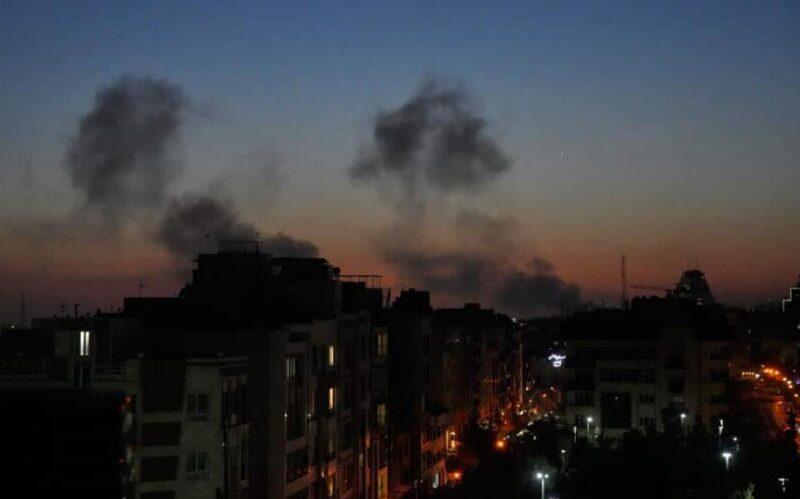
The finding has been cited across reporting as a central intelligence conclusion that complicates stated U.S. goals.
Assessment of Iran attack scenarios
The report modeled a range of options, from narrowly targeted strikes on leaders and institutions to broader, large-scale assaults, and assessed how Iran's institutions would react. Reporting says the NIC judged that Iran's clerical and military leadership would activate continuity protocols if top figures were killed, and that even an assassination of Supreme Leader Ayatollah Ali Khamenei would probably be absorbed without producing an opposition takeover. The assessment drew on and echoed earlier CIA judgments that regime change was improbable under the attack scenarios it evaluated.
Report scope limitations
At the same time, reporters note important limits to the report’s scope: it did not fully model several alternative scenarios that analysts and policymakers have discussed, including a U.S. ground invasion, the arming of insurgent groups, or the long-term effects of sustained occupation.
“The newspaper also says the assessment did not fully consider some alternative scenarios, including the possibility of a US ground operation.”
Several pieces highlight that those unmodeled options could materially alter the assessment’s conclusions and that the NIC explicitly omitted some courses of action from its calculations.
Trump administration regional strikes
That methodological conclusion landed amid active military and political developments: several outlets report the Trump administration nonetheless authorized large joint U.S.–Israeli strikes (including an operation that killed Supreme Leader Khamenei), even as White House officials described goals of degrading missile, naval and proxy capabilities.
Reporting captures the tension between intelligence caution about regime collapse and the administration’s public warnings, threats, and subsequent military operations across the region.
Drivers of NIC judgment
Analysts and regional reporting highlight the core drivers of the NIC’s judgment: Iran’s institutional resilience, the central role of the Islamic Revolutionary Guard Corps in security and succession, and the fragmentation of opposition forces. Experts cited in coverage describe the assessment as reflecting a long-standing, institution-level view of Iran’s resilience, while reporting on succession dynamics notes IRGC influence, the Assembly of Experts’ formal role, and internal contestation over figures such as Mojtaba Khamenei. Those same sources underline remaining uncertainties and warn that different, unmodeled scenarios could produce markedly different outcomes.
“The report says Tehran has plans to maintain continuity if senior leaders are killed, that fragmented opposition groups are unlikely to seize power, and that a mass uprising is improbable despite bombardment and internal tensions. Experts, including Brookings’ Suzanne Maloney, say the analysis reflects a longstanding, institution-level view of Iran’s resilience.”