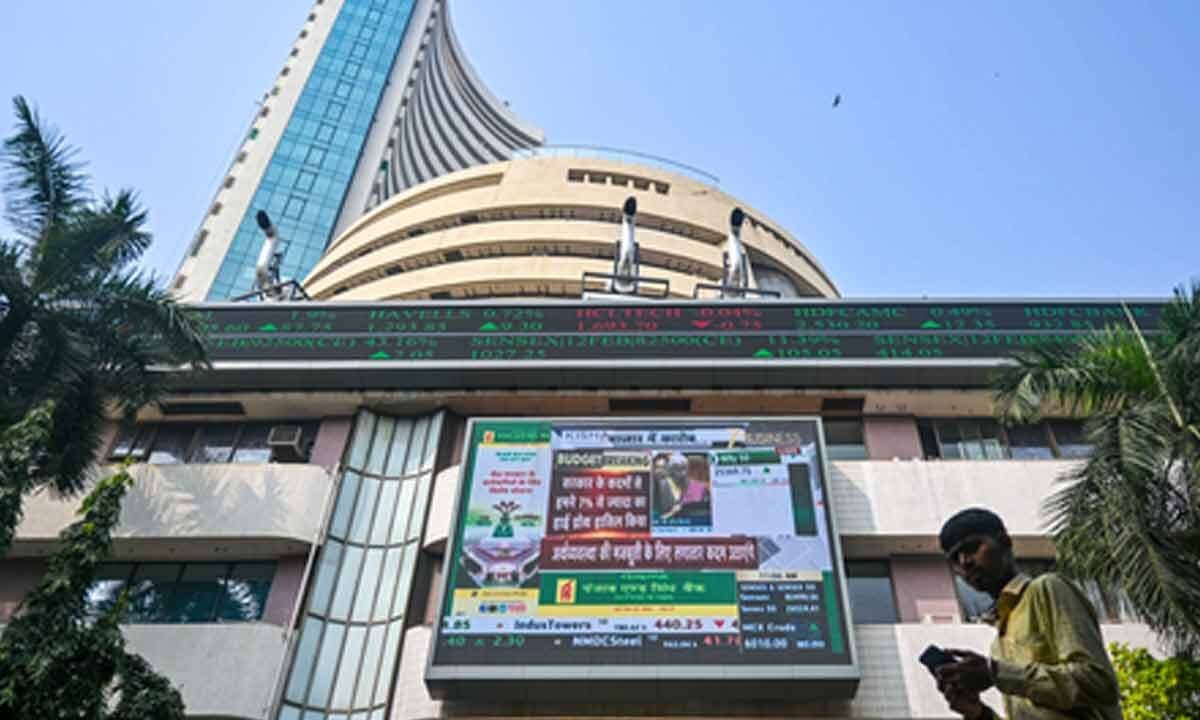
US-Iran Standoff Spikes Oil Prices, Slams Indian Markets
Key Takeaways
- Crude oil prices spiked sharply, driven by US–Iran tensions and Strait of Hormuz supply disruptions
- Indian benchmarks fell steeply; Sensex down 2,368.29 points (2.91%), Nifty down 728.2 points (2.89%)
- Asian equities crashed, with Nikkei and Kospi plunging over six percent
Markets react to Iran strikes
Global markets tumbled as investors reacted to escalating strikes involving Iran.
“The Indian stock market benchmark indices, Sensex and Nifty 50, are expected to open sharply lower on Monday, following a sell-off in global markets, amid a surge in crude oil prices as the expanding US-Israeli war with Iran fuelled fears of tighter supply and prolonged disruptions to shipments through the Strait of Hormuz”
Asian equities sank and broader shares were mostly lower.

Oil surged above $71 a barrel to an eight-month high on fears of supply disruptions.
Indian market reaction
The immediate fallout was visible in Indian markets: exchanges were set for a gap-down, with mint reporting Sensex fell 1,097 pts (1.37%) to 78,918.90 and Nifty dropped 315.45 pts (1.27%) to 24,450.45.
However, there is inconsistent reporting on the scale of the weekly move — The Hans India cites a larger weekly decline of 2,368.29 points (−2.91%) to the same 78,918.90 level.
Overseas investors continued to pull money out, amplifying the downturn.
Oil route disruption risks
A key driver behind the rout was energy-market anxiety tied to disruptions in strategic waterways.
“Amidescalating geopolitical tensions between the US and Iran, which led to a sharp jump in crude oil prices”
Sources flagged the Strait of Hormuz as a vulnerability, with Mint saying the conflict raised fears of "tighter oil supply and disruptions through the Strait of Hormuz," and The Hans India warning explicitly of "Disruption risks around the Strait of Hormuz (key oil/LNG route)".
This dynamic prompted investors to watch developments that could restore normal oil supply routes.
Global market sell‑off
The sell‑off was broad‑based.
Asian markets "crashed" with big declines in Nikkei, Topix and Kospi, and Hang Seng futures pointed sharply lower.
US indexes finished the prior week lower amid a jump in oil.
Within India, cyclical and rate‑sensitive sectors lost ground even as defence stocks gained.
These moves reflected direct market sensitivity to geopolitical and energy risk.
Market volatility and geopolitics
Looking ahead, commentators and market participants warned that volatility is likely to persist until the geopolitical picture and energy flows clarify.
“Asian markets crash as oil spikes toward $115/barrel; Nikkei and Kospi plunge over 6% amid Middle East war crisis Asian stocks traded in the red on Monday; sentiment weakened as the US-Israeli war with Iran entered its second week with no clear resolution, while major Middle Eastern oil producers cut output and shipments through the Strait of Hormuz remained disrupted”
Seeking Alpha said, "The situation is fluid and likely to keep volatility high until there is clarity on the conflict and energy flows."
mint listed West Asia developments, crude oil and fund flows among key watch-items.
The Hans India cautioned, "Unless geopolitical tensions ease and crude falls, near-term volatility in Indian markets is likely."
More on Business

Senate Passes Bipartisan Housing Bill Banning Institutional Investors From Buying Single-Family Homes
19 sources compared

Senate Passes Bipartisan Housing Bill Banning Institutional Investors From Buying Single-Family Homes
29 sources compared

Lucid Group Reveals Cosmos and Earth Midsize EVs Starting Under $50,000
10 sources compared

IEA Proposes Largest-Ever Strategic Oil Reserve Release to Reshape Global Markets
15 sources compared