U.S. launches military operation in Venezuela, captures Maduro
Key Takeaways
- United States conducted a dawn raid in Caracas, detaining Nicolás Maduro.
- International bodies and several governments condemned the attack as a violation of international law.
- Oil prices rose following the U.S. operation in Venezuela.
Military Operation
In the early hours of January 3, 2026, the United States launched a large-scale military operation against Venezuela.
“"This is deeply troubling and condemnable": Russia, China and Iran criticize the US attack on Venezuela and the detention of Nicolás Maduro”
The operation resulted in the capture and exfiltration of President Nicolás Maduro and his wife Cilia Flores.

U.S. President Donald Trump described the military incursion as part of his fight against drug trafficking.
The operation involved helicopter-borne forces targeting Caracas and surrounding military bases.
Venezuelan authorities initially denied Maduro's capture, claiming he remained in Miraflores Palace.
Independent sources confirmed Maduro's removal from the country.
The operation marked a dramatic escalation in Washington-Caracas relations.
Global Condemnation
The U.S. military intervention sparked widespread international condemnation.
Numerous governments condemned the operation as a violation of Venezuela's sovereignty and international law.

Colombian President Gustavo Petro denounced the attack as an 'encroachment on the sovereignty' of Latin America.
Petro announced troop deployments to the border with Venezuela.
Brazilian President Luiz Inácio Lula da Silva called it a 'grave breach of Venezuela's sovereignty.'
European leaders uniformly condemned the intervention.
French Foreign Minister Jean-Noël Barrot stated it 'violates the principle of non-use of force that underpins international law.'
Spanish Prime Minister Pedro Sánchez offered to act as mediator.
Russia called the operation an 'act of armed aggression,'
China denounced 'hegemonic behavior' that 'gravely violates international law.'
Oil Factor
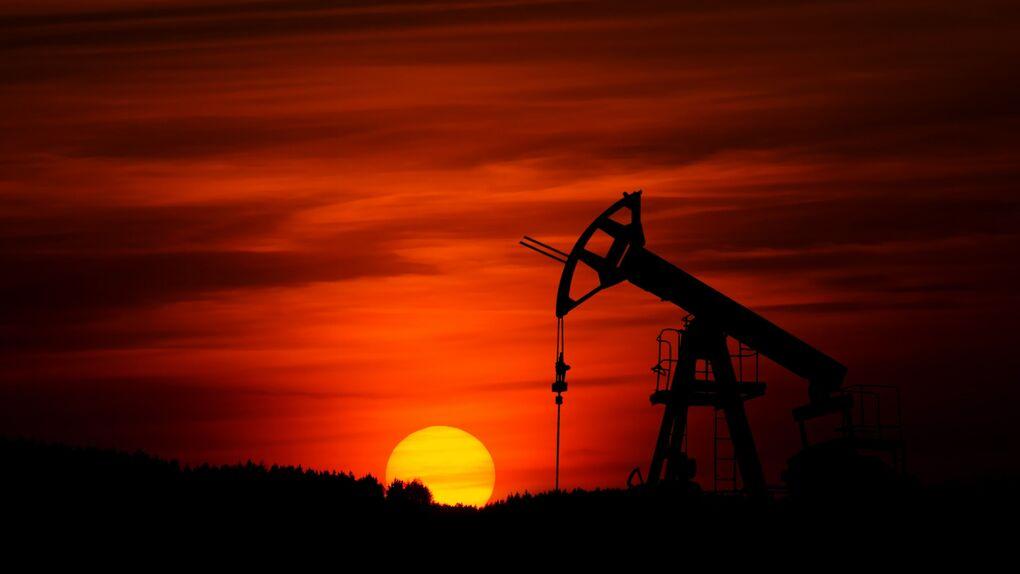
Oil resources emerged as a central factor in the U.S. intervention.
“"Rechazamos sin matices la injerencia y la lógica de guerra”
Venezuela possesses the world's largest proven oil reserves at approximately 303 billion barrels.
These reserves represent about 17% of global total.
Trump publicly acknowledged that American multinational corporations would participate in rebuilding Venezuela's oil industry.
Trump stated that Venezuela's oil 'belongs to the United States' and was 'stolen.'
Market reactions showed initial price volatility with crude prices rising.
Brent crude rose 1.76% to $61.82 and West Texas Intermediate advanced 1.85% to $58.38.
Analysts noted the market impact would be limited in the short term.
OPEC+ met in emergency session to coordinate responses.
Experts emphasized that rehabilitation of Venezuela's oil sector would require years and billions of dollars.
Current Venezuelan production is less than 1 million barrels per day compared to nearly 3.5 million at its peak.
Human Impact
The human impact of the intervention extended beyond Maduro's capture.
Approximately 14,000 Cuban medical professionals in Venezuela face uncertainty.

Cuban doctors reported being confined to their homes and unable to go out.
Mission coordinators activated evacuation protocols known as PAMUSE.
Doctors were required to prepare emergency kits with basic supplies, passports, and cash.
The Trump administration announced plans to govern Venezuela.
Trump stated Washington would need 'full access to oil and other resources to rebuild it.'
Maduro reportedly faces charges related to drugs and terrorism in U.S. courts.
Interim Venezuelan leadership remained unclear.
Various political actors jockeyed for position in the power vacuum.
More on USA

U.S. Prepares to Deploy 1,000 82nd Airborne to West Asia to Seize Airfields
17 sources compared

Democrat Emily Gregory flips Trump-carried Palm Beach House seat, defeating Trump-backed Jon Maples
12 sources compared

President Donald Trump Threatens National Guard Deployment to U.S. Airports
14 sources compared
GOP excludes ICE enforcement in DHS funding plan, leaving TSA workers unpaid and airports strained
17 sources compared