U.S. Military Action Captures Nicolás Maduro, Ousted President, in Venezuela
Key Takeaways
- Maduro, ousted Venezuelan president, arrived in Brooklyn to face drugs and weapons charges.
- U.S. military action led to Maduro's capture and transfer to U.S. custody.
- Venezuela's interim leader demanded Maduro's return.
Maduro Captured
The U.S. military conducted a dramatic operation in Venezuela that resulted in the capture of ousted President Nicolás Maduro, marking a significant escalation in American intervention in the region.
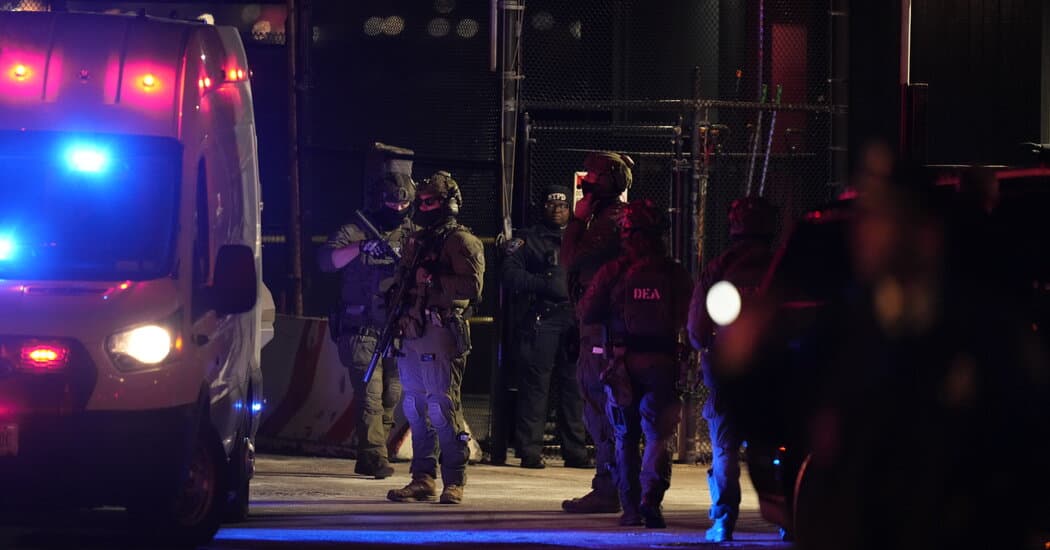
“Nicolás Maduro, the ousted president of Venezuela, arrived in Brooklyn and will be held on drugs and weapons charges”
Maduro was seized from a heavily guarded compound in the capital during an operation where U.S. forces descended largely unopposed.
The attack caused substantial destruction, including the destruction of at least three military bases, and resulted in significant casualties among Venezuelan forces.
The operation represented a major military humiliation for Venezuela and was carried out without any loss of American life, demonstrating the asymmetry of force between the two nations.
Power Vacuum
Following Maduro's capture, Venezuela experienced a complex political transition with multiple figures positioning themselves to lead the country.
Diosdado Cabello, described as Maduro's right-hand man, was captured alongside him during the U.S. military operation.
María Corina Machado, a conservative former National Assembly member who won the Nobel Prize, emerged as a key alternative leader and openly stated her readiness to assert power.
Machado, who has decades-long ties to Washington and had been actively courting Trump's support, released a statement saying 'Today we are prepared to assert our mandate and seize power,' indicating her ambition to lead Venezuela in the post-Maduro era.
U.S. Strategy
The Trump administration made a strategic decision to support Maduro's vice president, Delcy Rodríguez, as a transitional figure rather than immediately backing Machado.
“Nicolás Maduro, the ousted president of Venezuela, arrived in Brooklyn and will be held on drugs and weapons charges”
This represents a calculated approach to Venezuelan politics, as Trump's team chose to give Rodríguez a chance while passing over the Nobel Prize-winning opposition leader.
The administration's decision suggests a pragmatic assessment of the current political landscape in Venezuela, potentially weighing factors such as Rodríguez's perceived ability to navigate the country's ideological divisions and manage the transition process effectively.
Rodríguez Challenges
Rodríguez faces significant challenges in her potential leadership role, navigating Venezuela's deep ideological divisions and maintaining stability amid the political crisis.
Her contradictory position was evident when addressing the nation, as while Trump announced she had been sworn in as president, Venezuelan state television labeled her as vice president, and her remarks suggested she still viewed Maduro as the legitimate leader.
Political observers note that Rodríguez's capacity for negotiating across Venezuela's ideological chasm could prove crucial in easing tensions and facilitating a democratic transition, though her effectiveness remains uncertain given the complex circumstances surrounding Maduro's removal.
Human Cost
The U.S. military operation had devastating human consequences for Venezuela, with official reporting indicating at least 40 Venezuelans died, including both civilians and soldiers.
“Nicolás Maduro, the ousted president of Venezuela, arrived in Brooklyn and will be held on drugs and weapons charges”
This significant loss of life represents the human cost of the intervention and has created profound challenges for the incoming leadership, particularly in managing the grief and anger of those affected.
The casualties reflect the asymmetrical nature of the conflict, where the United States suffered no losses while inflicting substantial damage on Venezuelan military infrastructure and personnel.
The human toll has complicated the political transition and created sensitivities that any new government will need to address.
More on USA

Trump Threatens to Delay Xi Summit If China Fails to Defend Strait of Hormuz
12 sources compared

White House Chief of Staff Susie Wiles Has Early-Stage Breast Cancer, Trump Says
13 sources compared

Trump Urges Beijing to Secure Hormuz Strait as Australia Rejects U.S. Naval Escort Mission
32 sources compared

Trump Threatens to Delay Xi Summit Over Iran War and Strait of Hormuz
21 sources compared