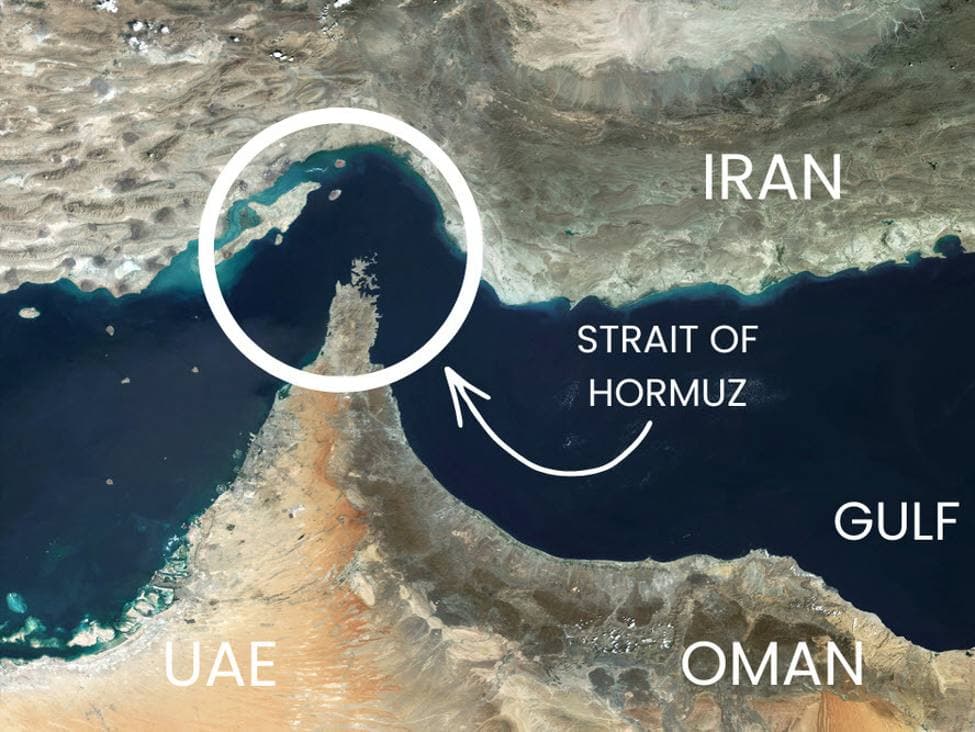
US Readies Multinational Naval Coalition to Escort Ships Through Strait of Hormuz
Key Takeaways
- White House plans to announce a multinational naval coalition to escort ships through Hormuz.
- Coalition aims to protect global oil shipments by securing the Strait of Hormuz.
- Outlets cite The Wall Street Journal; Trump urges regional partners to contribute ships.
US Naval Coalition Announcement
The United States is preparing to announce a multinational naval coalition designed to escort commercial ships through the Strait of Hormuz.
“In the early hours of this morning, Civil Protection teams from the Emirate of Dubai put out a fire that broke out near the international airport, caused by a drone attack”
Potential announcements could come as soon as this week according to U.S. officials.

This coalition represents a significant strategic initiative aimed at protecting critical maritime shipping lanes near Iran's coast.
Approximately 21% of the world's seaborne oil trade passes daily through this essential maritime chokepoint.
The coalition's mandate will focus explicitly on safeguarding commercial shipping operations.
It will not involve broader sanctions enforcement or other geopolitical objectives.
This indicates a targeted approach to maritime security challenges in the region.
Coalition Composition & Strategy
The coalition's composition is expected to include key U.S. allies with naval assets in the region.
Particularly the United Kingdom, France, and several Gulf Cooperation Council (GCC) states are likely participants.

Maritime security analysts emphasize that the coalition's success will depend on clear rules of engagement and political unity.
Dr. Sarah Chen, a senior fellow at the Center for Maritime Strategy, warns about the operational challenge.
She states that "the operational challenge is not just presence, but credible deterrence."
The coalition requires both capability and unanimous will to respond decisively to aggression against neutral shipping.
The structure would involve coordinated naval patrols and intelligence sharing.
Joint response protocols would protect commercial vessels from attacks or harassment.
Economic & Energy Impacts
The coalition formation impacts global energy markets and insurance sectors significantly.
“Formula 1 and its governing body FIA said the Grand Prix races in Bahrain and Saudi Arabia will not happen in April because of safety concerns related to the Iran war”
A sustained military presence can reduce the perceived risk premium on oil shipments.
This premium typically inflates global prices during periods of heightened tension.
Shipping insurance rates for vessels transiting the region could stabilize with enhanced security.
The coalition supports economic stability by safeguarding just-in-time supply chains.
Major Asian economies have significant stakes in the mission's success.
China, India, Japan, and South Korea import massive oil volumes via this route.
The coalition reflects a broader shift toward formalized structures for maritime protection.
Regional Reactions
The coalition's announcement will draw varied reactions from regional powers.
Iran consistently states it would never block the waterway.
Iran simultaneously views foreign naval presence in the Gulf as a provocation.
Iranian officials have proposed regional security dialogues excluding extra-regional forces.
The U.S.-led effort may depend on tacit understandings to prevent miscalculations.
Gulf Arab states have pursued more independent foreign policies recently.
Their full-throated participation in the coalition is not automatic.
They will weigh security benefits against diplomatic and economic repercussions from Iran.
Strategic Significance
The White House's move represents a pivotal moment in maritime security policy.
It directly addresses a persistent vulnerability in the global energy supply chain.
The approach uses collective defense mechanisms.
The initiative demonstrates interconnected nature of contemporary maritime security.
It involves intricate diplomatic negotiations and complex military coordination.
Sophisticated economic stewardship of critical infrastructure is required.
International observers will monitor whether the coalition provides durable stability.
Protection of the Strait remains a fundamental interest for global energy consumers.
More on USA

Trump Threatens to Delay Xi Summit If China Fails to Defend Strait of Hormuz
12 sources compared

White House Chief of Staff Susie Wiles Has Early-Stage Breast Cancer, Trump Says
13 sources compared

Trump Urges Beijing to Secure Hormuz Strait as Australia Rejects U.S. Naval Escort Mission
32 sources compared

Trump Threatens to Delay Xi Summit Over Iran War and Strait of Hormuz
21 sources compared