U.S. Senate Rejects War Powers Resolution, Preserves President Trump's War Authority
Key Takeaways
- Senate fails to curb presidential war powers amid Iran war, while Republicans debate Israel.
- Public disapproval noted; Republican tensions reflect broad unease over Middle East policy.
- CPAC remarks underscore tensions within Republicans on US support for Israel amid Iran war.
War Powers: Senate rejects
New development: The U.S. Senate rejected a War Powers resolution aimed at curbing President Trump’s authority to prosecute the war against Iran, effectively preserving unilateral executive power.
“Washington, DC – A new war in the Middle East and the knock-on effect of rising petrol prices have roiled the United States public, according to a slate of polls, but a month into the US-Israeli war on Iran, lawmakers have shown little appetite to rein in the conflict”
Across the party-line vote, the chamber defeated the measure 53-47, underscoring the Republican majority's reluctance to constrain the conflict.

Democrats in the U.S. House reportedly had the votes to pass their own War Powers resolution, but leadership opted not to schedule a vote, leaving the executive branch with no immediate congressional check.
Analysts cited by Al Jazeera argued that lawmakers are caught between pro-Israel lobbying pressures and public unease about the war, signaling a broader domestic political divide.
As the conflict in West Asia continues, the Republican Party faces a balancing act between maintaining its traditional alliances.
House plan, language missing
House dynamics and the plan’s specifics: Democrats in the U.S. House reportedly had the votes to pass their own War Powers resolution, but leadership has backed away from holding a vote.
The exact language and concrete demands of the measure are not published in these reports, making it unclear what precise restrictions would have been imposed.
On the strategic side, the Trump administration is described as not articulating a unifying endgame for the conflict, instead touting degraded Iranian military capabilities and killings of top officials.
Public opinion remains hostile to the war, with polling showing broad disapproval, signaling political risk for backers of ongoing intervention.
Generational political divide
Domestic mood and the generational divide: Younger conservatives are increasingly skeptical toward foreign military involvement and questioning the strategic rationale behind close ties with Israel.
“Deepening divisions within the Republican Party have come into sharper focus as the war involving the United States, Israel and Iran reshapes debate over foreign policy and national priorities”
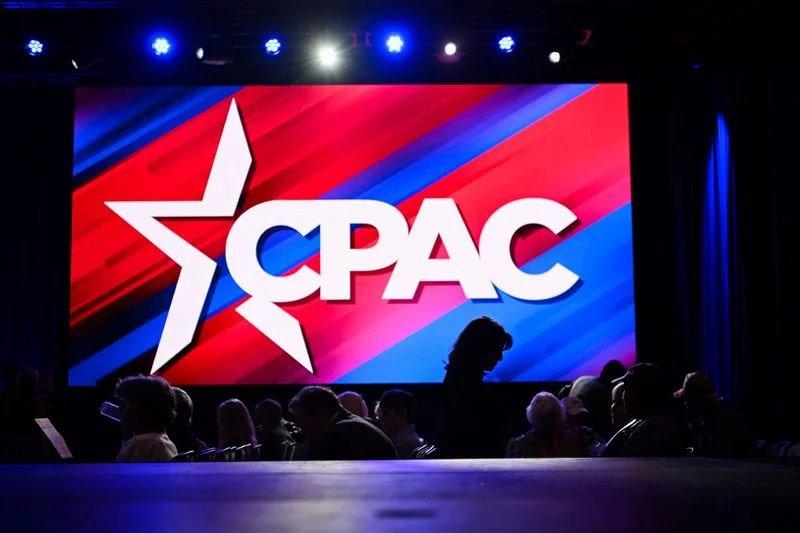
Younger attendees at CPAC expressed opposition to the Iran war and called for greater focus on domestic spending rather than overseas military commitments.
Tensions over allegations of antisemitism have surfaced in parallel, with some party figures urging caution against rhetoric that could alienate voters or deepen divisions.
Older voters and evangelical constituencies remain more supportive of longstanding alliances and traditional security commitments.
Attrition and regional balance
Strategic implications and regional calculus: The war’s trajectory appears to be moving into a phase of attrition, with Iran suspected to gain leverage as escalation wires stay in place.
Analysts cited in reporting describe the Iranian regime as remaining intact but largely degraded, complicating any notion of a swift, decisive Western victory.
The Pentagon has deployed yet more U.S. troops to the region, signaling a sustained military footprint even as public support wanes in the West.
Together, these elements imply a protracted West Asia dynamic in which external powers face limited room to reshape outcomes through unilateral actions.
More on USA
President Donald Trump Sparks Millions to Join No Kings Rallies Opposing Iran War Policies
49 sources compared
Rubio Surges to 35% Behind Vance's 53% in CPAC 2028 Straw Poll
14 sources compared
Trump Signals U.S. Could Target Cuba, Hinting at Military Action
12 sources compared
Trump Orders DHS to Immediately Use 'Reasonable Nexus' Funds to Pay TSA Agents
70 sources compared