
U.S. Supreme Court Hears Challenge To Geofence Warrants For Cellphone Location Data
Key Takeaways
- Supreme Court weighs legality of geofence warrants seeking nearby cellphone location data.
- Warrants compel tech firms to disclose vast location data near crime scenes.
- Case tied to 2019 Virginia bank robbery; ruling could redefine digital privacy.
Geofence Case Reaches Court
The U.S. Supreme Court heard arguments Monday on whether law enforcement’s use of “geofence” warrants to obtain cellphone-location data violates the Fourth Amendment’s ban on unreasonable searches.
“Supreme Court weighs 'geofence warrants' for cellphone data The case involves 4th Amendment protection against unreasonable searches”
NPR frames the central question as whether the technique is “Ingenious? Orwellian? Or both?” and explains that geofencing lets the government draw a virtual fence around an area where a crime occurred, then seek a warrant requiring a tech company to search its data to identify users who were within the geofence line.

Reuters reports that the case involves an appeal by defendant Okello Chatrie, who conditionally pleaded guilty in 2022 to robbing a Midlothian, Virginia credit union while reserving his right to suppress evidence.
PBS, citing Associated Press, says Chatrie’s cellphone gave him away after police served a geofence warrant on Google that found his cellphone among a handful of devices in the vicinity of the bank around the time it was robbed.
NBC News adds the timeline detail that at 4:50 p.m. May 20, 2019, an armed man holding a cellphone walked into the Midlothian, Virginia branch of the Call Federal Credit Union and handed a note to a teller demanding cash, then left with $195,000.
Multiple outlets emphasize that the warrants work “in reverse,” because police start with a location rather than a named suspect, and then identify people who were in the area.
The Supreme Court’s decision is expected by the end of June, according to Reuters and ABC News, while The Hill says arguments begin Monday at 10 a.m. ET.
How the Warrant Worked
In Chatrie’s case, police sought a geofence warrant after other leads ran out, using footage that showed the robber talking on a cellphone at the credit union.
Reuters says investigators had exhausted all other leads when they sought a geofence warrant based on footage of the robber using a cellphone at the credit union, and that a state magistrate judge found probable cause to issue the warrant.
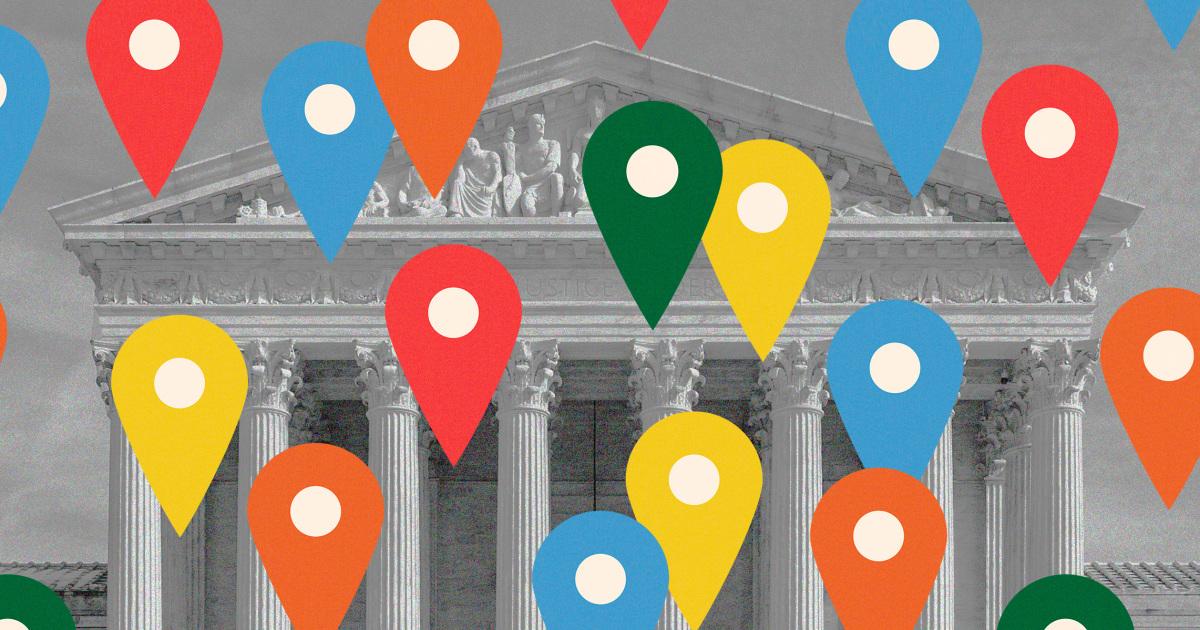
NPR describes the geofencing in this case as relying on a Google feature called 'location history,' which it says recorded where a person was 'every two minutes, on average,' using multiple information sources to pinpoint and record the location of every person with an active cell phone.
Reuters adds that the warrant authorized disclosure of Google location information for an area the size of about three football fields around the Midlothian bank at the time of the robbery, allowing police to see who was where “within a one-hour window” of the May 2019 robbery.
NBC News reports that Google initially identified 19 users, but the officer ultimately narrowed his search down to Chatrie after his phone had its Google “location history” setting switched on.
The Hill similarly says the warrant encompassed “some 17.5 acres” and a “two-hour stretch of time,” and it describes the reverse-warrant approach as “A reverse warrant turns the Fourth Amendment upside down.”
PBS says the geofence warrant police served on Google found Chatrie’s cellphone among a handful of devices in the vicinity of the bank around the time it was robbed.
Privacy, Expectations, and Defense
The arguments before the justices centered on whether geofence warrants amount to unconstitutional dragnet searches of private location information.
ABC News says critics argue the warrants intrude on Americans’ “reasonable expectation of privacy” by compelling service providers to turn over “broad swaths of user location history and time stamps within a specified area within a specified timeframe,” while advocates argue the tool is critical for solving crimes.
Reuters reports that lawyers for Chatrie contend in court papers that geofencing amounts to a dragnet search that exposes mass amounts of private information and lacks the specificity required by the Fourth Amendment.
The Hill quotes Greg Nojeim, senior counsel and director of the Security and Surveillance Project at the Center for Democracy and Technology, saying “Instead of law enforcement going to the provider and saying, ‘Give us the data that you have on this person, on this account,’ law enforcement goes to the provider and says, ‘Identify the suspect for us,’” and it adds that Chatrie’s lawyers want the court to rule out any use of geofence warrants at all.
Reuters says the Justice Department counters that Chatrie's opting in to Google’s location history stripped him of any expectation that his data would remain private, and it argues police had “probable cause” to believe that Google had information that could help identify the robber, accomplices and witnesses.
NPR quotes Stanford law professor Orin Kerr describing the technique as “a little bit of an investigative lottery ticket when they had no other way of finding a suspect,” and it also quotes Michael Dreeben saying the court has “uniformly favored privacy interests rather than extending precedents that allowed government searches.”
NBC News adds that the Trump administration, represented by Solicitor General D. John Sauer, argues that no search took place at all, while also quoting Sauer’s position that even if a warrant is required, the one issued was lawful because law enforcement had “probable cause to believe that Google had information that would help identify the cellphone-using robber.”
Broader Use and Court Splits
Beyond Chatrie’s robbery, the outlets describe how geofence warrants have been used in other investigations and how lower courts have treated the practice differently.
PBS says investigators used geofence warrants to identify supporters of President Donald Trump who attacked the Capitol in the riot on Jan. 6, 2021, and also in the search for the person who planted pipe bombs outside the Democratic and Republican party headquarters the night before.

PBS also says police credit these warrants with helping identify suspects in killings in several states, including California, Georgia and North Carolina, and it notes that a Supreme Court ruling in 2018 imposed limits on cellphone location data pinpointing past location of criminal suspects.
Reuters reports that a Virginia-based U.S. District Judge Mary Lauck found that the geofence warrant used in Chatrie’s case violated the Fourth Amendment but denied suppression because investigators acted with a good faith belief that their actions were lawful, and it says the full bench of the Richmond-based Fourth U.S. Circuit Court of Appeals affirmed Lauck’s decision.
PBS adds that in a separate case, the federal appeals court in New Orleans ruled that geofence warrants “are general warrants categorically prohibited by the Fourth Amendment.”
The Hill provides additional context on the legal stakes, quoting Chatrie’s petition that “The Fourth Amendment was born of the Founders’ revulsion for general warrants and writs of assistance—instruments that allowed the government to search first and develop suspicions later,” and it says a geofence warrant operates on “precisely that principle.”
NBC News adds that Google changed its storage policies so that location history is stored on an individual’s device rather than on Google’s servers, and it says the company “can no longer respond to geofence warrants based on Location History data.”
What Happens Next
The Supreme Court’s ruling is expected to determine whether geofence warrants are constitutional under the Fourth Amendment and how broadly law enforcement can use reverse warrants to obtain location data from tech companies.
“Mark Sherman, Associated PressMark Sherman, Associated Press Leave your feedback WASHINGTON (AP) — Okello Chatrie's cellphone gave him away”
Reuters says the justices agreed to decide whether geofence warrants are unconstitutional but declined to hear Chatrie’s evidence-exclusion claim, and it adds that if Chatrie wins the constitutional argument, his case would likely be returned to the district court for further proceedings.
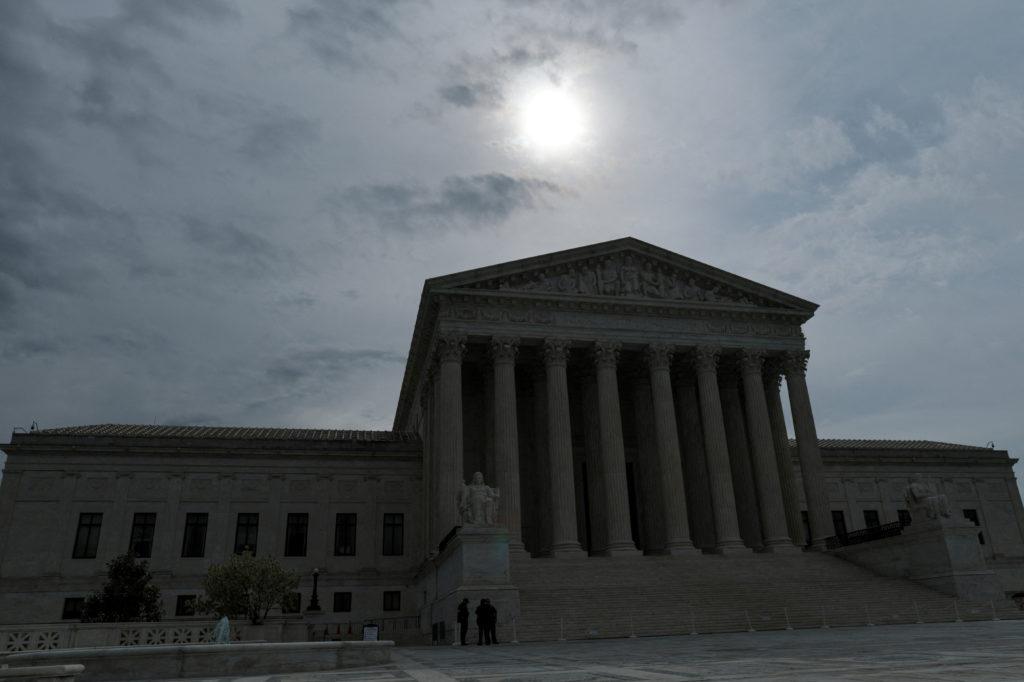
ABC News says a decision in the case—Chatrie v U.S.—is expected by the end of June, and it describes the case as the first time the justices consider whether digital dragnets violate constitutional protections against unreasonable searches.
PBS says the Supreme Court will decide whether geofence warrants violate the Fourth Amendment’s ban on unreasonable searches, and it quotes law professors who wrote that a ruling in favor could “unleash a much broader wave of similar reverse searches.”
The Hill says the court’s decision could have potentially major implications for how law enforcement investigates crimes in the digital age, and it reports that arguments begin Monday at 10 a.m. ET.
NPR situates the case as the latest clash between privacy rights and law enforcement, describing how the court has “uniformly favored privacy interests” in digital-age cases and how the court has grappled with applying “analog-era precedents to digital realities.”
NBC News adds that if the court were to find that geofence searches do not require a warrant, it would open the door to government abuse that could infringe upon free speech rights by targeting protesters, and it quotes Jake Karr saying “It's the stuff authoritarian nightmares are made of.”
More on USA
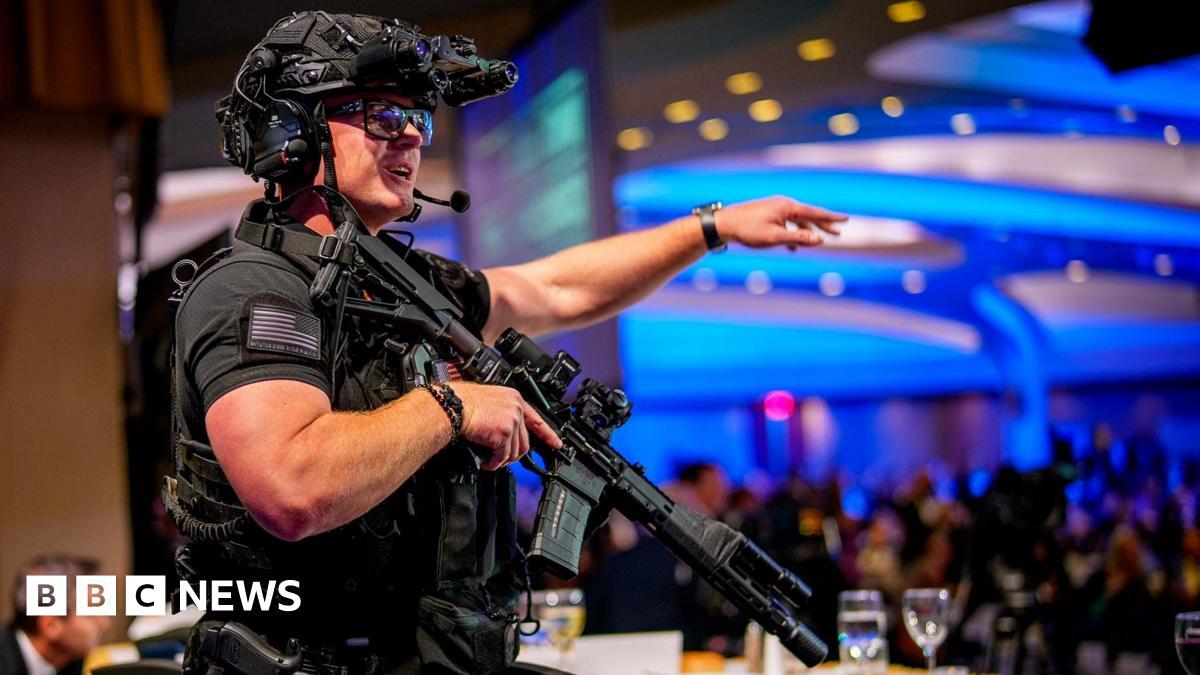
Cole Tomas Allen Stormed Washington Hilton Lobby, Exchanged Gunfire With Secret Service at Trump Dinner
12 sources compared

Cole Tomas Allen Opens Fire at White House Correspondents’ Dinner, Evacuates Donald Trump
11 sources compared

Trump Says King Charles Will Be Very Safe During U.S. State Visit After Washington Shooting
16 sources compared

Cole Tomas Allen Shot At White House Correspondents’ Dinner Security Checkpoint, Trump Evacuated
47 sources compared