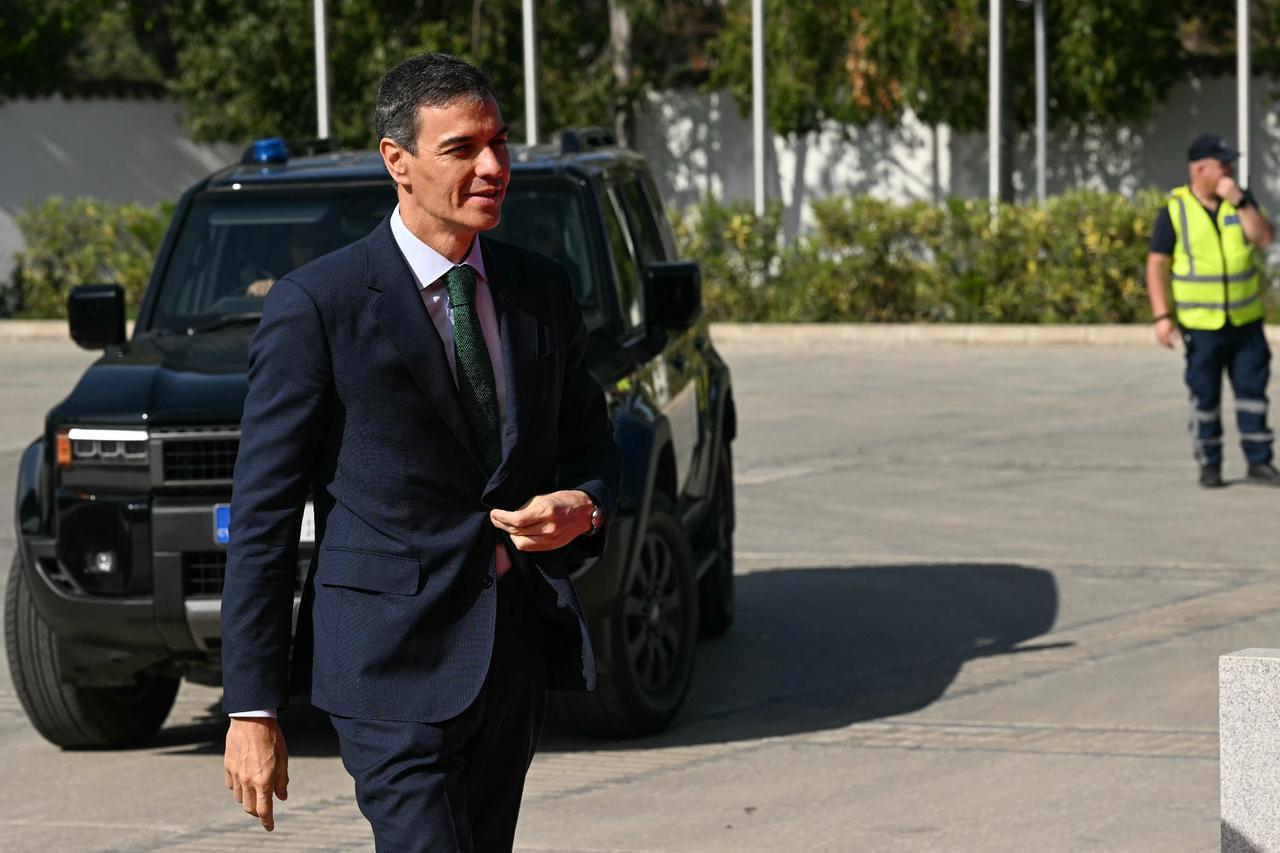
U.S. Threatens To Suspend Spain From NATO Over Iran War Stance, Sanchez Says
Key Takeaways
- Internal Pentagon email reportedly proposed punishing NATO allies, including suspending Spain, over Iran war stance.
- Spain's prime minister Sánchez dismissed the reports and affirmed Spain remains a reliable NATO member.
- NATO allies publicly pushed back against the alleged punitive measures.
Pentagon email sparks NATO rift
A leaked internal Pentagon email, first reported by Reuters, has ignited a dispute inside NATO over whether the United States could punish allies that did not support the U.S.-Israeli war on Iran, including a reported option to suspend Spain from the alliance.
Middle East Eye says the U.S. has threatened to "punish" Nato allies for their lack of support in the war on Iran, with ejecting Spain from the alliance among the measures considered.
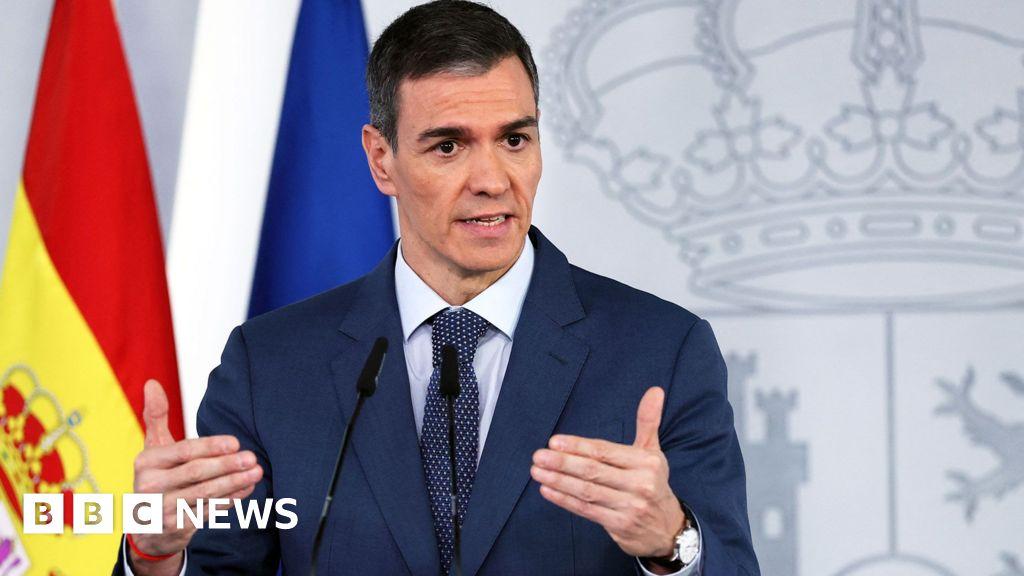
Reuters’ reporting, as described by BBC, said the email suggested the U.S. could seek to suspend Spain from Nato over its stance, even though the BBC notes there is "actually no provision in the Nato treaties to expel a member country."
BBC also reports that any action to bar Spain from filling key civilian or military roles in Nato would have to be taken unanimously among all Nato members.
Spain’s Prime Minister Pedro Sanchez responded at an EU summit in Cyprus, telling waiting journalists, "We are fulfilling our obligations toward Nato."
Türkiye Today similarly quotes Sanchez saying, "Spain is a reliable member within NATO" and that he was "absolutely not worried."
Pentagon Press Secretary Kingsley Wilson told Reuters, "The War Department will ensure that the President has credible options to ensure that our allies are no longer a paper tiger and instead do their part," while adding, "We have no further comment on any internal deliberations to that effect."
Spain’s stance and the Iran war
The reported U.S. pressure is tied directly to Spain’s position on the Iran conflict, which the sources describe as unusually firm among European NATO members.
Middle East Eye says Spain has been the most prominent and forthright critic of the war on Iran, declaring it illegal from the outset and forbidding the U.S. from using its bases or airspace for the conflict.

BBC adds that Prime Minister Sanchez was outspoken in his opposition to the U.S.-Israeli strikes on Iran from the get-go, describing them as illegal under international law, and that he immediately denied U.S. forces permission to use joint US-Spanish military bases in Spain for operations against Iran.
Time Magazine similarly says Spain has repeatedly referred to the war as “illegal,” and it quotes Sanchez saying, "The position of the government of Spain is clear: absolute collaboration with the allies, but always within the framework of international legality."
Türkiye Today reports Sanchez told reporters in Cyprus, "We don't work on the basis of emails, we work off official documents and the position that the United States government has set out in this case."
The sources also connect Spain’s refusal to U.S. demands to earlier friction inside NATO, with BBC stating Spain had been dismissive of the leaked Pentagon email and that Sanchez had previously been the only member of Nato to refuse the U.S. president's demand to boost defence spending by 5% of GDP.
Time Magazine adds that Trump warned in March, "Spain has been terrible. I told Scott [Bessent, Treasury Secretary] to cut off all dealings with Spain," and "We’re going to cut off all trade with Spain. We don’t want anything to do with Spain."
European leaders push back
European NATO leaders and EU figures moved quickly to defend Spain after the reported U.S. threat circulated, with multiple governments publicly insisting Spain would remain in the alliance.
“- Published It's become a joke - through gritted teeth - these days in EU circles, that whenever leaders meet, as they did these last two days in Cyprus - expecting to discuss practicalities, such as the new EU budget - they get railroaded by yet another crisis”
BBC reports that fellow EU leaders at the Cyprus summit, who are also in NATO, "leapt to Spain's defence," and it quotes Dutch prime minister Rob Jetten saying he wanted to be "crystal clear" that Spain was and would remain a full Nato member.
BBC also includes a high-ranking German official saying, "Spain is a member of Nato. And I see no reason why that should change."
Italian prime minister Giorgia Meloni criticized the tensions between Washington and Madrid as "not at all positive," while BBC describes her as feeling forced to take a stance against Donald Trump, drawing his ire at Rome too.
Türkiye Today quotes Meloni telling reporters, "NATO must remain united. I believe it is a source of strength," and it also says Sanchez told reporters Spain’s position was based on "absolute cooperation with allies, but always within the bounds of international law."
BBC also emphasizes the legal and procedural constraints, stating there is no provision to expel a member and that any bar on key roles would require unanimity.
Time Magazine quotes a NATO official saying, "NATO’s Founding Treaty does not foresee any provision for suspension of NATO membership, or expulsion," reinforcing the pushback from Europe’s side.
Falklands and the wider retaliation theme
Alongside Spain, the leaked Pentagon email described potential retaliation that reached beyond the Iran dispute, including a reported option involving the Falkland Islands.
Middle East Eye says the internal Pentagon email outlined a range of possible options for the U.S. to inflict consequences on its allies, including recognising Argentina's claims over the Falkland Islands, which Argentina calls Las Malvinas, to punish the UK.

BBC similarly says the leaked Pentagon email suggested a possible potshot at the United Kingdom, reviewing the U.S. position on the UK's claim to the Falkland Islands in the south Atlantic, which are also claimed by Argentina.
Türkiye Today reports that the same email suggested the U.S. could review its position on the Falkland Islands in retaliation for U.K. Prime Minister Keir Starmer’s lack of support in the war, and it states that the U.S. State Department spokesperson told AFP that Washington remained neutral on the disputed sovereignty.
Türkiye Today quotes the spokesperson: “Our position on The Islands remains one of neutrality. We acknowledge that there are conflicting claims of sovereignty between Argentina and the U.K.,” and it adds that the spokesperson said the U.S. recognizes “de facto United Kingdom administration” of the islands without taking a position on sovereignty claims.
BBC also provides background on the islands, saying they were invaded by Argentina in 1982 and that the territory remains under British control, while Middle East Eye says the conflict resulted in the deaths of almost a thousand people.
The sources connect the Falklands angle to broader U.S. pressure on European NATO members, with BBC describing Trump’s fury at Starmer after he initially denied a request to use British military bases ahead of launching attacks on Iran in February.
Legal limits and future uncertainty
The sources portray the reported U.S. threat as constrained by NATO treaty language, while also warning that the political damage from the suggestion itself could be significant.
“Europe’s NATO allies are resisting a reported US threat to Spain amid the US-Iran conflict”
BBC stresses that there is no provision in the NATO treaties to expel a member country and that any action to bar Spain from filling key civilian or military roles would have to be taken unanimously among all Nato members.
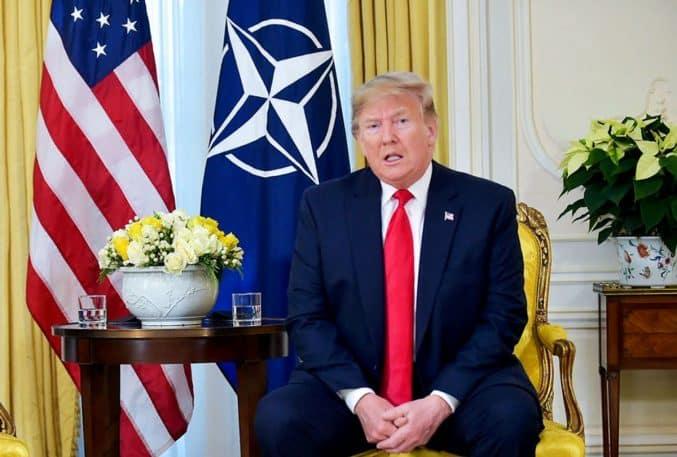
Time Magazine reinforces this with a NATO official’s statement that, "NATO’s Founding Treaty does not foresee any provision for suspension of NATO membership, or expulsion."
At the same time, Time Magazine reports that Trump has repeatedly criticized NATO allies for refusing to join the war in the Middle East and that he threatened economic repercussions, including telling Reuters that he was going to cut off trade with Spain.
It also says the discussed Pentagon email reportedly suggests reviewing the U.S. position on Britain’s claim to the Falkland Islands and removing “difficult” allies from key NATO roles and positions.
BBC places the dispute in a broader European context, describing an energy crisis provoked by the US-Israel war on Iran and Russia's aggression in neighbouring Ukraine, now in its fifth year, as leaders met in Cyprus.
Time Magazine includes a legal-policy warning from Ilaria Di Gioia, who told TIME, "The very idea of a U.S. exit erodes trust, cohesion, and the credibility of collective defense," and it adds that Trump’s repeated questioning of the alliance weakens deterrence and shakes European security planning.
More on Europe

Pentagon Email Suggests Suspending Spain From NATO, NATO Says No Treaty Mechanism
18 sources compared

Russia Suspends Kazakh Oil Transit to Germany via Druzhba Pipeline Starting May 1
13 sources compared
EU Foreign-Born Population Reaches Record 64.2 Million in 2025, Germany Hosts Nearly 18 Million
10 sources compared
Germany and Italy Block EU Push to Suspend Israel Association Agreement in Luxembourg
20 sources compared