Virginia Voters Approve Mid-Decade Redistricting Plan That Could Boost Democrats’ Four House Seats
Key Takeaways
- Virginia voters approved a mid-decade constitutional amendment bypassing the redistricting commission to redraw congressional maps.
- The plan could net Democrats up to four additional U.S. House seats in 2026 midterms.
- Ballot passage occurred by a narrow margin.
Virginia’s Redistricting Vote
Virginia voters approved a mid-decade redistricting plan Tuesday that could boost Democrats’ chances of winning four additional U.S. House seats in November’s midterm elections, with the constitutional amendment narrowly backed by voters bypassing a bipartisan redistricting commission.
AP reported that the plan could boost Democrats’ chances of winning “four additional U.S. House seats,” and NBC4 Washington projected the referendum would help Democrats flip control of the closely divided chamber.

NBC News said the “yes” vote held a narrow lead of 3 percentage points with 97% of the vote counted, while WTKR said the measure passed by 51.4% to 48.7% with 95% of votes tallied.
Virginia Mercury put the unofficial result at 50.7-49.3% out of 2.5 million ballots cast, and Cardinal News said the “yes” campaign’s margin was 2.7 percentage points as of 9:50 p.m.
The measure is designed to allow new congressional districts drawn by Virginia’s Democratic-led General Assembly to take effect, and AP said the state Supreme Court is considering whether the plan is illegal in a case that could make the referendum results meaningless.
NBC4 Washington described the referendum as a test of Democrats’ ability to push back against President Donald Trump, who started a national redistricting battle after urging Texas Republicans to redraw districts.
The vote also set up a continuing legal fight, with Republicans pledging to continue the battle over Virginia’s new map in court.
How the Fight Escalated
The Virginia referendum arrived after months of legal and political battles over process, timing, and campaign messaging, with Virginia Mercury describing an abrupt start to the effort in late October during a special legislative session that “quickly veered into a broader political fight.”
Virginia Mercury said that on Oct. 27, “days before the Nov. 4 statewide elections,” Democratic lawmakers unveiled plans to pursue a constitutional amendment allowing congressional maps to be redrawn outside the traditional post-census cycle.

It described a sharp debate over “timing, process and political intent,” and quoted House Speaker Don Scott, D-Portsmouth, framing the move as a response to national redistricting battles, saying, “I think we have an opportunity now to send a message to the rest of the country that we’re not going to stand by while you rig this election. We will do everything in our power to level the playing field we were talking about.”
MS NOW traced the national escalation to Texas Republicans’ mid-decade redistricting scheme in 2003 and said that “last summer, at Donald Trump’s behest, GOP officials did it again,” creating a new map designed to give Republicans five additional U.S. House seats more than a year before voters cast a ballot.
NBC News said the mid-decade redistricting arms race began last year when President Donald Trump urged GOP-led states to alter their district lines, and it described Virginia’s constitutional amendment as authorizing the Democratic-controlled Legislature to bypass the state’s bipartisan redistricting commission “through the end of the decade.”
Oregon Public Broadcasting said Virginia was the second state, after California last fall, to put the question to voters, and it emphasized that even if the referendum succeeded, the state Supreme Court was considering whether the redistricting plan is illegal.
Across the coverage, the same core timeline appeared: Trump’s push after Texas, California’s similar move, and then Virginia’s referendum, all while courts remained central to whether the public vote would ultimately matter.
Voices on Fairness and Accountability
The referendum’s narrow outcome triggered immediate, sharply worded reactions from Democratic leaders, Republican leaders, and party figures tied to national campaign committees.
AP quoted Democratic state House Speaker Don Scott saying, “Virginia just changed the trajectory of the 2026 midterms,” and it also quoted him saying, “At a moment when Trump and his allies are trying to lock in power before voters have a say, Virginians stepped up and leveled the playing field for the entire country.”
NBC News quoted Gov. Abigail Spanberger saying, “Virginia voters have spoken, and tonight they approved a temporary measure to push back against a President who claims he is ‘entitled’ to more Republican seats in Congress,” and it added that “We responded the right way: at the ballot box.”
Virginia Mercury carried additional Democratic voices, including Senate Majority Leader Scott Surovell saying voters “answered a question about the nature of our democracy … in favor of the people,” and it quoted House Speaker Don Scott again describing a national signal that Virginians rejected efforts to “rig our democracy.”
On the Republican side, AP quoted Virginia House Republican Minority Leader Terry Kilgore saying, “Serious legal questions remain about both the wording of this referendum and the process used to put it before voters,” and it quoted him adding, “Those questions have not been resolved, and they now move where they belong: to the courts.”
NBC4 Washington also quoted Kilgore’s statement that legal challenges remain and that the Virginia Supreme Court is set to hear arguments in the GOP challenge on Thursday.
Cardinal News quoted No Gerrymandering Virginia co-chair Brian Cannon saying the “no” side saw the margin as “a powerful message,” and it included his claim that the pro-gerrymandering side resorted to “over a million Virginians stood up against a partisan power grab.”
Different Frames Across Outlets
While all the outlets described the same referendum and the same legal uncertainty, they emphasized different aspects of what the vote meant and how the campaign unfolded.
AP and NBC4 Washington both described the vote as a setback for President Donald Trump and tied it to a national redistricting battle, with AP saying the Virginia vote marked a setback for Trump who “kicked off a national redistricting battle last year by urging Republican officials in Texas to redraw districts.”

NBC News focused more on the mechanics of the amendment, saying Virginia Democrats were required to pass the proposed amendment in two different legislative sessions, with a general election in between, before sending it to voters, and it also highlighted the spending dynamics by citing AdImpact’s ad-tracking data that Republicans narrowed a “massive 17-to-1 spending gap” to a “3-to-1 Democratic advantage.”
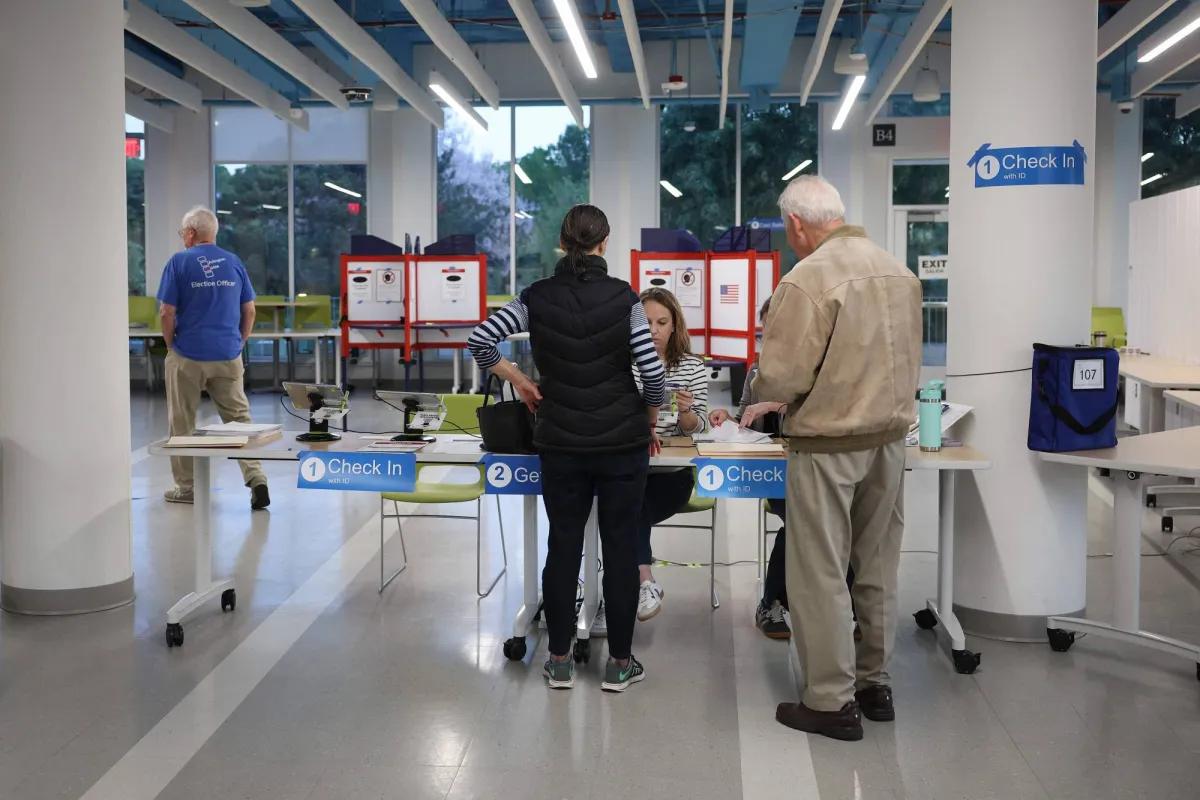
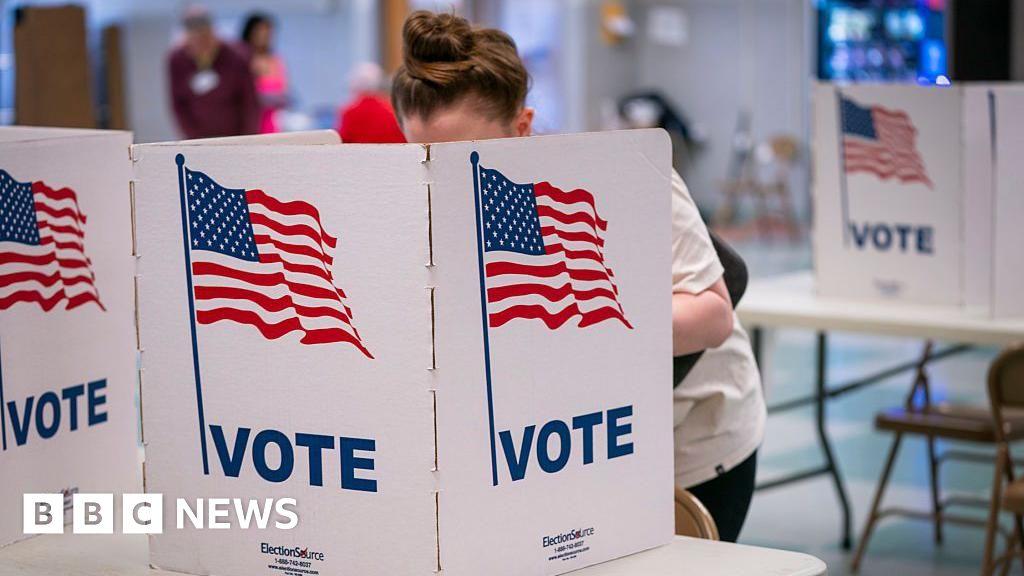
Oregon Public Broadcasting emphasized the voter experience and the fairness debate at a recreation center in Old Town Alexandria, quoting Matt Wallace saying he voted “to help balance the scales a bit until things get back to normal,” and quoting Joanna Miller saying she voted against the measure “because I want my vote to count in a fair way.”
Virginia Mercury and Cardinal News both described the campaign as expensive and contested, with Cardinal News saying the referendum was “the most expensive referendum in Virginia’s history” and citing roughly $83.2 million between the two sides, while Virginia Mercury reported the vote count and also framed the amendment as expected to reshape the state’s political map from “a closely divided 6-5 split to a heavily Democratic-leaning 10-1 advantage.”
WTKR and ABC7 Chicago both described the expected seat shift in similar terms, with WTKR saying the new map could give Democrats a 10-1 advantage and ABC7 Chicago saying the plan could boost Democrats’ chances of winning four additional seats.
The differences were not about the core facts of the referendum, but about which details each outlet foregrounded: AP and NBC4 stressed the national political implications, NBC News stressed campaign and process mechanics, Oregon Public Broadcasting foregrounded voter perspectives, and Virginia Mercury and Cardinal News foregrounded vote totals and campaign spending.
What’s at Stake Next
The vote’s immediate effect is paired with a looming possibility that courts could nullify it, leaving the referendum results and the new map vulnerable.
AP said the state Supreme Court is considering whether the plan is illegal in a case that could make the referendum results meaningless, and NBC4 Washington said the Court is set to hear arguments in the GOP challenge on Thursday.
ABC7 Chicago and WTKR both described the legal hurdle as ongoing, with ABC7 Chicago saying a Tazewell County judge ruled the redistricting push was illegal for several reasons, including that lawmakers failed to follow their own rules for adding the redistricting amendment to a special session and that the state failed to publish the amendment three months before last year’s general election.
WTKR quoted Terry Kilgore saying, “Serious legal questions remain about both the wording of this referendum and the process used to put it before voters,” and it also quoted him that “Those questions have not been resolved, and they now move where they belong: to the courts.”
Cardinal News and Virginia Mercury both described the referendum as a temporary constitutional change, with Cardinal News saying the new map created by the statewide referendum is expected to net Democrats an additional four congressional seats and with Virginia Mercury saying the approval allows new congressional maps to take immediate effect.
Virginia Mercury also laid out the longer arc, saying the new map would reshape the state’s political map and that supporters argued it gives Virginia flexibility to respond to aggressive redistricting efforts in several Republican-led states at the urging of President Donald Trump.
The stakes are explicitly tied to the 2026 midterms and beyond, with AP saying the November elections decide control of the closely divided Congress and with Cardinal News and NBC News describing the expected seat shift to a 10-1 advantage.
More on USA

7th Circuit Upholds Illinois Protect Illinois Communities Act Ban on Semiautomatic Guns
12 sources compared

Indiana State Police Trooper Justin Heflin Shot During Pursuit; Suspect Kevin W. Meyers Found Dead
10 sources compared

Donald Trump Fires Election Assistance Commission Members, Leaving No Commissioners
12 sources compared

Eight Accused Of Planning Terror Attack At Casa Blanca UFC Freedom 250 Event
18 sources compared