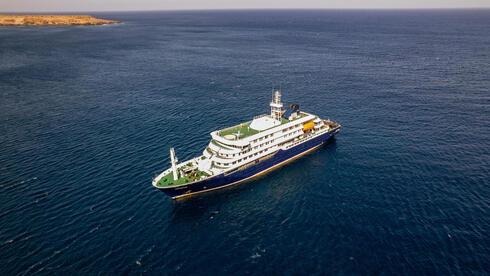
WHO Suspects Human-To-Human Hantavirus Transmission Aboard MV Hondius Anchored Off Cape Verde
Key Takeaways
- Seven confirmed or suspected hantavirus cases on MV Hondius off Cape Verde, including three deaths.
- WHO suspects possible human-to-human transmission among close contacts aboard the ship.
- Ship marooned off Cape Verde, awaiting docking; Canary Islands planned destination.
Rare spread on MV Hondius
The World Health Organization said it suspects human-to-human transmission of hantavirus aboard the Dutch-flagged MV Hondius, which has been anchored off Cape Verde in the Atlantic Ocean after Cape Verde authorities prevented it from docking. The outbreak has produced seven confirmed or suspected cases among passengers, with three deaths, and WHO said the risk to the wider public is low. WHO reported that two cases are confirmed as hantavirus infections while the remaining five are suspected, and it said the three fatalities were a Dutch couple and a German national. Maria Van Kerkhove, an epidemiologist with the WHO, said at a press conference Tuesday, "We do believe that there may be some human-to-human transmission that's happening among the really close contacts" aboard the ship.
Evacuations, quarantine planning
Cape Verde’s health ministry said three people would be evacuated in the coming hours, and it said medical personnel had assessed that all three are clinically stable. CNN reported that two air ambulances would help with the evacuations, and it quoted Dr. Maria Van Kerkhove saying, "We do know that some of the cases had very close contact with each other" and that human-to-human transmission can’t be ruled out. The WHO said it had requested, in coordination with the European Union, that Spain host the Hondius in the Canary Islands, where passengers and crew would undergo medical screenings before repatriation. CBS News also reported that Ann Lindstrand, the WHO representative in Cape Verde, said any quarantine could be as much as two months because the incubation period could last between one and eight weeks.
What the science hinges on
Investigators are working to determine the source of exposure, and WHO said the outbreak involves a hantavirus believed to be the Andes virus, a species found in Argentina and Chile. NPR quoted Van Kerkhove saying, "We do believe that there may be some human-to-human transmission that's happening among the really close contacts, the husband and wife, people who've shared cabins," and it described the incubation period as anywhere between one and eight weeks. The WHO also said the risk to the general public is low and that any suspected human-to-human transmission would have occurred between very close contacts like married couples. In parallel, health authorities and WHO teams are preparing for medical screenings and disinfection as the ship moves toward the Canary Islands, with the next steps tied to epidemiological investigation and assessment of passengers’ risk.
“From emotional to mundane, passengers on board a luxury cruise ship stranded off the coast of Africa have begun giving the world a glance into their purgatory amid a rare and deadly hantavirus outbreak”
More on Technology and Science
Giorgia Meloni Warns Italy Over AI Deepfakes After Fake Lingerie Photo Circulates
11 sources compared

PayPal Reorganizes Into Three Units To Accelerate AI Adoption And Save $1.5 Billion
13 sources compared

ShinyHunters Claims Instructure Breach Stole Data From Nearly 9,000 Schools And 275 Million Individuals
14 sources compared

Greg Brockman Testifies OpenAI Will Spend $50 Billion on Computing in Musk v. Altman Trial
12 sources compared