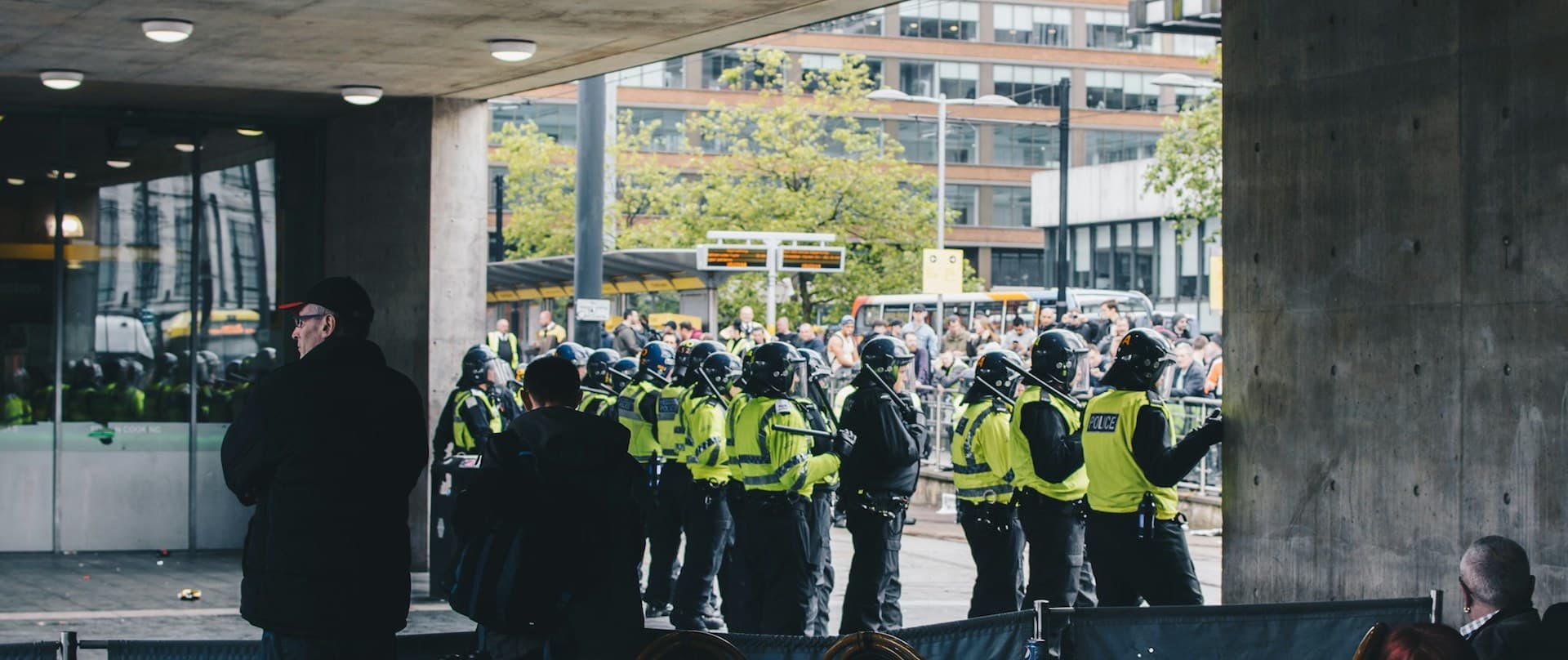
Wrongful Arrest by Algorithm: The Alvi Choudhury Case and Your Rights
Wrongful arrest after facial match
Alvi Choudhury, a 26-year-old software engineer, was working at his home in Southampton when police arrived.
“WRONGFUL ARREST Wrongful Arrest by Algorithm: The Alvi Choudhury Case and Your Rights The arrest of Alvi Choudhury has sent shockwaves through the legal and tech communities, serving as a landmark example of how digital-first policing can lead to devastating human errors”
Police handcuffed him and transported him 100 miles away.
Police detained him for 10 hours for a burglary in Milton Keys, a city he had never visited.
The wrongful arrest resulted from a retrospective facial recognition search that matched his image to CCTV footage.
The match occurred despite Mr Choudhury having a beard and being significantly older than the suspect in the footage.
UK police facial recognition
The piece explains UK police use three applications of facial recognition: retrospective facial recognition (used after a crime, searching against the Police National Database's 19 million mugshots), live facial recognition (real-time crowd scanning), and operator-initiated facial recognition (mobile apps).
It states the primary algorithm currently procured by the Home Office is provided by Cognitec.
It cites research commissioned by the Home Office and the National Physical Laboratory showing large accuracy disparities.
In the Alvi Choudhury case Asian subjects were 100 times more likely to be misidentified than white subjects, and Black women were 247 times more likely to trigger a false match.
The article attributes these errors to training-data bias.
It highlights a 'mugshot loophole' in which Mr Choudhury remained in the database because of a previous wrongful arrest in 2021 when he was the victim of an attack.
The piece notes custody images often stay in the system indefinitely unless manually deleted.
Facial recognition limits
The article sets out legal constraints on police use of facial recognition, citing PACE 1984 and Code G, which requires reasonable grounds and necessity for lawful arrest.
“WRONGFUL ARREST Wrongful Arrest by Algorithm: The Alvi Choudhury Case and Your Rights The arrest of Alvi Choudhury has sent shockwaves through the legal and tech communities, serving as a landmark example of how digital-first policing can lead to devastating human errors”
It cites the Equality Act 2010 and the Public Sector Equality Duty, saying police must avoid unacceptable bias.
It cites the Data Protection Act 2018 plus Article 8 of the Human Rights Act, noting that biometric data is highly intrusive and that retention after clearance may be unlawful.
The article says the system failed at three levels in Mr Choudhury's case: algorithmic bias, the mugshot loophole, and the failure of human oversight.
It notes the Home Office describes facial recognition as 'intelligence, not fact' and requires a human officer to verify matches.
However, officers in this case did not account for obvious physical differences.
Compensation and data remedies
DPP Law outlines legal remedies available to victims, including claims for compensation for false imprisonment, aggravated damages and special damages.
It says victims can also seek data rectification or the 'right to be forgotten' to remove custody images and biometric data from the Police National Database.
DPP Law says these cases require specialist solicitors who demand technical disclosures such as similarity scores, threshold settings and officer audit trails.
Iain Gould is representing Alvi Choudhury in his claim and DPP Law says it will monitor the case through the courts.
The article quotes Mr Choudhury on Good Morning Britain saying 'we are at the foothills of profound technological change' and urging early legal support to protect those wrongfully arrested.
Key Takeaways
- Police handcuffed Alvi Choudhury, a 26-year-old software engineer, at his Southampton home.
- An algorithm-driven, digital-first policing process caused the wrongful arrest.
- The arrest sent shockwaves through legal and tech communities, exposing algorithmic failure.
More on Crime

Justice Department Releases FBI Files Alleging Donald Trump Sexually Assaulted a Minor
102 sources compared

Police Arrest Iowa Man Who Murdered Three Women in Southern Utah
18 sources compared
Today Show Host Savannah Guthrie Returns to Missing Mother Nancy Guthrie's Home in First Sighting
12 sources compared

Abu Dhabi Authorities Intercept Drone; Falling Debris Kills One, Injures Seven At Zayed International Airport
28 sources compared