
Yemeni ports face shipping fee hike amid Iran conflict
Key Takeaways
- Shipping headed to Yemen faces thousands-of-dollars in new fees.
- Experts warn the fees could raise prices of imported goods and food in Yemen.
- Fees linked to the US-Israel conflict with Iran; traders say importers were alerted.
Fees and government response
A reported decision to impose thousands of dollars in fees on shipping headed for Yemen has experts worried that the price of imported goods and food will increase in the war-torn country, as it starts to feel the economic impact of the United States and Israel’s conflict with Iran.
“Mukalla, Yemen – A reported decision to impose thousands of dollars in fees on shipping headed for Yemen has experts worried that the price of imported goods and food will increase in the war-torn country, as it starts to feel the economic impact of the United States and Israel’s conflict with Iran”
Local traders and officials have said that international shipping companies informed importers earlier this month of the imposition of new fees of about $3,000 on each container bound for Yemen, described as “war risk” fees.
The surprise move prompted government officials to scramble to assess and address its potential repercussions.
Because Yemen imports nearly 90 percent of its food and other essential commodities, economists and humanitarian organisations warn that the rise in shipping and insurance costs could quickly translate into higher prices for fuel, food and other goods, further worsening an already dire humanitarian situation.
Port risk and humanitarian crisis
Yemeni ports have long been classified as high-risk, prompting shipping companies to impose war-risk surcharges that can reach about $500 per 20-foot container and $1,000 per 40-foot container.
Abdulrab al-Khulaqui, deputy chairman of the Yemen Gulf of Aden Ports Corporation, said the $3,000 fee now demanded was very high and unusual, but justified by shipping companies because they regard Yemeni ports as unsafe, despite their distance from Iran.
Although the Houthis are allied to Iran and previously attacked shipping in the Red Sea following Israel’s genocidal war on Gaza, the Yemeni group has yet to intervene in the US-Israel-Iran conflict.
Other Yemeni parties are also not involved.
The United Nations has again sounded the alarm over Yemen’s worsening humanitarian situation, saying nearly 65.4 percent of the population – about 23.1 million people – will require urgent humanitarian assistance and protection services this year.
This marks an increase of roughly 3.5 million people compared with 2025.
The World Food Program said in its February Yemen Food Security Update, released on March 5, that 63 percent of households nationwide are struggling to meet their minimum food needs, including 36 percent facing severe food deprivation.
Disruptions and alternative routes
Beyond the surcharges, disruptions in the Strait of Hormuz could force ships to bypass Yemeni ports, with Mustafa Nasr predicting that shipping lines may seek alternative hub ports to deliver goods to Yemen, which could increase costs and cause delays.
“Mukalla, Yemen – A reported decision to impose thousands of dollars in fees on shipping headed for Yemen has experts worried that the price of imported goods and food will increase in the war-torn country, as it starts to feel the economic impact of the United States and Israel’s conflict with Iran”
Nabil Abdullah Bin Aifan noted that most goods arriving at Mukalla are transported on wooden dhows from Dubai, and if Hormuz disruptions occur, traders may turn to alternative regional hub ports such as Salalah in Oman or Jeddah in Saudi Arabia.
“Large ships come to Dubai to unload their containers, and traders then unload the goods from the containers and load them onto those primitive ships, which have no insurance,” Bin Aifan told Al Jazeera.
For now, wheat shipments from Ukraine and goods transported from China to Yemen may see price increases due to rising insurance costs, while products imported from Gulf countries could disappear from the market.
Shipping lines may also consider routing cargo through the Cape of Good Hope rather than the Gulf, Bin Aifan said.
Personal impact on Yemenis
All of this means that Yemenis, already struggling with poverty and hunger after years of war, will likely have to pay more for imported food and goods.
Abdullah al-Hadad, an English teacher from the city of Taiz with 40 years of experience in the profession, said that his monthly salary – less than $80 – is already not enough to cover his basic needs.
Meat and fish have become luxuries for his family, and he still owes nearly one million Yemeni riyals (about $670) to a local grocery shop.
To make ends meet, he works additional jobs as a taxi driver and in a grocery store, while his children also work after school to help support the family and pay for medication for his 10-year-old son, who has autism.
More on Yemen

Mohammed bin Salman Chairs GCC Emergency Summit in Jeddah To Coordinate Iran-Linked Responses
12 sources compared

Houthi Leader Declares US-Iran Ceasefire Major Victory for Iran and Resistance Axis
10 sources compared
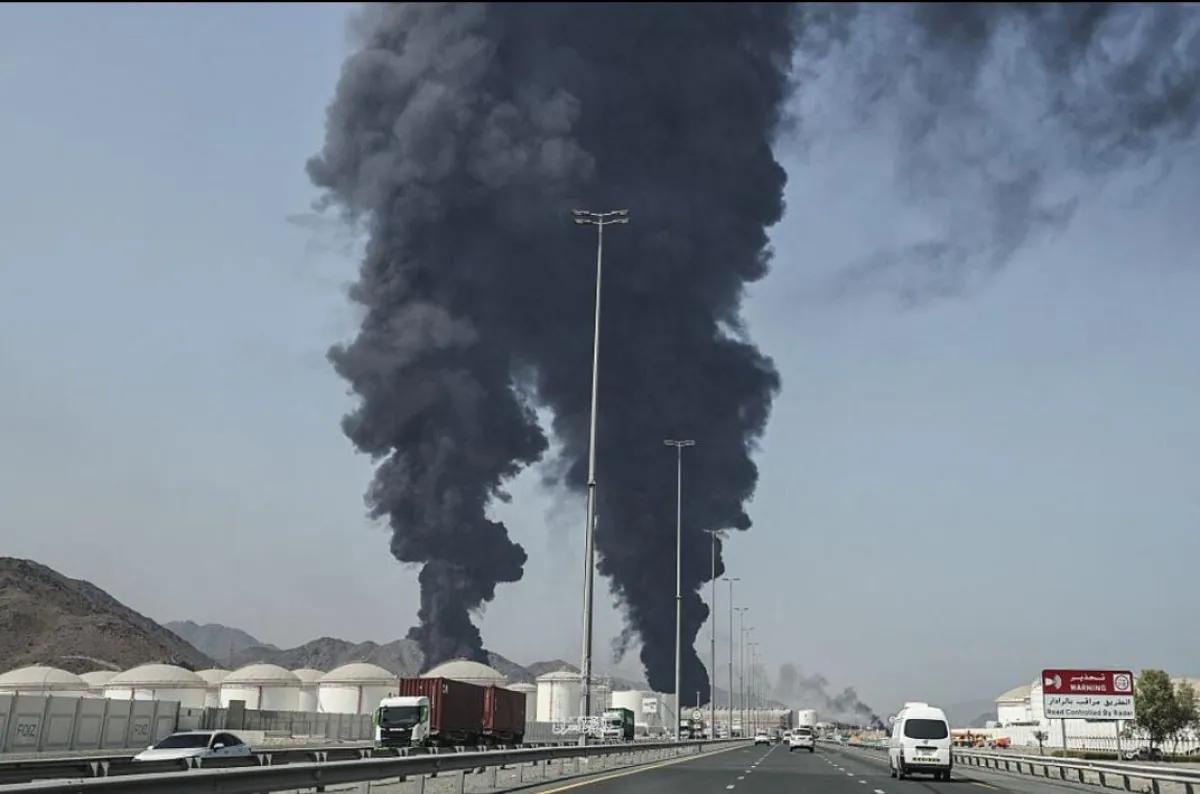
Iran Escalates With Missiles on Saudi Arabia's Jubail, Energy Hub Targeted
21 sources compared

Houthi Rebels Launch Coordinated Attacks on Israel With Iran and Hezbollah
31 sources compared