Zelensky Calls US Envoys Kushner and Witkoff’s Moscow-Only Visits Disrespectful
Key Takeaways
- Zelensky called US envoys' Moscow visits without Kyiv disrespectful
- Envoys Witkoff and Kushner visited Moscow late last year and again in January, meeting Putin
- US mediation criticized as imbalanced without Kyiv visits; Zelensky calls for Kyiv engagement
Kyiv snub sparks Zelensky jab
President Volodymyr Zelensky said the failure of US envoys to visit Kyiv is “disrespectful,” after Steve Witkoff and Jared Kushner repeatedly went to Moscow without going to Ukraine’s capital.
In a BBC account of Zelensky’s remarks, he said he considered visits by Witkoff and Kushner to Moscow but not Kyiv, calling it “disrespectful” that “It’s disrespectful [for them] to come to Moscow and not Kyiv, it’s just disrespectful,” and adding, “If they don’t want to, we can meet in other countries.”
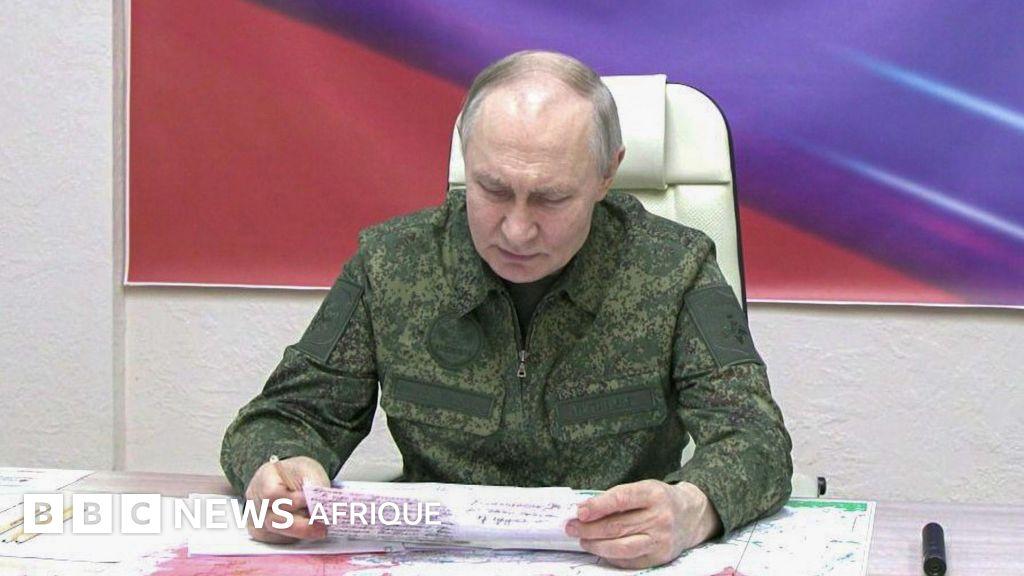
The BBC reported that Witkoff, who has been to Moscow eight times, met Vladimir Putin on many occasions, and that neither he nor Kushner has ever visited Kyiv in an official capacity.
The Kyiv Independent similarly quoted Zelensky saying, “I consider their arrival is needed by them, not us... It’s disrespectful to come to Moscow and not Kyiv, it’s just disrespectful,” and described that the envoys were expected to visit Kyiv in April but Zelensky cast doubt on the format.
KOHA.net also carried Zelensky’s line that “It’s disrespectful for them to go to Moscow and not come to Kiev, just disrespectful,” and said Witkoff has visited Moscow eight times while neither official has visited Kyiv in an official capacity.
TAG24 News Deutschland GmbH likewise reported Zelensky’s rare public attack, quoting him: “It is disrespectful to travel to Moscow and not come to Kyiv,” and noting that a visit to Kyiv expected after Orthodox Easter on April 12 had not taken place.
Across the accounts, the envoys’ Moscow travel is tied to ceasefire talks that gained pace in autumn 2025, with the BBC saying the last trilateral summit between Russia, the US and Ukraine was in mid-February.
Talks, deadlocks, and Donbas
The dispute over visits sits inside a broader ceasefire process that the BBC described as reaching partial agreement on “military issues” while leaving key questions unresolved, especially the status of Ukraine’s eastern Donbas region.
The BBC said ceasefire talks gained pace in autumn 2025, when it emerged that Russian and US officials were working on a plan to end the war in Ukraine that appeared to include several terms unfavourable to Kyiv, and that Ukraine pushed to be involved.
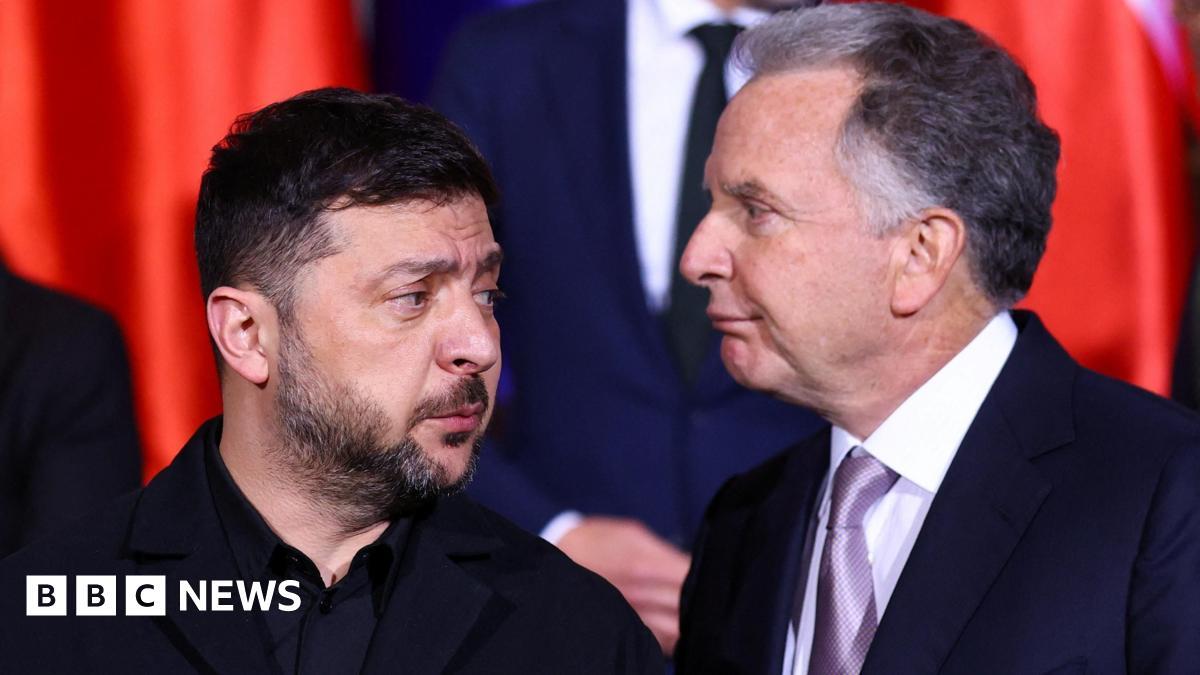
By February, the BBC reported that both Moscow and Kyiv said they had reached an agreement on some “military issues”, including the location of the front line and ceasefire monitoring, but that other issues remained unresolved, including Ukraine’s demand that Russia returns the Ukrainian children it forcibly deported since the start of the war and Moscow’s insistence on a “regime change” in Kyiv.
The BBC said the key matter was Donbas, with Moscow demanding sovereign Ukrainian territory in exchange for an end to the war that Kyiv called unacceptable, leaving the talks at a dead-end.
Kyrylo Budanov, Zelensky’s chief of staff, told the BBC in February that “We are looking for a compromise between two completely polar positions,” and added, “We have not yet found it.”
The BBC also quoted Budanov’s warning that in the end both sides would have to acknowledge one of two things: either they find a solution and end the war, or “we all equally take responsibility for admitting that we didn’t find a solution and continue to kill one another - something we do quite efficiently and professionally.”
The Kyiv Independent added that Zelensky said the quickest way to end Russia’s war would be to cease hostilities along the current line of contact, while Moscow was unwilling to do so, and it quoted Zelensky saying, “There was a mutual understanding that we want a simple format because all that is complicated is difficult to implement.”
It also reported Zelensky’s account of Moscow’s ultimatum, saying that on March 31 Zelensky said Russia was giving Ukraine two months to withdraw from Donbas or face new demands, and that Ukraine refused to withdraw from the territory it controls.
Miami talks and energy pressure
While Zelensky criticized the envoys’ Moscow focus, other reporting described parallel diplomatic efforts in the United States and escalating pressure from the war itself.
“Zelensky criticized US envoys for avoiding Kyiv while engaging with Moscow, calling it “disrespectful”
RaiNews said Zelensky sent negotiators to the United States to meet the envoys of Donald Trump and resolve disagreements on “garanzie di sicurezza statunitensi per Kiev,” describing the team as led by Kyrylo Budanov with Rustem Umerov and David Arakhamia, and it said they were in Florida after arriving in Miami.
RaiNews reported that the team went with the hope of obtaining “maggiore chiarezza” from Jared Kushner, Steve Witkoff, and Dan Driscoll, and it said the talks followed “l’ennesima frattura tra Washington e Kiev” after Trump accused Zelensky of “rallentare” the peace agreement due to nodes on territories and security guarantees.
In the same RaiNews account, Zelensky rejected Trump’s accusations, saying, “l'Ucraina non è mai stata e non sarà mai un ostacolo alla pace,” and it said the Miami talks would be used to “presentare un quadro completo e accurato delle conseguenze degli attacchi russi”.
RaiNews also tied the diplomatic urgency to the winter conditions in Ukraine, saying the country faced “il suo inverno più difficile dall'inizio della guerra nel 2022” because of Russian attacks on energy infrastructure, and it reported that “Centinaia di migliaia di persone sono costrette al buio e al gelo in tutte le regioni del Paese.”
It added that in Kyiv, “le scuole rimarranno chiuse fino a febbraio” due to health problems from power interruptions.
RaiNews quoted Zelensky after a meeting with Oleh Ivashchenko, saying there were “ampie informazioni sui preparativi per ulteriori attacchi russi al nostro settore energetico e alle nostre infrastrutture, comprese le strutture e le reti che servono le nostre centrali nucleari.”
The BBC and KOHA.net both described the war’s ongoing intensity, with the BBC saying that on one night last week Russia launched “more than 700 drones and missiles in multiple waves, killing at least 18 people,” and KOHA.net saying that “In the past week alone, Russia has launched more than 700 drones and missiles in waves of attacks, killing at least 18 people.”
Different frames: markets, diplomats, and Europe
The same Zelensky criticism of “disrespectful” Moscow-focused diplomacy is framed differently across outlets, ranging from mainstream diplomatic reporting to a prediction-market lens and commentary from a former US ambassador.
The BBC and KOHA.net both center Zelensky’s argument that Witkoff and Kushner have never visited Kyiv in an official capacity, with the BBC quoting him that it is “disrespectful” to come to Moscow and not Kyiv and KOHA.net repeating the same core language that it is “unacceptable and disrespectful.”
Kyiv Post, however, adds a second layer by quoting former US ambassador Steven Pifer, who said Washington’s mediation efforts were weakened by “an imbalanced diplomatic approach” and that “Mr. Witkoff has made seven visits to Moscow and none to Kyiv,” arguing, “I think that’s one of the reasons why he has not been successful as a mediator.”
Pifer also criticized what he described as Witkoff’s trust in Russian claims, saying, “I also worry that Mr. Witkoff seems to take things that the Russians tell him at face value,” and he said he was “not sure that Mr. Witkoff fully understands Russia or Ukraine.”
In contrast, Crypto Briefing treats the diplomatic dispute as a factor affecting ceasefire odds in prediction markets, stating that “The May 31 market for a ceasefire sits at The absence of US diplomats in Kyiv is straining Ukrainian patience,” and then shifting to trading metrics, including “The May 31 market trades at $319 in USDC per day” and “$2,734 needed to shift the odds by 5 points.”
It also reports “The June 30 market is thicker: volume at $3,672 per day, requiring $19,968 to move 5 points,” and frames the dispute as potentially delaying resolution while urging readers to “Get prediction market intelligence as a structured API feed.”
Meanwhile, Il Sole 24 ORE and The Guardian place the story in a broader European and security context, with Il Sole 24 ORE reporting that Zelensky said he received “PAC-3 missiles for the Patriot system” from President Trump at Davos and that the Abu Dhabi talks would resume on Saturday, as Tass said.
Taken together, the outlets show the same dispute—Moscow visits without Kyiv—being treated as a diplomatic legitimacy issue in mainstream reporting, a mediation failure in Kyiv Post’s Pifer quotes, and a variable in market-based ceasefire probabilities in Crypto Briefing.
Patriot promises and what comes next
The diplomatic friction over visits is occurring alongside reported security and negotiation developments, including promises tied to US air defense and the continuation of trilateral talks.
“Ukrainian President Volodymyr Zelensky said that only the United States can persuade Russia to end the war in Ukraine, while envoys from Kyiv and Moscow have traveled to Miami for further talks”
Il Sole 24 ORE reported that at the World Economic Forum in Davos, “the presidents of the United States and Ukraine agreed to supply ammunition for the Patriot air defense system,” and it quoted Zelensky saying, “I spoke with President Trump and I received—I won’t say how many—PAC-3 missiles for the Patriot system.”
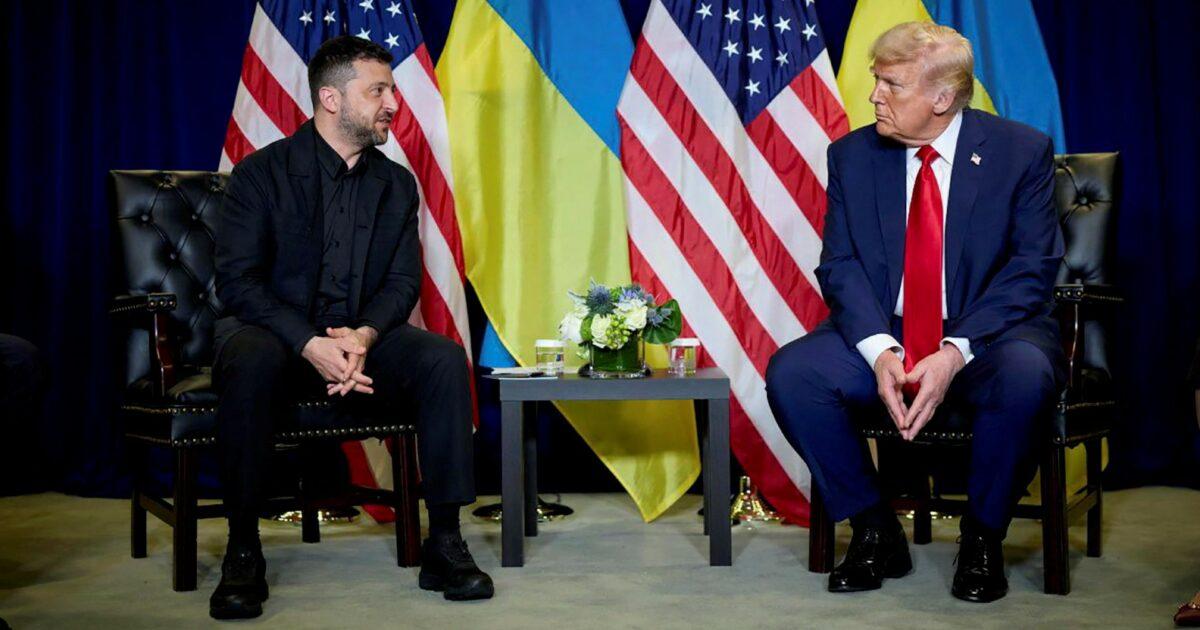
The same Il Sole 24 ORE account said the Abu Dhabi talks would resume on Saturday, citing Tass, and it described the focus as achieving “a dignified and lasting peace,” quoting Ukrainian chief negotiator Rustem Umerov in a post on X after the meeting concluded.
It also said that leaks about an $800 billion reconstruction plan were part of the wider context, describing a document titled “Roadmap for Ukraine’s Prosperity: A Vision for Ukraine 2040” and stating that over the next 10 years the EU, the United States, and international financial institutions have committed to spending $500 billion of public and private capital.
The article further reported that Politico said the Commission intended to earmark another €100 billion for Kyiv through budget support and investment guarantees, as part of the EU’s next seven-year budget starting in 2028, and it said it was expected that this funding would unlock €207 billion in investments for Ukraine.
In parallel, RaiNews described Zelensky’s insistence that the US side understand the impact of Russian attacks on the diplomatic process, quoting Zelensky saying, “discredito al processo diplomatico: la gente perde fiducia nella diplomazia e gli attacchi russi minano costantemente anche le limitate opportunità di dialogo che esistevano in precedenza.”
RaiNews also said Zelensky told the American side that “La parte americana deve comprenderlo,” and it framed the Miami meetings as a way to address that.
The BBC, meanwhile, described the broader stakes of the ceasefire negotiations by tying unresolved issues to the status of Donbas and to Moscow’s insistence on sovereign territory swaps and “regime change,” while Budanov said the parties either end the war or “continue to kill one another - something we do quite efficiently and professionally.”
Even outside the mainstream diplomatic narrative, TAG24 News Deutschland GmbH reported Zelensky rejecting a Russian demand for Ukraine to withdraw from eastern regions of Luhansk and Donetsk, saying it “would undoubtedly be a strategic defeat for us,” and it said Zelensky insisted the fastest way to end the war would be through a ceasefire along the current front line.
More on Ukraine War

Olaf Scholz Condemns Donald Trump’s Remarks Calling Volodymyr Zelenskyy a Dictator
12 sources compared
Erdogan Says Turkiye Is Working to Revive Russia-Ukraine Talks With Leaders
11 sources compared
Kyiv Patrol Police Chief Yevhen Zhukov Resigns After Officers Fled Holosiivskyi Shooting
11 sources compared

Dmitry Medvedev Threatens To Strike Elsight Drone Facilities Across Europe, Including Prague And Riga
11 sources compared