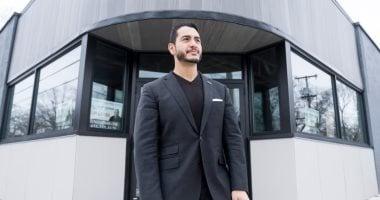
Abdul El-Sayed’s Michigan Senate Bid Splits Democrats as Republicans Pour $45 Million
Key Takeaways
- Egyptian-born El-Sayed gains Bernie Sanders' backing; appeals to Arab American voters.
- CNN analysis links Democratic dip in Israel support to El-Sayed's rising profile.
- Michigan race seen as must-win for Democrats amid internal divisions.
Michigan primary turns messy
A must-win Michigan Senate race has turned messy for Democrats as Abdul El-Sayed, a 41-year-old son of Egyptian immigrants, seeks to dispel the notion that he is unelectable while Democrats weigh whether to back a progressive challenger or a more establishment-aligned candidate.
“Sitting in a coffee shop in his hometown of Ann Arbor, Abdul El-Sayed is ready to dispel the notion that he’s unelectable”
Sitting in a coffee shop in his hometown of Ann Arbor, El-Sayed told CNN, “I think there is this notion that electability is about being the least offensive,” adding, “If that were true, why would Donald Trump have won the presidency twice?”

The stakes are tied to control of the Senate, with CNN saying Democrats need to net four seats to flip the chamber and that losing Michigan would make the task “almost impossible.”
CNN also reports that a leading Republican outside group announced plans to pour $45 million into the state to boost former Rep. Mike Rogers, the likely GOP nominee, and that Republicans are hoping the Democratic nominee emerging from the August 4 primary is “battered and cash-strapped.”
In the Democratic contest, CNN describes Rep. Haley Stevens, a 42-year-old who represents a district in the Detroit suburbs, as a favorite among many in the party establishment, while the 39-year-old Mallory McMorrow tries to brand herself as able to woo both traditional Democrats and progressives.
El-Sayed, described by CNN as a former public health official who wrote a book on Medicare for All, is pushing to the left on issues including immigration enforcement and health care.
The fight, CNN says, has exposed splits among Michigan Democrats over immigration enforcement, health care, support for Israel, and the state of their party’s leadership.
Israel, ICE, and party splits
The contest is being shaped by how Democrats in Michigan talk about Israel and immigration enforcement, with CNN describing El-Sayed calling to abolish US Immigration and Customs Enforcement while Stevens and McMorrow want changes to ICE’s practices instead.
CNN adds that El-Sayed has sworn off any corporate PAC money while Stevens continues to accept PAC funding, despite her calls to overturn the Supreme Court’s Citizens United ruling, and that McMorrow now bans corporate donations to her campaign after previously accepting them when running for state Senate.
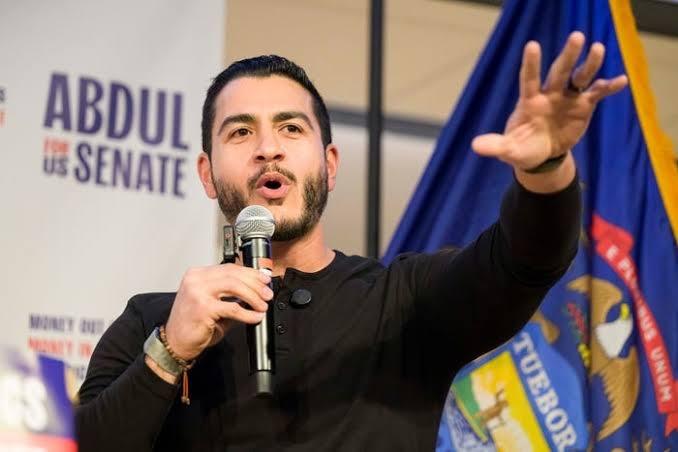
In CNN’s account of the internal fight, McMorrow says, “We can’t be Republican-light,” while El-Sayed attacks McMorrow for “a flip” in positions and argues that “it’s not just your positions, it’s about whether or not you truly and deeply hold on to them.”
CNN also frames the ideological conflict through Sen. John Fetterman, with El-Sayed saying, “I think so many of us are frustrated by the likes of John Fetterman, a guy who campaigned saying that he was going to take on the swamp, only to become the ogre who lives in the swamp.”
Beyond CNN’s focus on ICE and PACs, the West Asian wires report a “historic collapse in support for Israel within the Democratic Party,” describing a shift toward negativity toward Israeli policies and citing a “net positive view of Israel” falling to around -54 points.
The same West Asian reporting says the usual intra-Democratic Party divide over supporting Israel has “nearly dissolved,” replaced by a unified stance characterized by negativity toward Israeli policies, and it links that shift to the rise of the Arab-origin candidate Abd al-Sayed.
Another West Asian article says Abd al-Sayed is betting on Arab American votes in Michigan and has the support of Senator Bernie Sanders, while also describing his progressive proposals such as universal health care and abolishing the U.S. Immigration and Customs Enforcement.
Candidates, quotes, and contrasts
Voices from the campaign trail show sharp contrasts between the candidates’ approaches, with CNN quoting multiple Democrats as they argue over what Michigan voters should prioritize.
“The vacant seat in Michigan has begun to serve as an insurance policy for the Republican strategy in the 2026 elections, at a time when Democrats are struggling to tilt the balance of power in the U”
Jeff Albright, an undecided Democratic voter in the Detroit suburb of Canton, told CNN that the most important issue is “Anybody committed to shutting down Trump and the MAGA movement,” adding, “That’s No. 1.”
CNN reports that El-Sayed attacked McMorrow for “a flip” in positions and said “It’s just the same lack of courage that Democrats deploy to argue as to why they should be taking money from corporations, or why they should be hedging their bets on clear, obvious policies like abolishing ICE or guaranteeing health care through Medicare for All.”
McMorrow responded by saying, “Rhetoric is nice, but results are better,” and she added, “Just doing rounds and talking about issues and having rhetoric without knowing how to actually implement those things is not going to shake it up at all.”
In the West Asian reporting, Abdullah Al-Sayed is described as an Egyptian-born doctor seeking to become America’s first Muslim senator, and it says he is entering the Democratic primary for the U.S. Senate in Michigan.
That same article says he is betting on Arab American votes in Michigan and has the support of Senator Bernie Sanders, while describing Haley Stevens as a 41-year-old moderate who enjoys the backing of Democratic Party leaders and presents herself as a defender of industry.
Another West Asian wire says Abd al-Sayed employs “a sharp rhetoric that attacks the AIPAC committee,” while it says Haley Stevens rejects that direction and clings to the traditional alliance and Mallory McMorrow seeks to craft a message focusing on “human outcomes” without clashing with pro-Israel institutions.
Different frames of the same race
The same Michigan contest is framed very differently across the sources, with CNN focusing on internal Democratic splits and the mechanics of Senate control while West Asian reporting emphasizes Israel-related realignment and the candidate’s identity.
CNN’s analysis centers on how a progressive candidate could win a primary and lose in November, with El-Sayed described as the kind of candidate Democrats in Washington fear, and with the Michigan open Senate seat described as a GOP hedge against a potential takeover for Democrats.

CNN also highlights the August 4 primary and the idea that Republicans want the Democratic nominee to emerge “battered and cash-strapped,” while it ties the $45 million infusion to former Rep. Mike Rogers.
By contrast, the West Asian analytical report says CNN revealed a “radical, unprecedented shift” in Democratic voters’ attitudes toward Israel, describing the rise of the Arab-origin candidate Abd al-Sayed as embodying that shift and claiming the “broad negative consensus has become the dominant feature across the party.”
In that framing, the report says the net positive view of Israel has fallen to around -54 points and that the decline affects both young people and seniors, with convergence between liberal and moderate wings.
Another West Asian report similarly says CNN revealed a “Sharp decline in Democrats' support for Israel as Abdul El-Sayed rises,” again citing the “net positive view” falling to around 54 points in the negative region and describing a convergence between liberal and moderate wings.
Meanwhile, the West Asian reporting about the candidate’s biography and campaign message emphasizes that if he wins he would become the first Muslim senator in the United States and includes a Ramadan night prayer quote: “There is no place better for Muslims in the world than the United States of America.”
What happens next for Democrats
The sources portray immediate consequences flowing from the August 4 primary, with CNN saying losing Michigan would make Democrats’ task “almost impossible” and that Republicans are preparing to exploit the outcome by spending $45 million to boost Mike Rogers.
“Abdullah Al-Sayed, an American of Egyptian origin, is seeking to win the votes of Arab Americans in Michigan to become a member of the United States Senate”
CNN also says Democrats need to net four seats to flip the chamber, and it frames the Michigan seat as emerging as a GOP hedge against a potential takeover for Democrats.
In the West Asian reporting, the vacant seat in Michigan is described as serving as an “insurance policy for the Republican strategy in the 2026 elections,” and it repeats that observers say a loss in Michigan in November would spell Democrats’ dreams of controlling the chamber.
That same source says Republican lobbying groups plan to pour in a massive $45 million to back former Representative Mike Rogers and states that primary elections to select party nominees are scheduled for August 4, 2026, with the general election to be held in November of the same year.
It also describes the question facing Michigan voters as whether they will choose a candidate who embodies the party’s “pure ideology” or one who is “electable” in a swing state that does not subscribe to electoral certainties.
CNN adds that Republicans are hoping the eventual Democratic nominee is “battered and cash-strapped,” giving Rogers a leg up, and it quotes Mallory McMorrow warning that if Republicans succeed in trying to buy the seat there is “no path at all for Democrats to take control of the US Senate.”
The West Asian reporting further ties the stakes to the Democratic Party’s identity after losing all swing states in the 2024 presidential election, and it says the winner of the August primary could determine the Democratic Party’s course.
More on USA
Donald Trump Sends U.S. Delegation to Pakistan for Iran Talks, Threatens Power Plants and Bridges
47 sources compared

Shooting Near University of Iowa Campus Leaves Five Injured, Including Three Students
22 sources compared

United Flight 2092 Diverted to Pittsburgh After Crew Reported Possible Security Issue
12 sources compared

Pope Leo XIV Defuses Tensions With Donald Trump During Africa Tour
20 sources compared