
Abelardo De La Espriella Threatens Colombia's Climate Policies After Narrow Presidential Win
Key Takeaways
- De la Espriella won a narrow runoff, signaling a rightward shift in Colombia.
- Presidential platform includes expanding fossil fuels, including fracking, threatening the energy transition.
- Observers warn it jeopardizes Colombia's climate leadership and the Santa Marta summit.
De la Espriella wins runoff
Colombia elected a new president, with far-right lawyer Abelardo de la Espriella winning the presidential runoff by a narrow margin with 49.66% of the vote against left-wing ruling party candidate Ivan Cepeda’s 48.7%.
“Share this page Colombia: a tool to facilitate dialogue on the energy transition - Evaluation Story Published on In a country heavily dependent on hydrocarbons and committed to an ambitious energy transition, how can public decision-makers, regulators, financial sector actors, and civil society collectively experiment with the trade-offs of a just transition”
DW reported the margin of about 250,000 votes was the narrowest in the history of Colombian presidential elections, and said de la Espriella, a 47-year-old lawyer and political newcomer, will succeed Gustavo Petro.
Kristin Wesemann, head of the German Konrad Adenauer Foundation’s office in Bogota, told DW, "Colombia has voted, and it could hardly have been closer," as she described a country split almost evenly.
Sabine Kurtenbach, interim president of the German Institute for Global and Area Studies (GIGA), said to DW, "Colombia remains completely divided," and added that the real challenge begins now in governing a deeply divided country.
Security shift and climate stakes
DW said de la Espriella’s victory signals a shift to the right and a departure from key initiatives of the previous administration, particularly in peace, security, energy and social policy, with the biggest change framed as the end of Petro’s "Total Peace" approach.
The article said de la Espriella announced an end to negotiations with guerrilla groups and criminal organizations, aiming instead for military pressure including airstrikes against armed groups, the resumption of aerial spraying against coca cultivation, and closer security cooperation with the US.

Elizabeth Dickinson, deputy director for Latin America at the International Crisis Group, warned against further exacerbating social divisions, telling DW, "This is not the time for revenge or extreme politics, but for a path toward reconciliation."
Truthout added that a de la Espriella presidency would mark a sharp reversal for Colombia’s fossil fuel phaseout, and quoted climate policy advocate Gina Cortés Valderrama saying, "What is at stake is not only domestic policy".
Santa Marta summit and energy transition
While the election outcome raised concerns about Colombia’s energy direction, multiple outlets described Colombia’s parallel push to move away from fossil fuels through the Santa Marta summit co-organized with the Netherlands.
“Colombia has elected a new president, and the result has the potential to transform the country for the long term”
France 24 said energy ministers from about fifty states gathered in Santa Marta on April 28 and April 29 to examine how to "definitively move away from fossil fuels," and said the summit was meant to break a deadlock in UN COP negotiations operating on consensus.
Ouest-France reported that the conference is designed as a space where countries and stakeholders recognize the need to implement an energy transition by abandoning fossil fuels "in a just, orderly and equitable manner," and said the discussions should lead to a solutions-based report and a scientific panel on the energy transition.
In parallel, Spain and Colombia renewed their Memorandum of Understanding on the just energy transition and decarbonization of the energy sector, with the MdE extension signed by Sara Aagesen and Edwin Palma within the framework of the First International Conference for the Transition Beyond Fossil Fuels in Santa Marta.
More on South America

Gustavo Petro Alleges Israel And United States Interfered In Colombia Election
10 sources compared

Abelardo De La Espriella Wins Colombia Runoff With 49,66% Against Iván Cepeda
17 sources compared
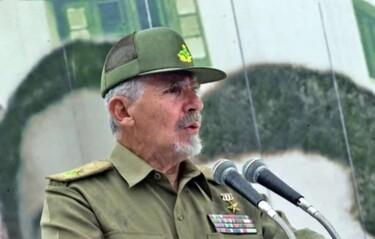
Miguel Díaz-Canel Confirms Ramiro Valdés Menéndez Death at 94, Cuban Revolution Commander
11 sources compared
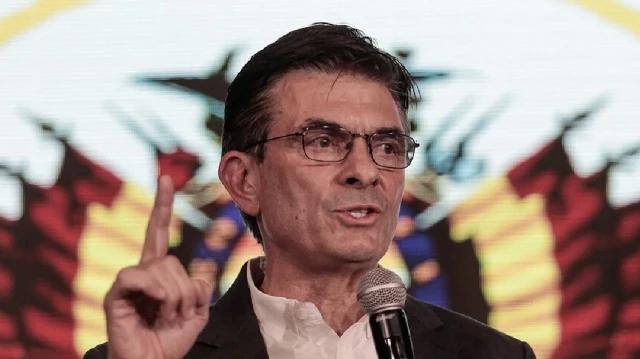
Rodrigo Paz Declares State Of Emergency After Protests Kill 14 In Bolivia
12 sources compared