Syria18 April, 20266 min read
Ahmed al-Sharaa Meets SDF Leaders Mazloum Abdi and Ilham Ahmed To Complete Integration
This article is an automated aggregation of coverage from news outlets. Our editorials offer in-depth analysis curated by the NewsCord team.
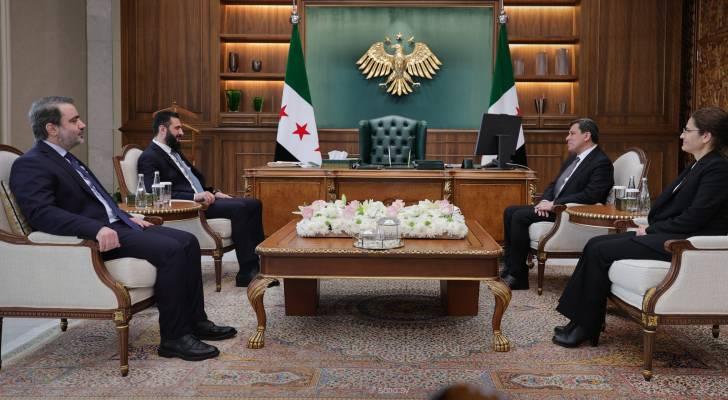
Damascus hosted al-Sharaa meeting with Mazloum Abdi and Ilham Ahmed on April 16. Discussed completing the integration of the SDF into Syrian state institutions.
Damascus meeting on integration
Syrian President Ahmed al-Sharaa met in Damascus with leaders of the Syrian Democratic Forces (SDF) to discuss completing the process of integrating the organization into state institutions, with the Syrian Arab News Agency (SANA) reporting that al-Sharaa received Mazloum Abdi, the commander of the SDF, and Ilham Ahmed, a senior leader of the organization. Al-Jazeera Net said the meeting took place “today, Thursday,” and that it was held “in Damascus” with Foreign Minister and Expatriates Asaad al-Shaibani and presidential envoy Ziad al-Aish present. Roya News similarly said Sharaa received on Thursday “both Commander of Syrian Democratic Forces (SDF), Mazloum Abdi, and President of the Executive Committee of Syrian Democratic Council, Ilham Ahmed,” and that the meeting was held “in the capital Damascus.”
The Jerusalem Post also described the same Damascus meeting, citing SANA’s account that “President Ahmad al-Sharaa received Mazloum Abdi and Ilham Ahmad on Thursday, in the presence of Foreign Minister Asaad Hassan al-Shaibani and Presidential Envoy Ziad al-Ayesh.” Caliber.Az reported that the meeting on April 16 focused on implementing a previously agreed plan to integrate the group into state institutions, naming Foreign Minister Asaad Hassan al-Shaibani and presidential envoy Ziad al-Ayesh as attendees. Across the accounts, the stated purpose of the talks was to advance “completing the integration process” into official state structures under the January 29 agreement, with multiple outlets tying the discussion to the same Damascus setting and the same named SDF leaders.

January 29 deal and detainees
The meeting in Damascus was repeatedly linked to the January 29 agreement and the subsequent steps described by Syrian authorities for ending the division in the country through integration and detainee transfers. Al-Jazeera Net said the talks came “to discuss implementing the agreement of January 29 and completing the 'process of integration into state institutions', without providing further details,” and it added that “On January 30, the government announced reaching a comprehensive agreement with the SDF aimed at ending the division in the country and establishing a new phase of integration.” It further described a “dual track” for returning the detainee file in the east of the country to state institutions, “through a dual track that includes releasing detainees and gradually handing over the prisons.”
The same outlet quoted spokesman for the presidential team, Ahmed Al-Halali, saying that “1500 detainees have been released so far in four batches from SDF prisons,” and it said detention centers in Hasakah and other areas were “on their way to coming under the supervision of the Ministries of Justice and Interior.” Roya News framed the Damascus talks as focusing on “setting timetables to merge civil administrations and military forces under the central government,” and it said the discussions covered “the executive paths to complete the process of integrating the forces and administrative institutions in north and east Syria.” The Jerusalem Post also tied the January 29 agreement to phased integration, stating that “SANA says the new meeting in Damascus on April 16 “focused on completing integration into state institutions.””

Sovereignty, displaced persons, and Aleppo security
Alongside integration talks, the sources described additional agendas that were presented as part of consolidating state authority and addressing humanitarian and security issues. Al-Jazeera Net said the Syrian presidency announced the start of implementing a comprehensive agreement with the SDF that included returning the detainee file in the east of the country to state institutions, and it described the detainee and prison handover as aimed at ending detention outside the formal legal framework. In a separate context, the same outlet reported that Syrian authorities announced the arrest of a cell affiliated with the Islamic State organization in Aleppo province, describing it as “involved in assassinations” and “direct targeting of security and military personnel.”
It said the arrest came during a joint security operation between the Interior Ministry and the General Intelligence Service east of Aleppo, and it added that “weapons and ammunition were seized that were in the possession of the cell members.” Meanwhile, صووت الإمارات reported that Ahmed al-Hilali said “the issue of the return of displaced persons and refugees topped the agenda, being treated as a “top humanitarian priority.”” That outlet added that participants discussed “ways to facilitate the return of residents to their areas and provide them with essential services,” and it said the talks included Aleppo Governor Azzam al-Gharib and internal security head Muhammad Abdul Ghani.
International and regional positions diverge
While the Damascus meeting and the January 29 framework were presented by Syrian state-linked reporting as a path to “completing the integration process,” other outlets emphasized different aspects of what integration should mean and who should control security. Annahar framed the U.S. position as supporting integration into the Syrian state and described an initial agreement that granted “a four-day period for consultation and the development of an executive mechanism to integrate the regions and institutions into the Syrian state.” It said the communiqué stipulated that “Syrian forces would not enter the centers of Hasakah and Qamishli at this stage,” placing them “only on the outskirts,” and it added that “no military forces will enter Kurdish villages.”
Annahar also reported that the U.S. envoy Tom Barack posted that “the greatest opportunity for the Kurds today lies in full integration within the Syrian state,” and it said Barack described American presence as “solely tied to the fight against Daesh.” In contrast, TRT Français and Türkiye Today portrayed Turkish concerns about delaying tactics and insisted that the SDF/YPG integrate into the Syrian army, with TRT Français quoting Ankara’s stance that the group’s attempts to “buy time are in vain.” The EU position, as reported by سانا, also differed in emphasis: it said Kaja Kallas welcomed the ceasefire and “full integration” while stressing “an immediate halt to all military activities” and “protection of civilians.”

What integration could mean next
The sources also lay out what the integration process is expected to cover, and they describe specific mechanisms that would determine whether the SDF’s military and administrative footprint is absorbed into state structures. Rudaw’s report said Sharaa received Mazloum Abdi and Elham Ahmad in Damascus to discuss “the completion of the integration process of Kurdish-led forces and institutions under the Syrian state,” and it cited SANA that “discussions centered on completing the integration process into state institutions.” Rudaw described the January 29 agreement as a “14-point agreement” establishing “a permanent and comprehensive ceasefire” and calling for withdrawal of SDF forces from major urban centers “such as the Kurdish-majority Hasaka and Qamishli cities” to designated military bases.
It said the Damascus government agreed to a “partnership framework” including a governor for Hasaka nominated by the SDF and that “the police chief is appointed by Damascus.” The same Rudaw account described phased integration into the Syrian army, including “several SDF brigades” and a separate “Kobani Brigade,” and it said Asayish are to be integrated into the interior ministry. Finally, Rudaw said Damascus assumed full legal and security responsibility for ISIS prisons and camps previously secured by Kurdish security forces, while the SDF provides logistical support during the transition of custody.