
AI Speeds Up Quantum Threat to Crypto, Security Experts Warn
Key Takeaways
- AI accelerates quantum computing development, threatening today’s cryptography.
- Crypto industry must adopt post-quantum cryptography to counter emerging threat.
- Security landscape shifts into ongoing arms race as attackers exploit quantum advances.
AI accelerates quantum risk
Researchers and builders say artificial intelligence is speeding up the quantum threat to crypto by compressing timelines for quantum computing and reshaping how digital security works.
“AI is speeding up the quantum threat to crypto, security experts warn Researchers and builders believe that artificial intelligence may be accelerating the quantum timeline and forcing a broader rethink of how digital security works”
Alex Pruden, CEO of Project Eleven, said, “Between quantum and AI, we’re going to go into a world where security, and this is more broadly than just crypto, you simply cannot count on the way you’ve always done things,” as he warned that the security landscape “is going to be different.”

Illia Polosukhin, co-founder of NEAR Protocol and a former Google AI researcher, said, “AI is becoming more and more of an accelerator,” adding that “The rate of research is going to accelerate from here, and we have already seen progress that people didn’t expect would come this early.”
CoinDesk and Bitget both describe AI being used to optimize quantum error correction, which they frame as a key engineering bottleneck, while also warning that AI can strengthen hacking capabilities by identifying software vulnerabilities and cryptographic implementation flaws.
The sources also highlight the “Harvest Now, Decrypt Later” strategy, with Polosukhin saying, “If I know quantum computers are coming in a couple of years, I will start trying to capture all possible data that’s going around,” as governments and sophisticated actors collect encrypted traffic today.
Arms race and migration
CoinDesk frames AI as both a weapon and a defensive tool, saying AI is “simultaneously becoming a weapon for attackers, a defensive tool for developers, and an accelerator of quantum computing research.”
Pruden warned that AI could “accelerate… even more hacks,” saying, “You have these AI models that are able to find either implementation bugs in the underlying cryptography or increasingly, I think, break the cryptography itself.”

At the same time, the same source says developers are deploying AI defensively for code auditing, testing and formal verification, and Pruden said, “AI can help with formal verification of post-quantum systems,” adding that it “That theoretically makes them more secure.”
The sources describe a shift away from treating security as static infrastructure, with Pruden saying, “Nothing is going to be as static as it’s been in the future,” and arguing that either “a quantum computer comes online to break some fundamental assumption, or AI gets smart enough to break that assumption too.”
CoinDesk also says multiple ecosystems, including Ethereum, Zcash, Solana, Ripple and NEAR, are researching or implementing post-quantum migration strategies, and it notes NEAR’s plan to integrate post-quantum cryptography into its account infrastructure to allow users to rotate cryptographic schemes without migrating assets to entirely new wallets.
Deadlines, standards, and stakes
Beyond crypto, the sources connect the quantum timeline to broader security and compliance, with Portail de l'IE describing quantum computing as threatening to render current encryption obsolete and upending “global geopolitical and economic balances.”
“The crypto industry has spent years debating whether quantum computing poses an existential threat to blockchains like Bitcoin and Ethereum”
Thierry Breton, then European Commissioner for the Internal Market, is quoted warning, “Technological standards are of strategic importance,” and the article ties Europe’s stakes to its ability to set standards and protect “the values of the European Union.”
Cryptoast reports that Google has set a deadline for post-quantum cryptography resistance by 2029, quoting Google’s blog framing the “boundaries of quantum computing” as “closer than they appear.”
Cryptoast also says Ethereum has made quantum risk a “priority” for 2026 and points to a Bitcoin-side defense including “BIP-360,” while Silicon reports that Palo Alto Networks’ Anand Oswal said AI and quantum computing will enable breaking encryption “at an unprecedented speed.”
Silicon adds that the U.S. government has set 2035 as the deadline for federal agencies to complete their migration to PQC standards, and it quotes NIST-related guidance through Dustin Moody’s explanation of “Harvest Now, Decrypt Later” as adversaries collecting encrypted data now for future decryption.
More on Technology and Science

UK Heatwave Declared in Eight Southeast England Locations as Temperatures Hit 32.1C
13 sources compared

Heavy Rain Kills Three, Leaves 17 Unaccounted For in Chongqing’s Yongchuan District
11 sources compared

Gavin Newsom Declares State Of Emergency After GKN Aerospace Tank Overheats In Garden Grove
17 sources compared
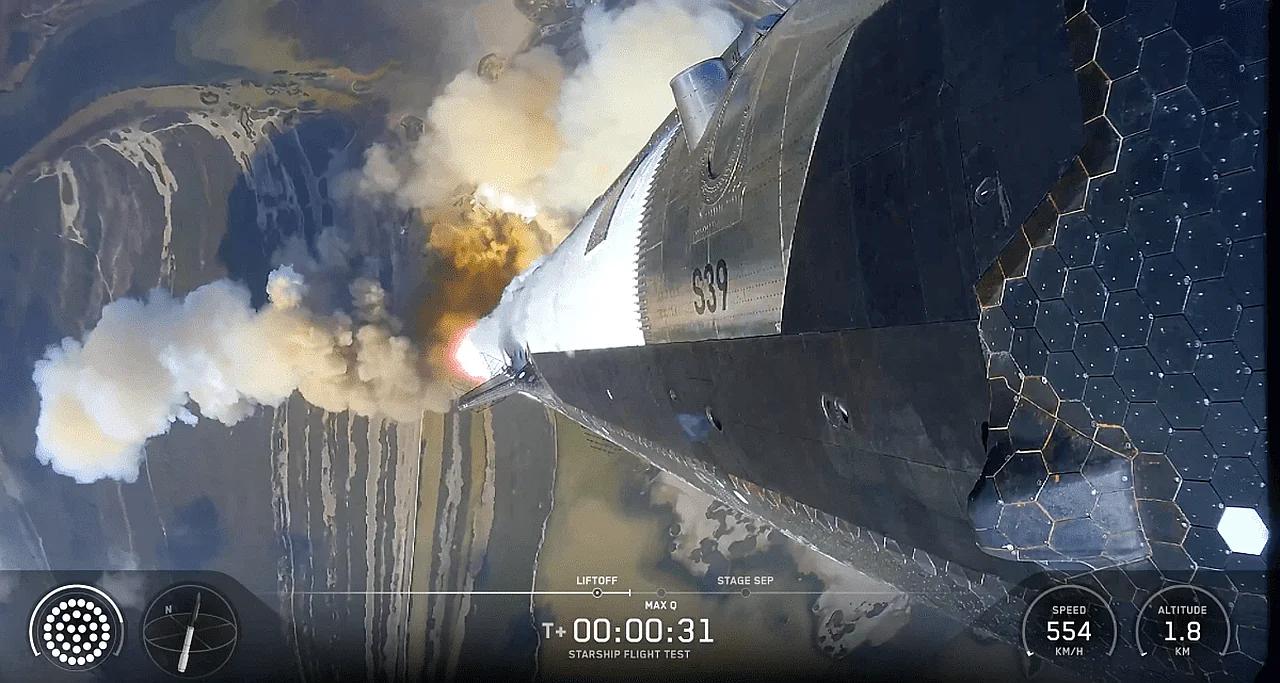
SpaceX Launches Starship V3 From Starbase, Texas, Loses Super Heavy Booster In Gulf Of Mexico
15 sources compared