
Alexander Heifler Planned Molotov Cocktail Attack On Nerdeen Kiswani, Intended To Flee To Israel; Arrested
Key Takeaways
- NYPD, with FBI involvement, disrupted plot to firebomb Kiswani's home.
- Alexander Heifler arrested in Hoboken on unlawful possession and making destructive devices.
- Molotov cocktails assembled for attack on Kiswani.
Imminent plot exposed, arrest, and weapon seizure
The single most important new development across the sources is the explicit, public unveiling of an imminent assassination plot targeting Nerdeen Kiswani, led to the arrest of Alexander Heifler in Hoboken, and the disclosure that investigators recovered eight Molotov cocktails in his residence, with Heifler intending to flee to Israel after the attack.
“NYPD, FBI disrupt alleged plot to kill a Palestinian activist Nerdeen Kiswani said she was informed by police of the plot”
This is paired with confirmation that Heifler had ties to a far-right pro-Israel offshoot of the Jewish Defense League (the JDL 613 Brotherhood) and that the operation relied on an undercover NYPD officer who infiltrated online group chats before moving to in-person surveillance.
Kiswani herself described the revelation as a direct, threat-to-life disruption and thanked law enforcement for thwarting a plan that was described as imminent.
The immediacy of the threat—“a plot against my life that was about to take place”—and the arrest timeline (online planning, surveillance, in-person meeting, then a late-night arrest) marks a sharper, more concrete development than prior reporting about threats or harassment.
This combination of a concrete arrest, concrete weapons recovered, and a concrete escape plan underscores the scale and seriousness of the case.
Detailed attack plan and timeline
Online discussions in February featured Heifler asking about space to practice throwing Molotov cocktails and training for “self-defense.”
An undercover NYPD detective infiltrated Heifler’s group chat, then met with him in person to discuss vandalizing Kiswani’s home and the broader attack plan.

The plan reportedly included throwing Molotov cocktails at Kiswani’s residence and at cars parked nearby, with Heifler claiming Kiswani’s address and outlining an escape route after the attack.
The number of devices is variably reported—some outlets mention approximately 12 Molotov cocktails, while others report eight that were recovered in a later search.
A later detail, echoed by the undercover operation, was an effort to avoid identification and scrutiny by limiting phone use and IDs during the attack window.
Context of activism and extremism links
Kiswani has faced years of targeting as a Palestinian rights activist, which is foregrounded in how this incident is framed by non-Western sources that highlight the broader context of harassment against Palestinian advocates.
“United States law enforcement agencies have announced that they foiled a plot against prominent Palestinian activist Nerdeen Kiswani in New York City, detaining a suspect for allegedly planning to throw Molotov cocktails at her home”
The suspect’s claimed affiliation with the JDL 613 Brotherhood—an offshoot described by outlets as connected to the FBI-designated extremist group—adds a dimension of far-right extremism to the attack plan.
Non-Western sources emphasize the broader climate of threats against Palestinian activists, including legal action Kiswani has taken against Betar USA for harassing campaigns, which is presented as part of a wider pattern rather than an isolated incident.
The reporting across Western and non-Western outlets converges on the idea that this is not a random attack but one embedded in a longer history of intimidation and political violence surrounding pro-Palestinian advocacy.
Law-enforcement response and implications
NYPD Commissioner Jessica Tisch characterized the operation as a model of intelligence and counterterrorism work—identifying and tracking the threat online and then in person to disrupt the attack and prevent harm.
AP and other outlets describe the case as a joint law-enforcement success that stopped an imminent threat against a political activist, using an undercover officer to pivot from online chatter to on-site surveillance.
Analyses from non-Western outlets emphasize the broader pattern of monitoring and countering extremism online as a means to protect Palestinian advocates, which some observers argue reflects a reliance on undercover infiltration to surface threats before they materialize.
The report also underscores a broader preemption dynamic in West Asia–related activism—where state security tools are used to intervene in politically sensitive disputes, with activists like Kiswani at the center of the debate about safety and civil rights.
Numbers, ages, and evolving specifics
Several outlets report eight Molotov cocktails were recovered, while others describe a plan involving roughly a dozen devices, reflecting evolving details as the case unfolds.
“Man arrested over plot to firebomb NY pro-Palestinian activist's home A 26-year-old man has been arrested for allegedly planning to carry out a "violent attack" against a New York-based pro-Palestinian activist, authorities say”
The charging documents consistently describe criminal counts tied to the devices; differences in the publicly reported age of Heifler (25 vs 26) appear across outlets.
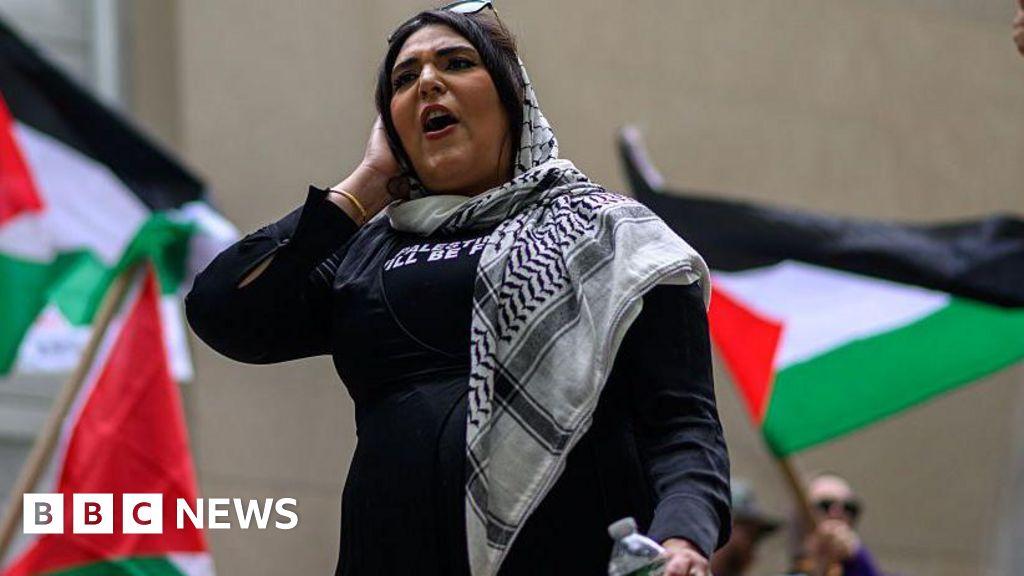
Non-Western sources emphasize the ongoing threat environment for Palestinian activists, framing the eight-devices count within a larger pattern of intimidation and targeted violence.
More on USA

House Republicans Reject Senate DHS Package, Advance Eight-Week Funding Excluding ICE And CBP
10 sources compared
Three-Vehicle Crash Triggers Nine Air-Ambulance Requests, Seven Air Transports To Nashville And Memphis Hospitals
15 sources compared

California Governor Gavin Newsom Bans Appointees, Associates From Betting On Prediction Markets Using Confidential Information
10 sources compared

Judge JP Boulee Doubts Fulton County Can Force Return Of Seized 2020 Ballots
18 sources compared