Syria14 May, 20262 min read
Amnesty Says Israeli Army Bulldozes Civilian Homes In Quneitra As War Crimes
This article is an automated aggregation of coverage from news outlets. Our editorials offer in-depth analysis curated by the NewsCord team.
Amnesty International says Israeli army deliberately destroyed civilian homes in Quneitra since December 2024. Amnesty calls for investigation as war crimes due to lack of military necessity.

Amnesty: war crimes probe
Amnesty International said on Thursday that the Israeli army’s destruction of civilian homes in southern Syria since the fall of longtime ruler Bashar al-Assad should be investigated as "war crimes". Amnesty said the day Assad fell, Israeli forces entered three villages and towns in the UN-demilitarised zone in Quneitra province, "conducting home raids and ordering residents to leave".
Over the following six months, Amnesty said the Israeli military destroyed or damaged at least 23 civilian structures in three villages, and it said it used satellite imagery to verify damage and destruction to 23 structures in the villages. Amnesty’s deputy regional director for the Middle East and North Africa, Kristine Beckerle, said, "Securing Israel's border cannot be used to justify bulldozing and blowing up people's homes and villages on the territory of another country," as the group called for reparations for violations of international humanitarian law.

Damascus talks, Israeli incursions
The New Arab said Israeli operations in south Syria have continued even as new Islamist authorities in Damascus held talks with Israeli officials in recent months as they edge towards a security agreement after decades of hostilities. Gulf News said Amnesty described Israel’s destruction of civilian homes in southern Syria’s Quneitra province since December 2024 as carried out "with no absolute military necessity".
Amnesty International also said Israeli forces entered three villages and towns in the UN-demilitarised zone in Quneitra province on the day Assad fell, and that witnesses described the buildings as "their and their neighbours' homes". In the same Amnesty account, Kristine Beckerle said, "Israel has an obligation to make reparations for these serious violations of international humanitarian law," tying the call for investigation to compensation for victims.
Buffer zone and ongoing pressure
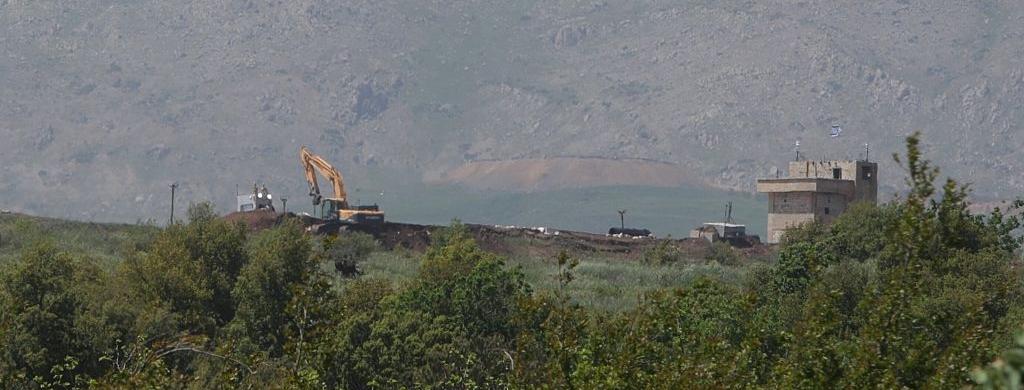
Amnesty International said it identified nine military bases built by Israeli forces since December 2024 in Quneitra and Daraa governorates, and it said some documented demolished structures were close to recently constructed Israeli military bases or to areas where a base was later built. On 17 April 2026, Amnesty said the Israeli Prime Minister said that Israel had established a “security buffer zone” whose boundary was marked by what he called the “yellow line,” and it said the zone included parts of Syria where Amnesty documented civilians’ homes damaged and destroyed.
Amnesty International said the Fourth Geneva Convention’s Article 53 prohibits the destruction of property by an occupying power "except where such destruction is rendered absolutely necessary by military operations," and it said the absolute military necessity standard does not authorize destruction based on general strategic objectives or security measures. In parallel, local reporting in Quneitra said an Israeli occupation patrol penetrated Syrian territory again and set up a temporary military checkpoint to inspect pedestrians and vehicles, with identity checks for all passersby before withdrawing back to its positions in the Syrian Golan.