
Archaeologists Discover Round Temple At Tell El-Farama Built For Nile Water Worship
Key Takeaways
- Circular temple discovered at Tell el-Farama, Pelusium, ancient Nile-linked religious site.
- Water network connected to Nile with channels and basins.
- Age reported between 2,000 and 2,200 years.
A temple tied to Nile water
Archaeologists working at Tell el-Farama, the ruins of ancient Pelusium in northern Sinai, have concluded an excavation that produced the discovery of a rarely-seen round temple built for water worship, according to the Biblical Archaeology Society and an Egyptian archaeological team.
“Discovery in Pelusium reveals circular temple of 2,200 years linked to the Nile, with channels, reservoirs, and signs of sacred rituals with water in Egypt Archaeologists found a 2,200-year-old circular Egyptian temple in Tell el-Farama, ancient Pelusium, in North Sinai”
The structure was built in the second century and remained in use until the sixth century AD, and its main feature was a circular basin that measured approximately sixty-five feet in diameter in one account and about 115 feet (35 meters) in another.
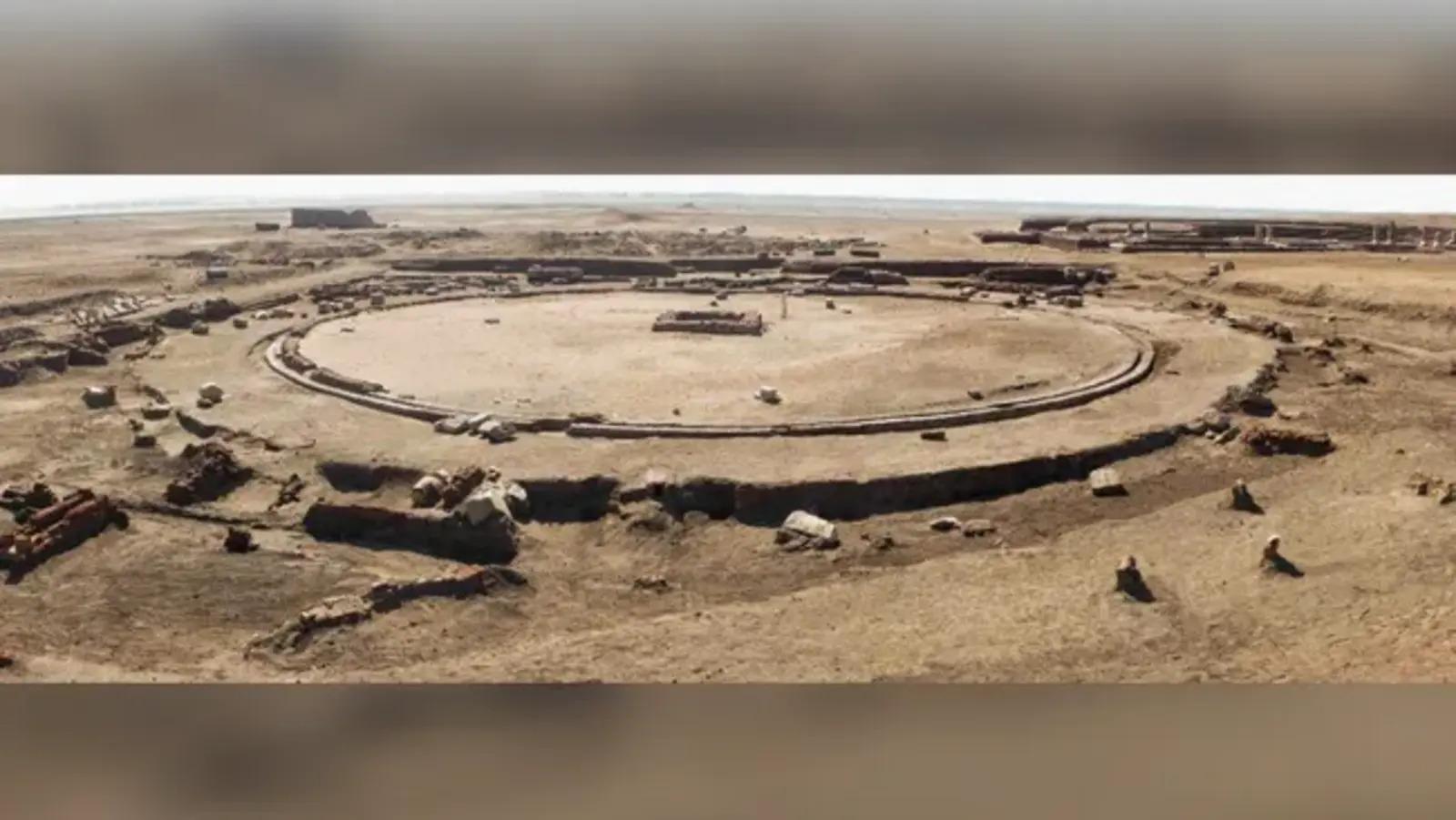
The basin was described as a place where water from the Nile would have been stored for use as a source of water to irrigate land near the temple, and other reporting says archaeologists found water and Nile silt inside the basin.
The Daily Galaxy and Live Science both tie the sanctuary to the Nile Delta, describing the site as on the eastern edge of the Nile Delta near the mouth of the river, and they place Pelusium as a fortress in pharaonic times and later as a customs station under the Roman Empire.
The Times of India says the builders used the Pelusiac branch of the Nile to furnish the basin with living water, and it adds that the builders used fired red brick associated with Roman hydraulic works.
The Daily Galaxy and Live Science also describe a square pedestal in the middle of the basin, likely used to support a statue of the local deity Pelusius/Pelusius, while the Times of India says the structure has a diameter of 35 meters and a square base that served as the foundation for what likely was a large statue of the deity it represents.
How the interpretation shifted
The excavation’s conclusions also reflect a change in how archaeologists initially read the site after partial work in 2019.
The Daily Galaxy says that when archaeologists first uncovered the structure in 2019, only part of it was visible and the red-brick remains were interpreted as a possible civic building, even a senate-like structure.
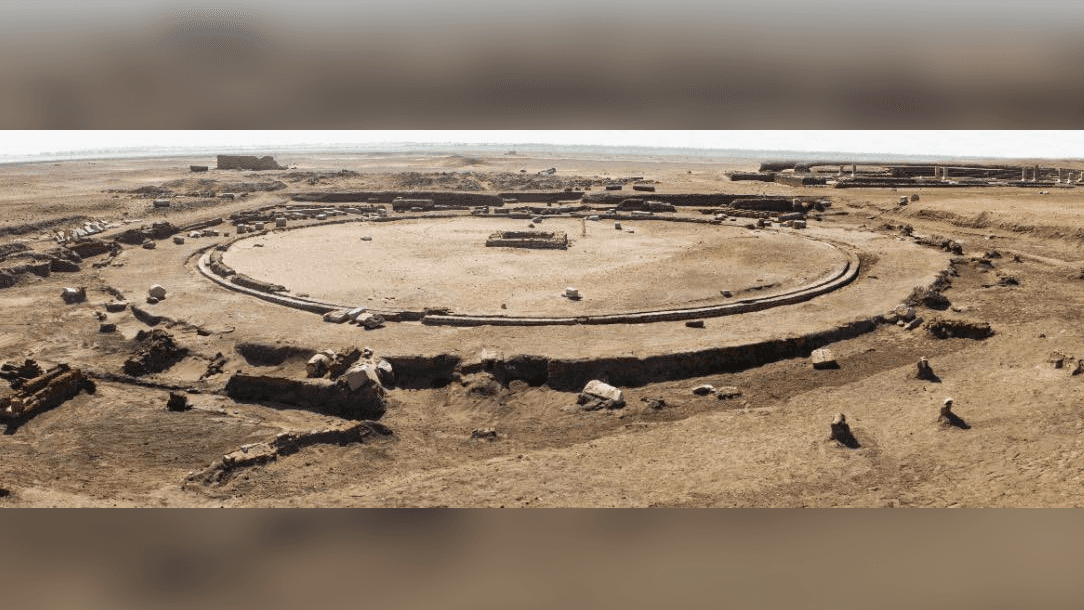
Live Science similarly describes that in 2019 “a partial excavation of about one-quarter of the area revealed a red-brick circular structure,” which archaeologists interpreted as representing the city’s senate house.
The Daily Galaxy and Live Science both say the interpretation shifted after a full excavation exposed the entire layout and the building was completely exposed.
In the Daily Galaxy’s account, the Egyptian Ministry of Tourism and Antiquities relayed in a Facebook post that the complete structure revealed “a circular sanctuary, a rare architectural form in ancient Egypt.”
Live Science quotes the April 9 translated statement from the Egyptian Ministry of Tourism and Antiquities, saying the mission uncovered “the remains of a unique religious building dedicated to the worship of the city’s local god, “Pelousios”.”
The Times of India adds that in 2019 archaeologists discovered circular walls previously thought to be political in function, but “the interpretation of the site has changed drastically as more excavations have been conducted.”
It also says evidence of hydraulic technology associated with the temple’s use helped determine its purpose, and it points to complex drainage systems, kisterns, and multiple entrances as signs of a specialist religious site rather than a political administrative building.
Voices from Egypt’s antiquities
The reporting ties the reinterpretation to named officials and archaeologists within Egypt’s antiquities system, and it also includes a specific academic voice from outside Egypt.
“A 2,200-year-old circular temple discovered in Egypt’s Nile Delta is shedding new light on how ancient societies integrated water into religious practices”
The Daily Galaxy attributes the basin and pedestal description to Professor Mohamed Abdel Badie, identified as “Head of the Egyptian Antiquities Sector at the Supreme Council of Antiquities,” and it places the basin at the center of the temple.
The Daily Galaxy also quotes a ministry statement translated on April 9, stating: “After six years of archaeological excavations at Tell el-Farama in the city of Pelusium in northern Sinai, the Egyptian archaeological mission of the Supreme Council of Antiquities has uncovered the remains of a unique religious building dedicated to the worship of the city’s local god, “Pelousios”.”
Live Science similarly says the April 9 translated statement described the discovery and it names Hisham El-Leithy, acting secretary-general of Egypt’s Supreme Council of Antiquities, as saying the design blended ancient Egyptian traditions with both Greek and Roman styles.
Live Science quotes El-Leithy describing the discovery as “highly significant” because it shows that Pelusium was once a prominent city in an “increasingly cosmopolitan ancient world.”
The Daily Galaxy adds that after “a number of scientific discussions with several archaeology professors, including Jean-Yves Carrez-Maratray, Professor of Classical Archaeology at the Sorbonne University in Paris,” the building was reinterpreted as not a civic council house but “a sacred water installation associated with religious rituals.”
The Daily Galaxy also includes a quoted description of the architecture: “Massive and complex architectural design, featuring a central circular courtyard approximately 35 meters in diameter, surrounded by water channels and reservoirs, with multiple entrances from the eastern, southern, and western sides, while the northern side had been largely destroyed.”
The Times of India, meanwhile, frames the temple’s purpose through the Biblical Archaeology Society and says experts now believe the temple was dedicated to the worship of the local god Pelusius, linking the name Pelusius to the Greek term for “silt” or “clay.”
Different outlets, different emphasis
While all the accounts describe a circular temple at Tell el-Farama connected to Nile water, they emphasize different details and use different figures for the basin’s size and the temple’s age.
The Times of India says the excavation concluded and the temple was built in the second century and remained in use until the sixth century AD, and it describes the basin as measuring approximately sixty-five feet in diameter, while it also states the structure has a diameter of 35 meters.
The Daily Galaxy and Live Science both describe the basin as about 115 feet (35 meters) in diameter, and they both say the sanctuary centered around a circular basin with a square pedestal, with water channels and reservoirs around it.
The Daily Galaxy and Live Science both highlight the temple’s location at the eastern edge of the Nile Delta and near the mouth of the Nile, while the Times of India focuses more on the Pelusiac branch of the Nile and the temple’s role in purification rituals and fertility.
The Daily Galaxy and Live Science both cite the April 9 translated statement from the Egyptian Ministry of Tourism and Antiquities, but they present different quoted lines.
The Times of India also differs by explicitly attributing the interpretation to the Biblical Archaeology Society and by describing the temple’s name connection to the Greek term for ‘silt’ or ‘clay.’
Meanwhile, CPG Click Petróleo e Gás and Live Science both describe the temple as 2,200-year-old and link it to sacred rituals with water, but CPG Click Petróleo e Gás additionally includes unrelated text about other scientific and technology stories.
Across the sources, the shared core is the temple’s water infrastructure and its dedication to the local god Pelusius/Pelousios, but the way each outlet frames the evidence—hydraulic technology, basin contents, and architectural blend—varies from one report to another.
Why it matters next
The sources frame the discovery as significant for understanding Pelusium’s long-running religious and cultural role, and they connect the temple’s water system to broader questions about how ancient societies integrated Nile resources into worship.
“Discovery in Pelusium reveals circular temple of 2,200 years linked to the Nile, with channels, reservoirs, and signs of sacred rituals with water in Egypt Archaeologists found a 2,200-year-old circular Egyptian temple in Tell el-Farama, ancient Pelusium, in North Sinai”
The Times of India says Pelusium was a culturally rich site and safety point for travellers for over a thousand years, and it adds that the port city marked the beginning of journeys into Egypt and provided access to goods sold in Egypt.
It also describes the temple’s architecture as an “outstanding reflection of humane interaction” blending indigenous Egyptian traditions with designs brought during the time of the Hellenists and later the Romans.
Live Science and the Daily Galaxy both stress that the sanctuary’s design embodied cultural exchange, with Live Science quoting Hisham El-Leithy’s view that the discovery is “highly significant” because it shows Pelusium in an “increasingly cosmopolitan ancient world.”
The Daily Galaxy and Live Science also point to the temple’s long lifespan, with the Daily Galaxy saying it was built in the second century B.C. and stayed in use until the sixth century A.D., and Live Science saying experts think it was built in the second century B.C. and used continuously through the sixth century A.D.
The Times of India adds that the builders used fired red brick used primarily in Roman hydraulic works, and it says this allowed the site to remain a functioning water complex for thousands of years.
In addition, the Daily Galaxy quotes the ministry statement describing “water channels and reservoirs” and multiple entrances from the eastern, southern, and western sides, while the northern side had been largely destroyed, which helps explain how the sanctuary’s layout supported ritual use.
The Daily Galaxy and Live Science both describe the basin as connected to a branch of the Nile and say archaeologists found water and Nile silt inside, reinforcing the symbolic association between Pelusius and the river’s fertile silt.
More on Africa

Nigeria Charges Six With Terrorism And Treason Over Alleged Coup Plot Against President Bola Tinubu
12 sources compared

Pope Leo XIV Lands in Angola, Says Debate With Donald Trump Is Not His Interest
14 sources compared

Pope Leo XIV Condemns Tyrants, Warns Against Using Religion To Justify Violence In Bamenda
12 sources compared

Julius Malema Sentenced To Five Years In Prison For Firing Rifle At EFF Rally
18 sources compared