
Argentina Seeks Talks With China As $19 Billion Currency Swap Expires August 6
Key Takeaways
- Currency swap with China is reported around $19–20 billion.
- Renewal talks with China are underway; discussions reportedly advancing.
- U.S. pressure frames discussions on the swap renewal.
Swap renewal deadline nears
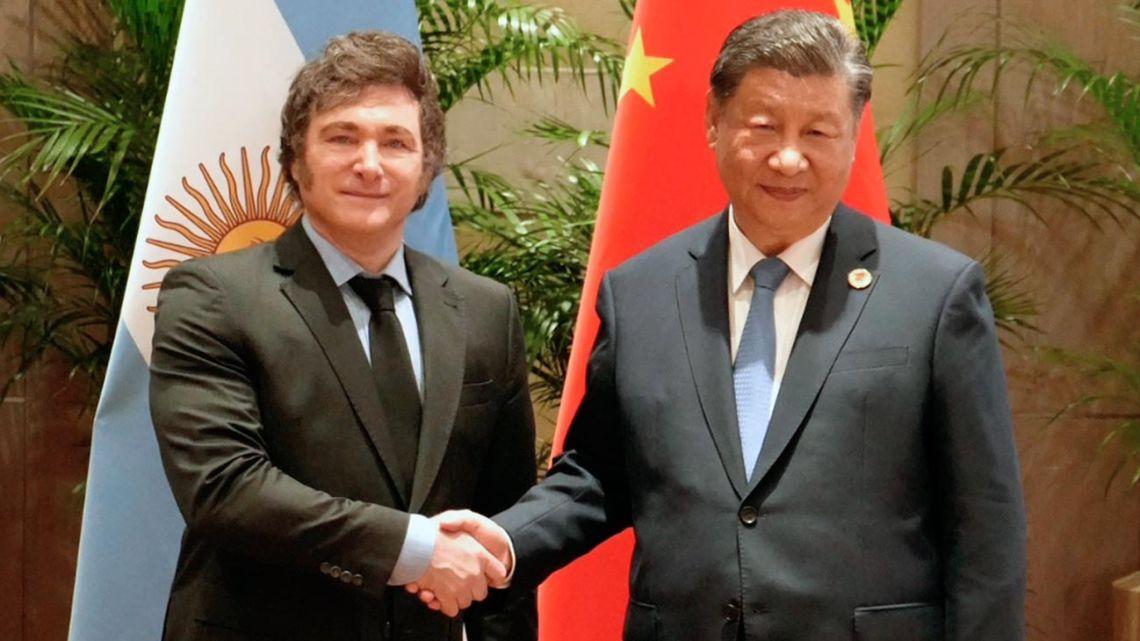
Argentina’s currency-swap relationship with China is again at the center of financial planning as the swap expires on August 6, with the South China Morning Post reporting that the US$19 billion swap “expires August 6” and that Argentine reports say talks are already advancing.
“El problema está ahí”
The Perfil account frames the issue as a renewed “frente” tied to a swap renewed on 14 de junio del 2024, which it says avoided Argentina entering default with China over about U$S 6 mil millones.
Perfil says the country should pay the 14 de junio de 2026 the US$ 6 mil millones or seek another two-year prorroga, while also describing a larger total pasivo of unos US$ 20 mil millones.
In the same Perfil narrative, it adds that the swap’s renewal was linked to the represa Cepernic-Kirchner project, with an agreement total of unos US$ 11 mil millones and a mechanism of divisas through the swap to keep funds flowing.
The South China Morning Post also characterizes the swap for Argentina as “less a debt than an insurance policy,” describing it as a source of yuan to shore up reserves and settle imports from China.
IMF money and exchange plans
In a separate development, Revolution Permanente says the IMF agreed to lend an additional $20 billion to the government of Milei in Argentina, with an initial disbursement of $12 billion and an additional $3 billion later in the year.
Revolution Permanente adds that the government expects to receive $28 billion just in 2025, including $15 billion from the IMF, $6 billion from other multinational lenders, $2 billion from international banks, and $5 billion thanks to an extension of the currency swap agreement with China.

The same source quotes Milei saying, "What you’re going to have is a mountain of dollars," and says the plan is to double gross foreign exchange reserves to $50 billion.
Revolution Permanente also reports that the official peso exchange rate, now liberalized, fell about 9% to 1,170 pesos per dollar, while net reserves after deducting liabilities and outflows showed a negative balance of $7 billion.
It further states that Milei said, "The foreign-exchange controls will no longer exist on January 1, 2026. Perhaps even earlier," tying the timeline to IMF disbursement speed.
Pressure, denials, and stakes
The South China Morning Post reports that Buenos Aires has publicly denied that the renewal of the swap was on the agenda, even as it says Argentine reports claim talks to extend the arrangement were advancing and only administrative steps remained.
“Argentina edges back to China on currency swap despite US pressure Buenos Aires denies negotiating renewal, but the US$19 billion swap expires August 6, and Argentine reports say talks are already advancing Bausili and Gongsheng exchanged views on the international economic and financial outlook and discussed the workings of the global monetary system, the Argentine central bank added”
Perfil, meanwhile, describes the swap renewal as a recurring obstacle that returns “en el mediano plazo,” stating that Argentina should pay the 14 de junio de 2026 the US$ 6 mil millones or renegotiate another two-year prorroga.
Revolution Permanente frames the stakes through the lens of exchange-rate policy, saying the government and the IMF say the approach will lead to "a fully flexible exchange rate within a bi-monetary system, where the peso and the U.S. dollar would coexist."
It also says the government aims to lift controls on the Argentine peso and let it float freely within a sliding fluctuation band, widening that band by 1% per month.
Across the three accounts, the immediate pressure point is the swap’s expiration date and the financing timetable, with the South China Morning Post emphasizing the swap as insurance to tap yuan for reserves and imports, while Revolution Permanente ties additional funding to the expectation of $5 billion from extending the China swap.
More on Finance

Nvidia Plans $25 Billion U.S. Bond Sale After $85 Billion Investor Demand
11 sources compared

U.S. Treasury Considers Using Iranian Assets To Help Gulf Allies Rebuild War Damage
24 sources compared

JPMorgan Chase, Bank of America, and Citibank Plan Tokenized Deposit Network With The Clearing House
14 sources compared

Ramp Raises $750M at $44B Valuation, Led by ICONIQ, GIC, and Ontario Teachers’ Pension Plan
10 sources compared