
Asim Munir Mediates US-Iran Talks After Iran Rejects Return To Islamabad
Key Takeaways
- Asim Munir, Pakistan Army Chief of Army Staff, leads mediation between US and Iran.
- Ceasefire remains fragile; talks linked to potential extension amid mediation efforts.
- Pakistan vows continued mediation despite Iran's rejection of talks.
Munir’s mediation push
Pakistan’s Chief of Army Staff Asim Munir has been trying to negotiate what Folha de S.Paulo describes as a “historic agreement between the U.S. and Iran,” using a mediation style that the outlet says is “a notable approach” for a country with limited experience in such talks.
“Islamabad, Pakistan – Iran has signalled that it has no plans to send negotiators to Islamabad for a new round of talks with the United States, threatening Pakistan’s plans for multiday negotiations between the warring nations less than 48 hours before a fragile ceasefire is set to expire”
Folha de S.Paulo reports that soon after presiding over “the most important meeting between the longtime arch-enemies,” Munir spent “several days in Tehran” wielding “a ‘command baton’,” alternating between “uniform and a dark blazer” in meetings with Iran’s political leadership, security forces, and the Revolutionary Guard.

The article says this month Munir kept “telephone contact with the White House,” building the relationship on what it calls a “reinvigorated US-Pakistan relationship,” including “deals involving minerals, cryptocurrencies, and Manhattan real estate,” and Islamabad’s endorsement of Donald Trump’s Nobel Peace Prize nomination.
Folha de S.Paulo adds that Munir’s efforts faced a test after “failed attempts to resume the talks this week,” and that his mediation reached an impasse on “Tuesday, the 21st,” when Iran resisted pressure to return to Islamabad for talks with the United States.
The outlet frames the core dispute as Iran’s “enrichment program and its stockpile of highly enriched uranium,” while noting that Pakistani authorities insist they are “still working to overcome the differences.”
It also says Munir’s task is complicated by Trump’s insistence that an “American naval blockade of Iranian ports would remain in place until a deal is closed,” and by Tehran’s refusal to “fully reopen the Strait of Hormuz.”
Ceasefire extension and Pakistan’s role
As the mediation effort unfolded, Pakistan’s Prime Minister Shehbaz Sharif publicly tied his country’s next steps to Donald Trump’s decision to extend a ceasefire.
Mehr News Agency reports that Sharif “thanked Donald Trump for agreeing to Islamabad's request to extend the ceasefire,” and said Pakistan “will continue its serious efforts to reach a solution to end the conflict through dialogue.”
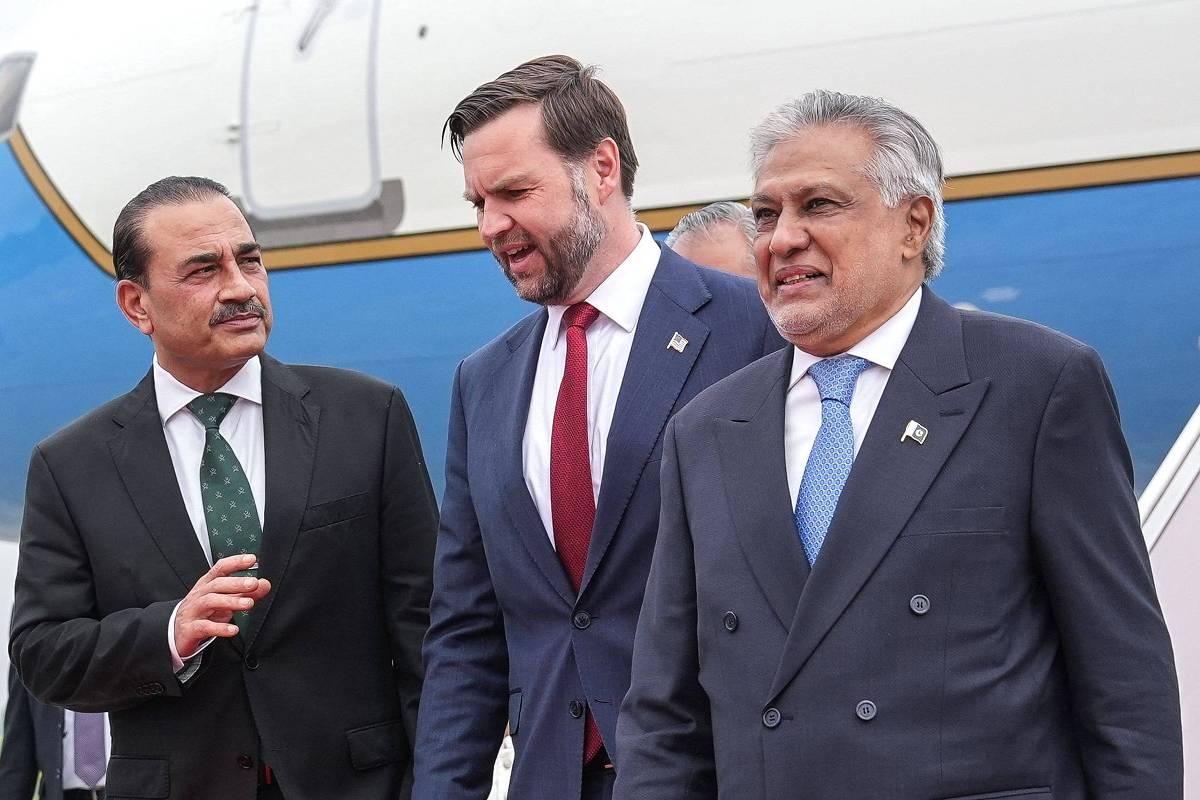
The same report says Sharif expressed “hope that both sides can reach a comprehensive peace agreement in a way that the conflict between the two sides ends forever,” and also said he hoped both sides would “continue their commitment to the ceasefire.”
Mehr News Agency adds that Trump claimed “Pakistan's Army chief Asim Munir, and Prime Minister Shehbaz Sharif had asked him to delay an attack on Iran until a proposal is presented by Tehran.”
It also states that Trump was “forced to unilaterally announce the ceasefire extension,” despite having “previously openly emphasized that he would not extend the ceasefire under any circumstances.”
Al Jazeera, meanwhile, describes a different tone from Tehran, saying Iran has “signalled that it has no plans to send negotiators to Islamabad for a new round of talks with the United States,” threatening Pakistan’s plans “less than 48 hours before a fragile ceasefire is set to expire.”
Al Jazeera quotes Iran’s Ministry of Foreign Affairs spokesman Esmaeil Baghaei saying Washington had “violated the ceasefire from the beginning of its implementation,” and it links that claim to the “US naval blockade of the Strait of Hormuz since April 13” and the “overnight capture of an Iranian container ship by the US military.”
Iran’s objections and Trump’s threats
Iran’s position, as presented by Al Jazeera, undercut Pakistan’s attempt to host multiday negotiations in Islamabad, and it did so by pointing to specific alleged ceasefire breaches.
“A former spy chief on two occasions, the Pakistan Army's Chief of Army Staff, Asim Munir, adopted a notable approach to mediating a historically difficult agreement between the United States and Iran”
Al Jazeera says Iran’s Ministry of Foreign Affairs spokesman Esmaeil Baghaei warned that if the US and Israel launched aggression again, Iranian forces “will respond accordingly,” while reaffirming that Tehran’s “10-point proposal” remained its basis for any negotiation.
In the same report, Baghaei is quoted saying, “The US is not learning its lessons from experience,” and that “this will never lead to good results.”
Al Jazeera also says Baghaei told reporters that Washington had “violated the ceasefire from the beginning of its implementation,” citing the “US naval blockade of the Strait of Hormuz since April 13” and the “overnight capture of an Iranian container ship by the US military.”
The report places these statements against a backdrop of Trump’s own public messaging, including his claim that his representatives would go to Islamabad for negotiations.
Al Jazeera says Trump wrote on Truth Social, “My Representatives are going to Islamabad, Pakistan. They will be there tomorrow evening, for Negotiations,” and it adds that he accused Iran of a “Total Violation of our Ceasefire Agreement” after Iranian gunboats fired on vessels in the Strait of Hormuz on Saturday.
It further quotes Trump’s threat that “the United States is going to knock out every single Power Plant, and every single Bridge, in Iran,” and includes his slogan “NO MORE MR. NICE GUY!”
Logistics and security in Islamabad
Al Jazeera describes Pakistan preparing for the second round of US-Iran talks in Islamabad with heavy security and hotel closures, even as Iran signalled it had “no plans” to send negotiators.
The report says Islamabad’s Marriott Hotel asked guests to vacate by Sunday afternoon, and that the Serena Hotel, “just a few kilometres away and the venue for the first round of talks a week earlier,” soon issued the same order and stopped taking reservations.
It adds that roads into the Red Zone, “the capital’s most heavily fortified area,” were sealed, and that the district houses key government buildings including “the National Assembly, foreign embassies and both five-star hotels.”
Al Jazeera reports that “Thousands of additional police and paramilitary personnel arrived from across the country,” and that “Barbed wire and barricades lined” the area.
The same account ties the preparations to the ceasefire timeline, saying the fragile ceasefire was set to expire and that Trump announced on Sunday that his representatives were heading to Pakistan for a second round of negotiations with Iran.
It also says Islamabad had been gearing up to host “the second round of talks between the US and Iran aimed at ending their war,” and that the first round had been held in Islamabad on “April 11.”
Al Jazeera further explains that unlike the first round, Pakistan was aiming for “multiple days of negotiations,” with mediators calling a temporary deal “a memorandum of understanding (MoU).”
What happens next
Across the reporting, the next phase of the Pakistan-mediated effort hinges on whether Iran participates and whether the US maintains its stated conditions, with both sides pointing to violations and threats.
“Islamabad, Pakistan – Iran has signalled that it has no plans to send negotiators to Islamabad for a new round of talks with the United States, threatening Pakistan’s plans for multiday negotiations between the warring nations less than 48 hours before a fragile ceasefire is set to expire”
Folha de S.Paulo says Munir’s efforts reached an impasse on “Tuesday, the 21st,” when Iran resisted pressure to return to Islamabad for talks with the United States, and it frames the central dilemma as “who will give in first,” quoting Ali Vaez of the International Crisis Group: “Unless Trump backs down on the blockade, I don't see how the Iranians would agree to participate.”
Al Jazeera similarly says Iran has “no plans” to send negotiators to Islamabad, and it reports that Baghaei warned that the US had “violated the ceasefire from the beginning of its implementation,” while also reaffirming Tehran’s “10-point proposal.”
In parallel, Mehr News Agency reports that Sharif said Pakistan would continue “serious efforts” through dialogue and that Trump had extended the ceasefire after Islamabad’s request, while also noting that Trump had previously emphasized he would not extend it.
Al Jazeera adds that Trump announced his representatives would go to Islamabad and that he revived pre-ceasefire threats to bomb Iran’s energy and power facilities, writing that the US would “knock out every single Power Plant, and every single Bridge, in Iran.”
The same Al Jazeera report describes a fresh escalation involving the USS Spruance intercepting the Touska, with Trump writing that “Our Navy ship stopped them right in their tracks by blowing a hole in the engine room,” and it says Iran described the seizure as “piracy.”
Folha de S.Paulo also situates the mediation within a broader pattern of failed attempts, saying “Most mediators of the US-Iran conflict have not managed to deliver lasting results,” and it notes that after Trump abandoned the 2015 nuclear deal, the EU and the E3 facilitated indirect talks but “failed to revive the agreement.”
More on Pakistan

Ben Stokes Recovers After Major Facial Injury From Cricket Ball Impact
10 sources compared

Pakistan Deploys Fighter Jets to Saudi Arabia While Mediating US-Iran Talks
17 sources compared

Pakistan Defence Minister Khawaja Asif Calls Israel Evil, Deletes Post After Netanyahu Rebuke
21 sources compared
ICC Assembly Votes to Proceed with Disciplinary Action Against Prosecutor Khan
10 sources compared