Technology and Science02 May, 20265 min read
Ask.com, Formerly Ask Jeeves, Shuts Down Search After May 1, 2026
This article is an automated aggregation of coverage from news outlets. Our editorials offer in-depth analysis curated by the NewsCord team.
Ask.com, formerly Ask Jeeves, shut down its search service on May 1, 2026. IAC discontinued the search business, signaling a shift away from search platforms.

Ask.com shuts down
Ask.com, the early internet search engine formerly known as Ask Jeeves, shut down on Friday, May 1, ending a service that had been operating for “25 years of answering the world’s questions,” according to the farewell message now displayed on the site. The San Francisco Chronicle reported that the company “shut down Friday,” and said it was originally named for its mascot, “a besuited cartoon search valet named Jeeves.” The Chronicle also tied the company’s founding to Berkeley, saying it was “founded by David Warthen and Garrett Gruener in Berkeley in 1996,” two years before Google was formed.
Rolling Out described the shutdown as “officially shut down its services on May 1, 2026,” framing it as the end of a “25-year run” that began “at the height of the dot-com boom.” LiveNOW from FOX said Ask.com posted a farewell message announcing the search engine would shut down “as of Friday, May 1,” and Mashable similarly reported that “Ask.com officially closed on May 1, 2026.” Across outlets, the same text appears on the Ask.com homepage: “Every great search must come to an end,” and “Jeeves’ spirit endures.”
Origins and evolution
Multiple reports traced Ask.com’s arc from its founding in Berkeley to later corporate changes and product pivots. The San Francisco Chronicle said Ask.com was “founded by David Warthen and Garrett Gruener in Berkeley in 1996,” and that it “grew to around 700 employees” before later headquarters moves to Emeryville and then Oakland in 2004. Rolling Out added that the company launched publicly as AskJeeves.com the year after it was founded, and it placed that timing “just one year before Google debuted.”
LiveNOW from FOX said the former search engine went live as AskJeeves.com in April 1997 before launching “at the beginning of June that year,” citing Search Engine Report. TechCrunch described the company’s acquisition by IAC in 2005 and said IAC “quickly dropped ‘Jeeves’ from the name,” while Mashable said the brand dropping the “Jeeves” word and valet logo happened in 2006.

Rolling Out said the Jeeves persona was retired in favor of “the cleaner, more generic Ask.com identity,” and it described a “brief and limited revival” of the mascot in “some international markets around 2009, including the United Kingdom.” By 2010, Rolling Out reported that Ask.com “shut down its independent web crawling infrastructure” and “outsourced its core search functions to third-party providers,” while also pivoting toward a “question-and-answer community model.”
Why it ended
The shutdown was attributed to IAC’s decision to discontinue its search business, with the company’s own message emphasizing a strategic refocusing.
The San Francisco Chronicle quoted the company’s statement: “Every great search must come to an end. As IAC continues to sharpen its focus, we have made the decision to discontinue our search business, which includes Ask.com.”
Mashable likewise quoted the homepage, saying “As IAC continues to sharpen its focus, we have made the decision to discontinue our search business, which includes Ask.com.”
LiveNOW from FOX described the same rationale, saying “IAC opted to shut down its search operations entirely and that included the longtime website.”
TechCrunch added that IAC Chairman Barry Diller said at TechCrunch Disrupt that Ask.com was “not competitive with Google and was not valued in IAC’s stock.”
The San Francisco Chronicle also reported that Ask.com’s search engine had been “long overshadowed by Google, Yahoo and Microsoft’s Bing,” and that by 2010 it had “outsourced its search technology.”
Rolling Out said the closure came as IAC refocused, and it described the decision as part of “a strategic refocusing,” while also stating that the company’s farewell message thanked users and staff.
Mascot, culture, and branding
Ask.com’s identity was closely tied to Jeeves, and multiple sources described how the mascot and conversational interface became part of the product’s appeal.
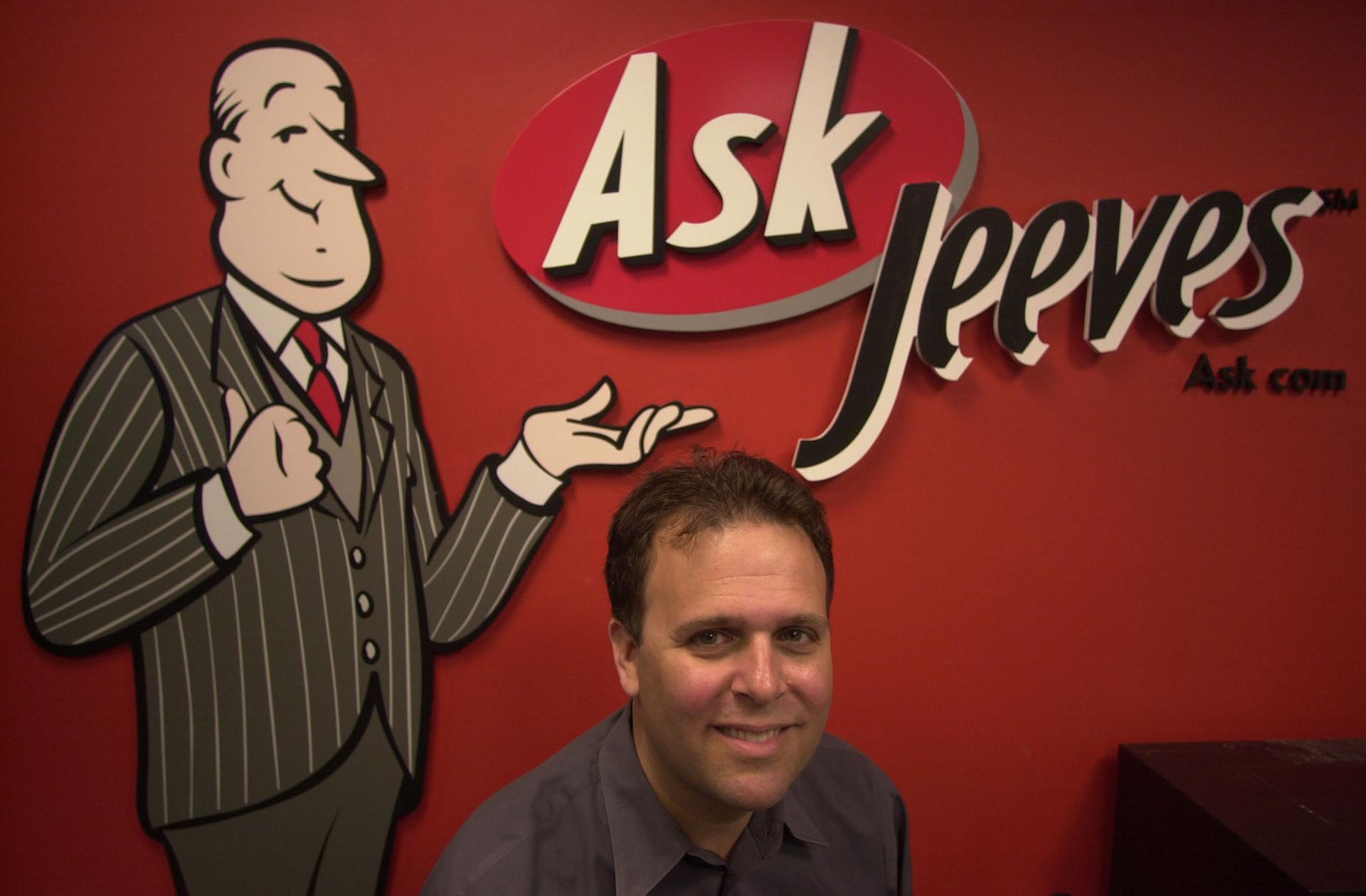
The San Francisco Chronicle said the company was “originally named for its mascot, a besuited cartoon search valet named Jeeves,” and it noted that “Jeeves’ spirit endures” appears in the farewell message.
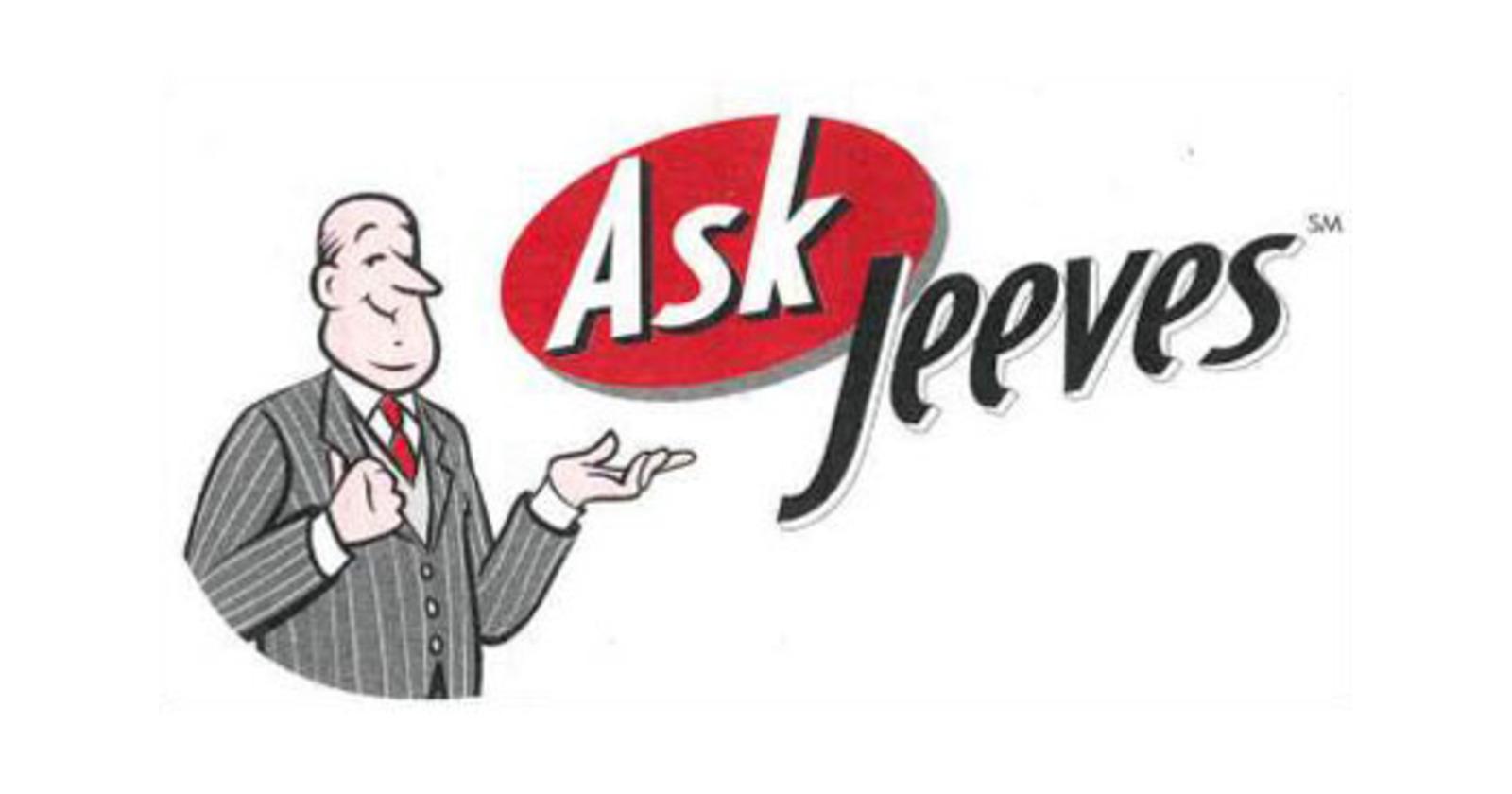
Rolling Out described the mascot as “a polite and knowledgeable service rather than a cold mechanical query,” and it said the Jeeves character was drawn from “the fictional valet in P.G. Wodehouse’s novels.”
Mashable similarly said the butler mascot “modeled after the P.G. Wodehouse character” and that it made appearances at the “Macy's Thanksgiving Day Parade.”
The San Francisco Chronicle added a specific timeline for the mascot’s revival, saying “His image was revived from 2009 to 2016 in the United Kingdom version of Ask.com.”
LiveNOW from FOX described how the service tried to differentiate itself by encouraging users to “frame their search queries in the form of a question,” and it also said that “when someone clicked a result, the website would open in a frame, rather than redirect a user to that site.”
Rolling Out and TechCrunch both described the core product idea as conversational, with Rolling Out saying the service “encouraged people to type full questions in plain, conversational language,” and TechCrunch calling it “a focus on answering conversational questions posed in natural language.”
Different angles on the same closure
While the shutdown date and the farewell message were consistent, the coverage diverged in how it framed Ask.com’s legacy and the meaning of its end. The San Francisco Chronicle emphasized the company’s place in the evolution toward modern AI chatbots, saying Ask.com’s “conversational approach toward questions and answers is now seen as a precursor to today’s artificial intelligence chatbots such as ChatGPT.” TechCrunch similarly described Ask.com as “arguably a precursor to today’s AI-powered chatbots,” while Rolling Out said the Jeeves approach “became the defining direction of the entire industry decades later in the form of voice assistants, chatbots and AI-powered search tools that prioritize natural language above all else.”
By contrast, Startup Fortune framed the closure as a lesson about distribution and reliability, arguing that “Ask Jeeves did not flame out in a dot-com implosion” and that it “lingered, diminished, rebranded, and gradually became a property that fewer and fewer people had a reason to visit.” PiunikaWeb and Columna Digital both highlighted the conversational interface and called it a precursor to chatbots, but PiunikaWeb added that the independent web crawler was shut down in 2010 and that the company “continued to try the Q&A approach.”
LiveNOW from FOX and Mashable kept the focus on the farewell message and the corporate decision, with LiveNOW quoting the page’s gratitude and Mashable quoting the homepage’s “After 25 years of answering the world’s questions” line. Even where outlets agreed on the end, they differed on what they treated as the central story: legacy and cultural recognition in Rolling Out and Mashable, or strategic refocusing and competitive pressure in the mainstream tech coverage.