Iran08 March, 20261 min read
Assembly of Experts Names US-Sanctioned Mojtaba Khamenei Iran's Supreme Leader
This article is an automated aggregation of coverage from news outlets. Our editorials offer in-depth analysis curated by the NewsCord team.
Iran's Assembly of Experts elected Mojtaba Khamenei to lead the country after his father's death Mojtaba Khamenei is the son of the late Ayatollah Ali Khamenei

New Supreme Leader Named
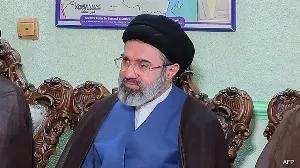
Iran’s Assembly of Experts has named Mojtaba Khamenei, 56, as the country’s new supreme leader. Multiple outlets reported the appointment and described him as the son of the late Ayatollah Ali Khamenei. Reports noted the formal selection by the clerical body that chooses Iran’s top authority.
“Iran’s Assembly of Experts has elected Mojtaba Khamenei, the 56-year-old son of the late Supreme Leader Ayatollah Ali Khamenei, as Iran’s new supreme leader, Iranian state television reports.”
Mojtaba background and ties
Background on Mojtaba emphasizes his long but low-profile involvement in Iran's clerical and security networks. Reports say he was a previously little-seen son who accompanied his father and undertook clerical studies.
He has been viewed as an influential behind-the-scenes figure with close ties to hard-line factions and the Islamic Revolutionary Guard Corps (IRGC). He was sanctioned by the U.S. in 2019.
Domestic reaction to appointment
Domestically, the appointment produced an immediate split in reactions. State-aligned and hard-line forces celebrated, state media shifted from mourning to celebration, and there were reports of the armed forces pledging allegiance. Visible opposition and street protests in Tehran signalled dissent and warned that his rule could be as repressive or more hostile abroad than his father's.
“Hard-line political forces and the Islamic Revolutionary Guard Corps — which has close ties to Mojtaba from his Iran–Iraq War service — celebrated the appointment, state television switched from mourning to celebratory coverage, and the semiofficial Fars agency reported the armed forces’ pledged full allegiance.”
Mojtaba's strategic implications
Analysts and reports highlight broader strategic implications. Mojtaba's elevation is portrayed as consolidating hard-line influence over Iran's military and nuclear posture, with business and security sources saying he will play a central role in war strategy, command IRGC-linked forces and control enriched uranium. Experts warn that operational agencies may gain more power in wartime even as the supreme leader retains religious legitimacy.
International reactions to Mojtaba
U.S. political figures publicly criticized the appointment, and Mojtaba remains internationally controversial because of prior sanctions and allegations. Some outlets report a disputed, violent context to the leadership change, with one outlet saying an Israeli airstrike killed the late supreme leader and Mojtaba’s wife. Other outlets simply note his father’s death without specifying a cause, showing disagreement among sources.
“In an Axios interview, former U.S. President Donald Trump said Mojtaba’s elevation would be ‘unacceptable,’ called him a ‘lightweight,’ and said the U.S. should be involved in the appointment.”