
Attack on Sudan hospital kills 64, WHO says
Key Takeaways
- 64 killed, including 13 children, at Al Deain Teaching Hospital in East Darfur.
- Hospital rendered inoperable, halting essential medical services in East Darfur.
- WHO confirmed the attack; total health facility deaths in Sudan's war surpass 2,000.
Hospital Attack Details
A devastating strike on El-Daein Teaching Hospital in East Darfur, Sudan, has killed at least 64 people including 13 children, two female nurses, one male doctor, and multiple patients, according to the World Health Organization.
“An attack on a hospital in Sudan’s Darfur region has killed at least 64 people, including 13 children, according to the head of the World Health Organization (WHO)”
The attack occurred on Friday night and wounded 89 others, with eight health staff among the injured.

WHO Director-General Tedros Adhanom Ghebreyesus condemned the attack as 'enough blood has been spilled' and called for an end to the nearly three-year conflict ravaging Sudan.
The attack caused extensive damage to the hospital's paediatric, maternity, and emergency departments, rendering the facility non-functional and creating a critical interruption of essential medical services in the region.
Sudanese rights group Emergency Lawyers reported that the hospital was hit by an army drone strike, though the WHO does not attribute blame as it is not an investigative agency.
Medical Infrastructure Impact
The attack represents a devastating blow to medical infrastructure in a region already experiencing severe healthcare shortages.
The El-Daein Teaching Hospital served as a critical secondary healthcare facility for the RSF-controlled capital of East Darfur state, providing essential medical services to a population under constant threat.

The extensive damage caused by the 'violence with heavy weapons' not only killed and injured medical personnel and patients but also destroyed vital medical supplies and storage facilities, according to WHO records.
The WHO is now supporting local health partners to fill urgent gaps by scaling up capacity at other health facilities, including increasing capacity to treat the injured and deploying trauma care supplies and essential medicines.
This attack comes as healthcare facilities have become regular targets throughout the Sudanese conflict, with the total number of people killed in attacks on health care now surpassing 2,000 since the conflict began.
Conflict Context
The attack on El-Daein Teaching Hospital is part of a broader pattern of escalating violence against healthcare facilities in Sudan's nearly three-year civil war between the Sudanese army and the paramilitary Rapid Support Forces (RSF).
“64 people, including children and healthcare workers, were killed in an attack on a hospital in Darfur, Sudan”
El-Daein, the RSF-controlled state capital of East Darfur, has been regularly attacked by the army, which is trying to push the paramilitary back towards its Darfur strongholds and away from Sudan's central corridor.
Near-daily drone strikes have become a hallmark of Sudan's brutal war, killing dozens at a time, mostly in the southern Kordofan region.
The conflict has unleashed one of the world's fastest-growing man-made humanitarian crises, with tens of thousands of people killed and more than 12 million forced from their homes.
Both sides have been accused of war crimes and crimes against humanity, while the RSF has been implicated in atrocities in Darfur that United Nations experts say bear the hallmarks of genocide.
Humanitarian Crisis
The devastating human toll of the hospital attack reflects a broader humanitarian catastrophe unfolding across Sudan.
The UN human rights chief, Volker Türk, this month expressed being 'appalled' after more than 200 civilians were reported killed by drone attacks within an eight-day period, noting that 'parties to the conflict in Sudan continue to use increasingly powerful drones to deploy explosive weapons with wide-area impacts in populated areas.'
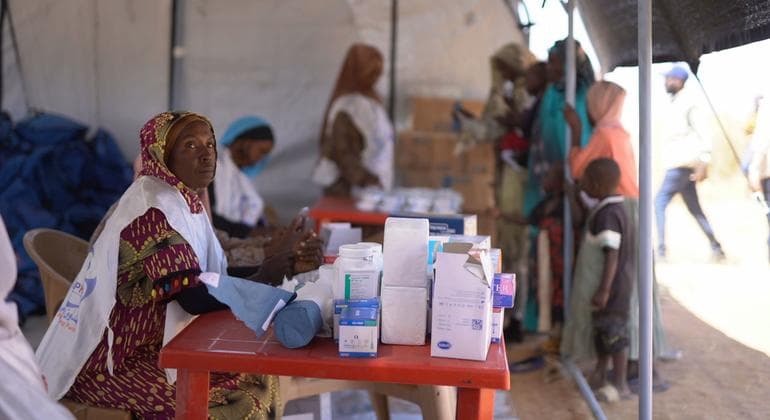
Across the country, the war has killed tens of thousands and driven more than 11 million people from their homes, fueling what the UN describes as the world's largest displacement and hunger crises, with more than 33 million people in need of humanitarian aid.
The United Nations' humanitarian office in Sudan said it was 'appalled by the attack,' while WHO statistics show that healthcare attacks in Sudan are growing deadlier by the year – in 2023, 64 attacks caused 38 deaths, in 2024, 72 attacks led to 200 deaths, and in 2025, 65 attacks caused 1,620 deaths, representing 82 percent of reported deaths from attacks on health care worldwide.
Accountability Concerns
As international condemnation mounts, questions remain about accountability for the escalating violence against civilians and medical facilities.
“"Enough suffering has been inflicted”
The WHO's Surveillance System for Attacks on Health Care (SSA) has confirmed 213 attacks on healthcare during Sudan's conflict, resulting in 2,036 deaths, with the latest hospital attack pushing the total past this grim milestone.

While Emergency Lawyers reported the attack was carried out by an army drone strike, the WHO deliberately does not attribute blame as it is not an investigative agency, instead focusing on documenting and verifying attacks.
The RSF dominates the vast western Darfur region, while the Sudanese army is in control of the east, centre and north of the country, creating a complex dynamic where civilian infrastructure in contested areas becomes particularly vulnerable.
International calls for de-escalation and protection of civilians continue to grow, with WHO Director-General Tedros Adhanom Ghebreyesus declaring that 'enough blood has been spilled' and 'the time has come to de-escalate the conflict in Sudan and ensure the protection of civilians, health workers, and humanitarians.'
More on Sudan

Drone Strike in Goma Kills French UN Aid Worker; M23 Blames Congolese Forces, Kinshasa Denies
10 sources compared
M23 Rebels Accuse Congolese Army of Drone Strikes That Kill French Aid Worker in Goma
10 sources compared

Chad Shuts Border With Sudan After RSF Cross-Border Attack Kills Chadian Soldiers, Civilians
21 sources compared
UN Fact-Finding Mission Finds RSF Siege of El-Fasher Bears Hallmarks of Genocide
33 sources compared