Pakistan12 March, 20256 min read
Baloch Liberation Army Kills 21 Hostages in Pakistan Jaffar Express Siege
Baloch Liberation Army hijacked the Jaffar Express train in Balochistan, triggering a daylong siege. Twenty-one hostages killed; hundreds rescued as the operation concluded.

Train siege ends
Pakistan’s military said an insurgent attack on the Jaffar Express in Balochistan ended after a daylong standoff, with all attackers killed and some hostages dead. The Associated Press reported that Pakistani authorities said the operation ended “with all attackers killed following a daylong standoff,” and that “over 300 hostages were rescued” while the operation continued. Reuters similarly said the Pakistan military ended the train standoff and reported “21 hostages and four troops killed.”
CNN described the broader timeline, saying the incident “began Tuesday” and that “nearly 350 hostages were rescued at the end of a deadly standoff between Pakistan’s military and armed militants.” Multiple outlets tied the attack to the Baloch Liberation Army (BLA), with the BBC saying the BLA “quickly claimed responsibility for the siege” and threatened to kill passengers if Pakistani authorities did not release Baloch political prisoners within 48 hours. The BBC also said the siege lasted “over 30 hours,” while the Guardian said the hijacking took place as the train “was travelling through a tunnel in the rugged mountains of Balochistan province on Tuesday afternoon.”

Multiple reports placed the incident on the Jaffar Express traveling “from Quetta to Peshawar,” and the Associated Press said the survivors were sent to Quetta under heavy security. In the aftermath, authorities sent survivors under heavy security, with the Associated Press saying “the last remaining civilian survivors of a hijacked train” were sent to Quetta.
How the hijacking unfolded
Accounts of the attack’s mechanics emphasized the train’s movement into a remote area and the militants’ use of explosives and gunfire before taking passengers hostage. The BBC said the nine-coach Jaffar Express “ground to a halt” in “the depths of central Pakistan's Bolan Pass” after “the tracks under the front car exploded,” and then “the bullets started flying.” NBC News said the track was blown up as the train entered a tunnel in a remote, mountainous district of Balochistan, and that militants then opened fire, “killing 11 people in Pakistan’s first such hijacking.”
The Guardian likewise said the BLA blew up a railway line and launched an attack on the Jaffar Express as it traveled through a tunnel, and it described the train as carrying “about 450 passengers.” CNN put the number of passengers at “Around 450 passengers” and said militants opened “intense gunfire” as the train traveled through a tunnel early in its journey. Several outlets described the militants separating people by ethnicity and using hostages as leverage, with the BBC saying militants “started checking cards and telling people to go this way, this way,” and that hostages were separated into groups “alongside the train, according to their ethnicity.”
NBC News said militants separated law enforcement personnel from the others before taking them into the mountains in small groups, and it quoted a senior security official saying, “They are using these hostages as human shields.” The BBC also included a direct threat attributed to the militants: “We have made demands to the government and if they are not met, we will not spare anyone; we will set the vehicle on fire”.
Voices and demands
The siege drew competing narratives from Pakistan officials, survivors, and the Baloch Liberation Army, with multiple accounts describing threats, hostage conditions, and the military’s response. CNN quoted a security source saying the BLA claimed responsibility and that “A total of 27 hostages were killed by the BLA, the security source said, as well as one soldier,” while it also said “At least 35 militants were killed in the rescue operation.” NBC News said the Pakistani military reported it “successfully eliminated all 33 terrorists including suicide bombers, while rescuing the hostages in a phased manner.”
The BBC described the BLA’s threat in terms of a 48-hour deadline, saying the group threatened to kill passengers if authorities did not release Baloch political prisoners within 48 hours. Survivors described fear and identification checks during the hijacking, with CNN quoting passenger Mohammad Ashraf saying he saw “more than 100 armed individuals on the train” and that “no harm was inflicted on women and children.” CNN also quoted survivor Arslan Yousaf telling Reuters that militants began checking “ID cards - Punjabis, Sindhis, Baloch,” and that “Sometimes, they took soldiers outside and executed them.”
Another hostage account came from Muhammad Tanveer, who told Reuters that “The hostages didn’t have any food and had to resort to drinking water from the train’s washroom.” Pakistan’s Prime Minister Shehbaz Sharif condemned the attack, with NBC News quoting him saying, “Targeting innocent passengers during the peaceful and blessed month of Ramadan clearly reflects that these terrorists have no connection with Islam, Pakistan or Balochistan.”
Numbers diverge across outlets
While the broad outline of a hijacking and rescue was shared, the reported casualty and hostage figures varied across outlets, reflecting different counts and timing. Reuters said Pakistan’s military ended the standoff and reported “21 hostages and four troops killed,” while Associated Press said “over 300 hostages were rescued.” CNN, citing a security source, said “Nearly 350 hostages were rescued” and that “A total of 27 hostages were killed by the BLA,” and it added “At least 35 militants were killed in the rescue operation.”
The BBC said authorities reported “300 passengers have now been freed, and 33 BLA militants, 21 civilian hostages and four military personnel were killed,” while it also noted “conflicting figures suggest many passengers remain unaccounted for.” PBS (via AP) said the separatists attacked the train carrying “about 450 people” and that “300 passengers have now been freed,” with “33 BLA militants, 21 civilian hostages and four military personnel were killed.” NBC News said the Pakistani military reported “21 hostages” killed and “four soldiers also died,” and it stated the operation eliminated “all 33 terrorists including suicide bombers.”
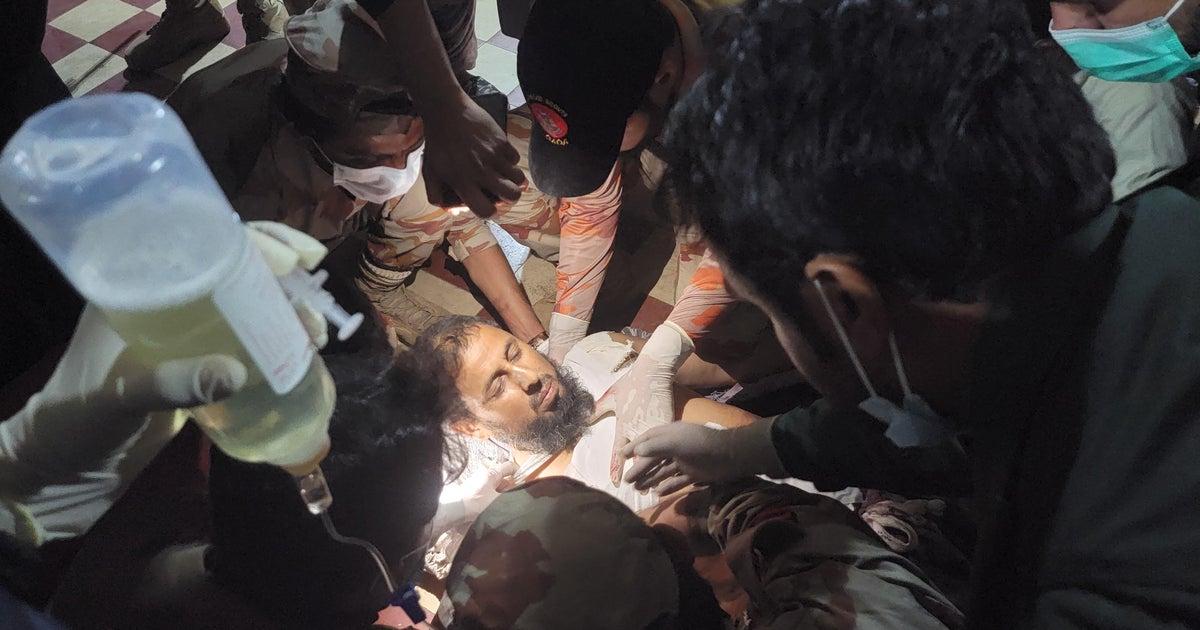
CBS News said “At least 30 of the militants were killed, in addition to 21 security personnel,” and it added that “no civilians had been killed in the attack.” The Guardian said officials claimed “33 militants and 21 hostages were killed,” while it also reported the BLA claimed it had killed “50 of the hostages.”
Aftermath and stakes
The attack’s aftermath placed Balochistan’s insurgency, Pakistan’s regional security posture, and international relationships at the center of official statements and analysis. NBC News quoted Prime Minister Shehbaz Sharif saying, “The fight against terrorism will continue until this menace is completely eradicated from the country.” NBC News reported that Pakistan’s military said intelligence reports “unequivocally” confirmed the attack “was orchestrated and directed by terrorist ring leaders operating from Afghanistan.”
CNN described the security sources accusing militants of being in contact with handlers in Afghanistan and said Pakistan and Afghanistan have long accused each other of providing sanctuary to militant groups. The BBC framed the siege within Balochistan’s decades-long insurgency, saying the BLA has waged “a decades-long insurgency to gain independence for Balochistan.” In the immediate operational aftermath, the Associated Press described survivors being sent to Quetta under heavy security and wounded arriving on a special army-organized train at a railway station in Much.

PBS said rescued passengers were being sent to their hometowns and injured were being treated at hospitals in the Mach district, while others were taken to Quetta about “100 kilometers (62 miles)” away. CNN quoted Abdul Basit saying, “The insurgency has evolved both in its strategy and scale,” and that Pakistan’s approach “seems to have run its course.”