
Before the bombers take off: how are air defenses disabled and the skies over the battlefield opened?
Key Takeaways
- Forces pursue full air superiority amid escalating air and missile attacks
- Forces use integrated reconnaissance, electronic warfare, and intelligence analysis to identify air-defense targets
- Disabling air defenses precedes bomber operations to open skies over the battlefield
Five-stage air superiority plan
The article outlines a five-stage approach to achieving air superiority, drawing on a report by journalist Omar Abdel Latif.
“The current war in the Middle East continues amid escalating air and missile attacks, underscoring the importance of air control and achieving full air superiority, while raising questions about the operations required to attain that dominance”
Forces first use an integrated system of reconnaissance, electronic warfare, and intelligence analysis—manned and unmanned reconnaissance aircraft, satellite imagery, and monitoring enemy radar—to precisely build a target bank.
The next phase is neutralization and electronic jamming, in which hostile air defenses are targeted and safe corridors are prepared for stealth aircraft such as the F-22 and F-35, in parallel with electronic attack aircraft like the EA-18G Growler and HARM missiles.
After imposing control over the airspace, attackers begin major strikes with F-15 fighters and long-range bombers against command-and-control centers, depots, airports, and missile bases.
Early-warning and interception aircraft update targets, while fighters such as the F-18 and F-16 intercept cruise missiles and enemy aircraft or strike new launch platforms.
A defensive umbrella of Patriot and THAAD systems and naval Aegis systems is established to intercept missiles and aircraft, including high-altitude ballistic threats.
Through these five stages, forces aim to ensure complete control of the skies and enable precise strategic strikes while minimizing losses.
Air operations and incidents
U.S. Central Command hinted that, in coordination with Israeli forces, it had come close to neutralizing Iranian airspace but said it has not—so far—announced the downing of any of its warplanes by Iranian defenses.
Central Command acknowledged last Monday that three U.S. aircraft fell over Kuwait to "friendly fire," revealing that "Kuwaiti air defenses mistakenly shot down the fighters during active combat operations."
The article presents these admissions alongside the operational account of how air defenses are suppressed and airspace opened for attacks.
Israel, US attacks on Iran
Since February 28, the article reports, Israel and the United States have been carrying out attacks on Iran.
“The current war in the Middle East continues amid escalating air and missile attacks, underscoring the importance of air control and achieving full air superiority, while raising questions about the operations required to attain that dominance”
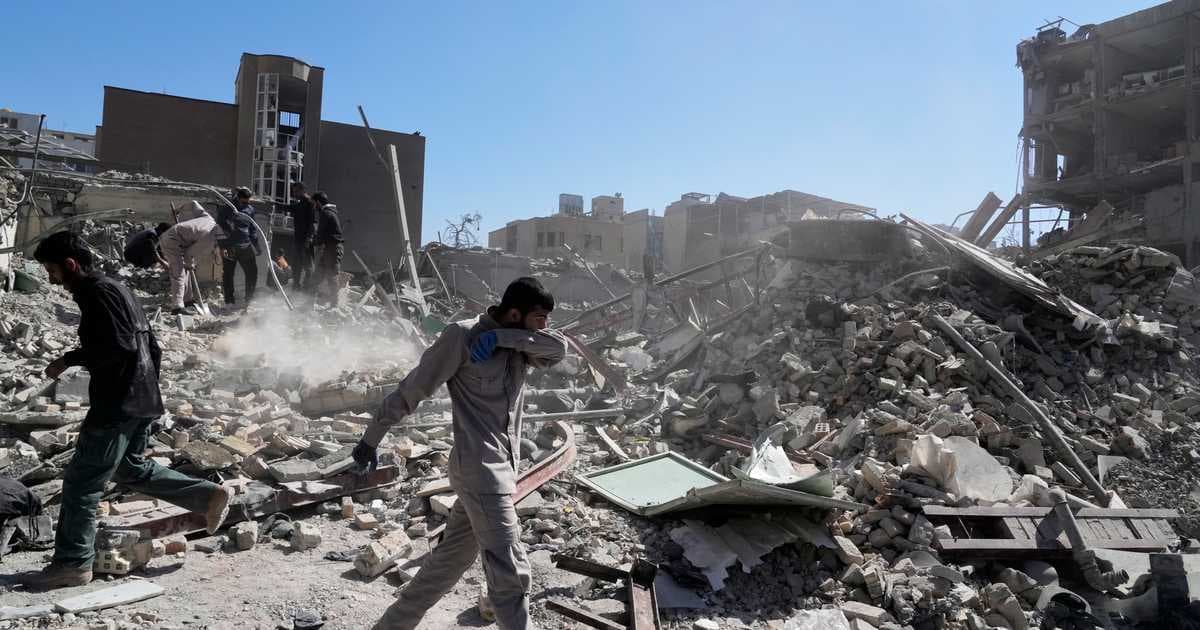
Those attacks have resulted in hundreds killed and injured, including the Supreme Leader Ali Khamenei, the defense minister, the commander of the Revolutionary Guard, and other military leaders.
Tehran has responded by launching missiles and drones toward Israel and by targeting what it describes as "American interests" in Arab and Gulf countries.
The article says those actions have led to deaths and injuries and damage to civilian facilities including airports, ports, and residential buildings.
More on Iran-Israel

Escalation in Iran Pushes Oil Near $120, Sparks Gas Price Surge in Los Angeles
10 sources compared
U.S. Intercepts Iran Message Activating Sleeper Cells After U.S.-Israel Strike Kills Khamenei
14 sources compared

Iran Threatens To Confiscate Property Of Iranians Abroad Who Support US And Israel
14 sources compared
Ukraine Sends Drones, Experts to Shield U.S. Bases in Jordan From Iran
16 sources compared