
Google Bought British Deepmind, Driving European Tech Value From Europe to the U.S.
Key Takeaways
- Google acquired Deepmind in 2014, highlighting US acquisitions of European AI talent.
- European startups face growing US investment, influencing internationalization and retention strategies.
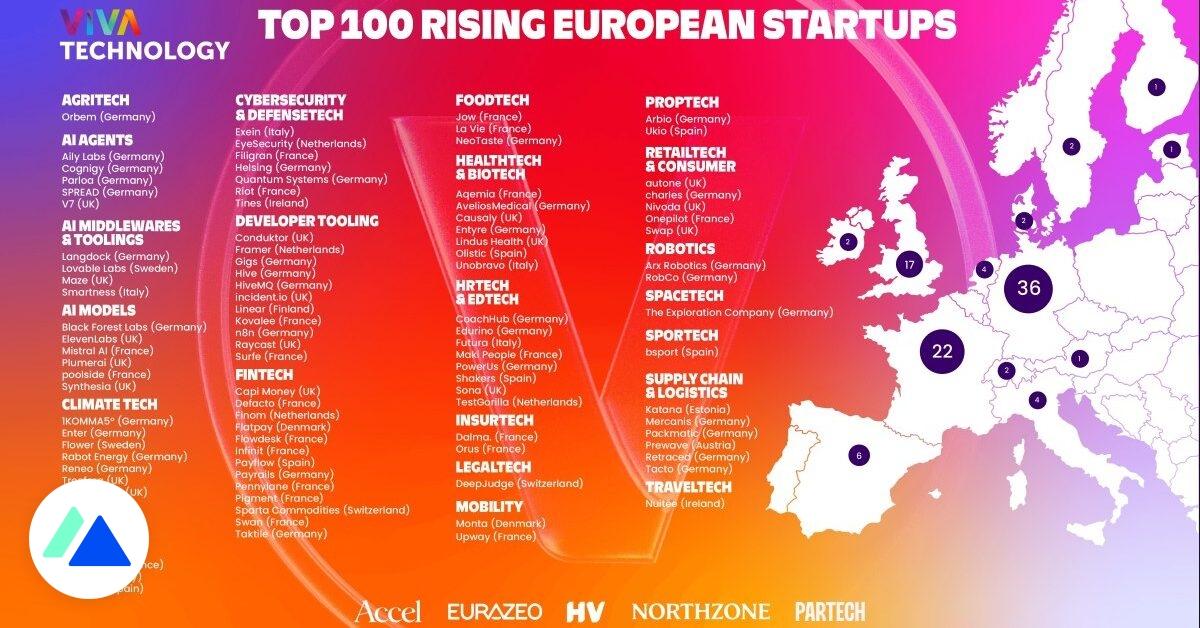
- VivaTech's Top 100 Rising European Startups, backed by major funds, illustrates ongoing European growth.
Deepmind’s European exodus
In Europe’s technology debate, the Deepmind story is presented as a defining example of how European innovation can end up under U.S. control.
“As Viva Technology, the trade show it organizes from June 11 to 14, 2025, approaches, has just unveiled the first edition of its Top 100 Rising European Startups 2025 ranking, which aims to catalog the leading European startups to watch”
Corriere della Sera writes that “Nel 2014 Google ha comprato la startup britannica Deepmind” and that Deepmind was founded in 2010 “a Londra da tre ricercatori, due inglesi e uno neozelandese,” before being acquired for “650 milioni di dollari” after “una feroce competizione con Facebook.”
The same article says the acquisition made Deepmind “diventando l’architrave del modello Ai Gemini,” and it frames the move as “la prima di una lunga serie di acquisizioni in Ue da parte di investitori americani.”
Corriere della Sera also cites a broader pattern from “un’analisi di Eqt e McKinsey,” saying that “fra il 2014 e il 2025 aziende tecnologiche europee del valore di 700 miliardi hanno lasciato il continente.”
It adds that the figure of “1.200 miliardi” reflects that “Oggi quelle imprese valgono 1.200 miliardi,” while also warning that it is “una stima per difetto” because it does not include the value of startups absorbed by acquirers “come accaduto a Deepmind con Google.”
In the same discussion, Victor Englesson is quoted saying, “Se Deepmind fosse rimasta in Europa, probabilmente oggi avremmo la prima azienda europea da oltre 1.000 miliardi.”
The article then connects the Deepmind case to a policy question: “Come trattenere gli innovatori?”
What drives the move
The sources lay out a chain of pressures that, in this telling, pushes European startups toward U.S. ecosystems.
Corriere della Sera describes the “esodo delle startup europee” as part of a long sequence of acquisitions, and it ties the problem to the ability to fund growth at scale, not just to early-stage investment.

It says that European venture capital “coprono gran parte del fabbisogno iniziale delle startup Ue (i cosiddetti round pre-seed e seed),” but that “Il problema si crea quando la startup domanda decine o centinaia di milioni per accelerare la crescita.”
In the same article, Victor Englesson argues that the Silicon Valley advantage is not only capital but also employee incentives, explaining that “Servono strumenti per consentire ai dipendenti delle startup di partecipare alla ricchezza creata” so they can “poi impiegare quanto guadagnato per creare le proprie aziende o finanziare quelle altrui.”
He links this to why European startups “stabiliscono la loro sede legale in Delaware o decidono di trasferirsi tout-court negli Stati Uniti,” carrying “la conoscenza “tribale” di come si fa impresa.”
Corriere della Sera then introduces a proposed policy response, quoting Englesson’s hope that “la cosiddetta Eu Inc sia abbastanza ambiziosa,” and it frames the goal as creating conditions for European companies to become global.
Separate reporting on European startup watchlists reinforces that the ecosystem is actively tracking companies beyond headline unicorns, with TechCrunch describing how it asked investors to recommend startups “da pre-launch a unicorn” and how “insiders are still tracking very closely.”
Voices: investors and policymakers
The debate over retaining innovators is carried by named figures who argue for structural changes.
“Raising funds is good, but ensuring long-term sustainability is even better”
Corriere della Sera quotes Victor Englesson, partner of the Swedish investment fund Eqt, saying, “vista da un’altra prospettiva, però, la cifra è anche una misura dell’opportunità che abbiamo di fronte se riusciremo a soddisfare le tre necessità fondamentali delle startup europee: talenti, clienti e capitali.”
Englesson is also quoted on the talent side, stating, “La qualità della ricerca è ottima e abbiamo un maggior numero di pubblicazioni,” and he adds a quantitative claim that “l’Ue vanta 325 mila talenti e circa 50 mila ricercatori, alla pari degli Usa.”
He then argues that the flow of talent is changing, saying the number of European “cervelli” moving to America “è crollato,” from “721 emigranti dell’Ai del 2022 ai 210 del 2025.”
On the policy side, the same article quotes Englesson again about the need for a European corporate framework, saying, “Mi auguro che la cosiddetta Eu Inc sia abbastanza ambiziosa.”
In a separate source focused on European startup policy, Key4biz reports a joint letter to the European Parliament supporting the “28th regime,” describing it as “già pushed by Mario Draghi and Enrico Letta,” and it says the letter is signed by “Giorgia Meloni!!!”
The Key4biz piece quotes Gianmarco Carnovale, CEO of Scuter and founder of Roma Startup, explaining that the 28th regime would provide “A single, unified (and simplified) corporate regulatory framework for capital raising by international investors.”
How lists frame the ecosystem
While Corriere della Sera frames the problem through acquisitions and incentives, other sources shift attention to how investors and media track emerging companies.
TechCrunch’s list is explicit that it is “Beyond Lovable and Mistral: 21 European startups to watch,” and it says Europe should be known for “BottleCap AI, not bottle cap memes,” while also noting that “Lovable and Mistral AI are proof of it.”

TechCrunch describes its selection process as asking “investors at some of Europe’s best known venture funds to recommend two startups each,” and it adds that it “threw in a few picks of our own.”
It also states that due to methodology, the list “may not reflect where the region’s hottest hubs are,” but it does reflect “how deep tech talent could help Europe play its own cards in the AI race.”
In the same TechCrunch piece, specific startups are tied to named recommenders, including “Alta Ares Recommended by Julien Codorniou, general partner, 20VC,” and “Apron Recommended by Jan Hammer, partner, Index Ventures (investor).”
Another outlet, The Tech Buzz, describes a similar watchlist but emphasizes that it is “curated list of 21 companies that venture insiders are quietly tracking,” and it says the timing signals “a shift in how investors and media track the continent’s tech scene beyond headline-grabbing unicorns like Mistral AI and Lovable.”
Startup-News.it frames its own “100 European startups to watch in 2025” as coming from VivaTech’s “Top 100 Rising European Startups” ranking, with criteria including “annual recurring revenues of at least €5 million in 2024” and “an annual growth rate above 40% over the last three years.”
Stakes: funding, sovereignty, and next steps
The stakes described across the sources are about whether Europe can build and scale technology without losing control of the companies and the value they create.
“Internationalization, for many entrepreneurs, is first seen as a business development operation: new customers, new markets, incremental growth”
Corriere della Sera argues that the “tre necessità fondamentali” are “talenti, clienti e capitali,” and it ties the capital gap to the moment when startups seek “decine o centinaia di milioni” to accelerate growth.

It also frames a policy solution in terms of a European corporate structure, with Englesson saying, “Mi auguro che la cosiddetta Eu Inc sia abbastanza ambiziosa,” and it positions this as a response to the Silicon Valley model where startups may incorporate in Delaware.
Key4biz adds that the 28th regime is meant to create “an alternative to Delaware incorporation,” and it describes a second purpose: “A single pan-European legal entity is intended to approach the 27 national markets without having to establish local subsidiaries.”
The Key4biz report also says the letter calls for “modernizing EU competition rules and accelerating merger controls and state aid procedures at EU level,” and it includes a request to set “a February 2026 meeting to review EU competition rules.”
In parallel, VivaTech-related reporting shows how the ecosystem is being organized around measurable criteria and a “technological sovereignty” narrative.
Finally, the Tech Buzz and TechCrunch watchlists show what comes next for founders and investors: TechCrunch points to “TechCrunch Disrupt 2026” and says “Register now to save up to $410,” while The Tech Buzz says investors will watch “how many of these 21 companies raise institutional rounds over the next 12 months.”
More on Technology and Science

CISA Adds CVE-2026-31431 Copy Fail Flaw to KEV, Enabling Linux Root Privilege Escalation
27 sources compared

Muséum National D'Histoire Naturelle Explains Ichthyosaurs’ Dolphin-Like Marine Reptile Evolution
10 sources compared

Arizona, California, and Nevada Submit Colorado River Water-Saving Proposal to U.S. Interior Department
18 sources compared

Meta Threatens To Shut Down Facebook And Instagram In New Mexico Over Child Safety Trial
24 sources compared