
Bitcoin Rebounds as U.S. Spot Bitcoin ETF Inflows Partially Recover, Outflows Persist
Key Takeaways
- US spot Bitcoin ETF inflows rebounded to $3.29B over two months, still below peak.
- Net outflows persist in spot ETFs, signaling uneven institutional demand.
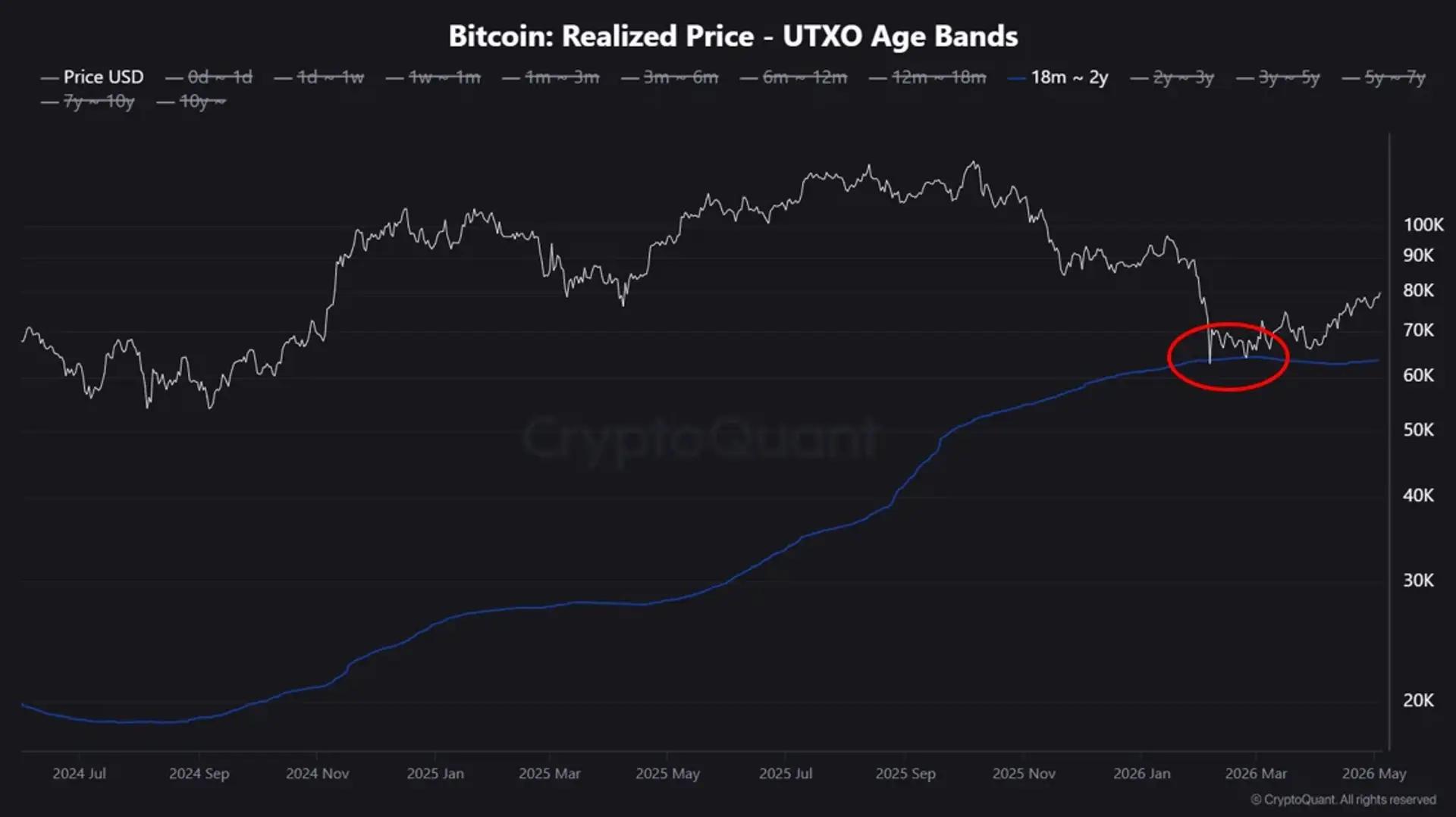
- Bitcoin rebounded near average entry price of early spot ETF inflows, led by institutional buying.
ETF flows rebound, not done
Bitcoin’s rebound is being powered by a partial recovery in U.S.-listed spot bitcoin ETF inflows, but multiple crypto outlets stress that the turnaround is incomplete and still being measured against earlier peaks and outflows.
“Recovery in bitcoin ETF inflows is real”
CoinDesk says the “recovery in bitcoin ETF inflows is real” while adding “It is just not complete yet,” noting that U.S.-listed spot bitcoin ETFs attracted “$3.29 billion over the past two months” and brought cumulative net inflows since the January 2024 launch to “$58.72 billion,” still below the “$61.19 billion peak reached in October.”

CoinDesk also frames the gap by pointing to “the $6.38 billion in outflows seen between November 2025 and February 2026,” arguing that the rebound has not yet offset that earlier selling.
TradingView, meanwhile, ties near-term weakness to ETF positioning, reporting “US spot bitcoin ETFs register net outflows of $19.6 million” and describing the institutional appetite as “still-fragile” in the short term.
Cryptoast’s on-chain analysis similarly emphasizes that even if price action looks like it could improve, “les flux de demande demeurent particulièrement limités,” and it questions whether BTC can break “la résistance des 95 000 $” without “pression d’achat significative.”
Together, the outlets depict a market where ETF demand has resumed, but the flow picture remains mixed enough to leave BTC vulnerable to sharp reversals.
On-chain signals and levels
Beyond ETF flows, the outlets also point to on-chain and technical indicators that suggest BTC is trying to stabilize while still lacking broad demand.
Cryptoast centers its case on the SOPR metric, describing the “ratio SOPR” as “un excellent indicateur pour suivre les tendances et les comportements du marché du BTC,” and it says the ratio has been “stagne désormais juste sous son seuil de neutralité,” implying that “un changement de tendance reste possible” if SOPR “parvient à se hisser durablement au-dessus de 1.”
Cryptoast adds that the short-term variant “STH-SOPR” is “en divergence” with price action, noting that it “se rapproche progressivement de 1 après avoir enregistré un pic de prise de perte majeur fin novembre 2025,” which it interprets as a sign that “les investisseurs à court terme réalisent de moins en moins de pertes.”
TradingView’s market framing complements this by describing a technical move: “Bitcoin falls about 5% below $85,000 after a rejection at $90,000,” and it says the pullback came after BTC “briefly trading above $90,000 the day before.”
TradingView also reports a specific intraday trough, stating “This pullback comes as the U.S. Federal Reserve confirmed a pause in its monetary cycle,” and it gives a level where the market “touched a trough near $84,300.”
XTB similarly discusses a technical rebound, saying “Bitcoin rebounds near 1%” after testing “the 85,000 zone,” and it sets “key levels at 86,400 on the upside and 85,300 on the downside.”
In the same technical vein, the Coin Republic quotes a sentiment-and-level framework from Michaël van de Poppe, including “zritical support zone” around “the $70,000 level” and a “resistance in the $85,000-88,000 range,” while also citing a target of “$85-88K$ is the target zone in May for #Bitcoin.”
Fed pause and macro pressure
Macro conditions are presented as a key reason BTC’s rebound has struggled to become a sustained trend, with outlets linking the timing of price moves to the Federal Reserve and to broader risk sentiment.
“Recovery in bitcoin ETF inflows is real”
TradingView says the decline came “after a rejection at $90,000,” and it explicitly connects the move to the Fed, writing that BTC was “penalized by the Fed pause and ETF outflows.”
It reports that “On Wednesday, the Fed kept its policy rate in a 3.50% to 3.75% range,” and it adds that the statement “remained cautious, stressing dependence on forthcoming economic data.”
TradingView also argues that the Fed decision did not provide the catalyst the crypto market hoped for, stating “The Fed reassures, but does not trigger flows,” and it reiterates that bitcoin is behaving “more like a high-beta asset, sensitive to risk-off phases.”
XTB similarly frames the week’s weakness as “not offset by the Fed's rate cut,” describing “a deterioration in global risk appetite” and saying the rebound is “within a stretch of weakness dominated by organic selling pressure and negative institutional flows.”
Cryptoast’s analysis also reflects the demand-side limits, stating that while on-chain structure looks “propice à un rebond à court terme,” “les flux de demande demeurent particulièrement limités,” and it asks whether BTC can clear “95 000 dollars sans pression d’achat significative.”
The Coin Republic adds a macro calendar angle through Michaël van de Poppe, quoting, “Today the FOMC, tomorrow GDP,” and it says “Many important events are approaching, and markets tend to fall before them.”
Bloomingbit, meanwhile, points to institutional buying as a floor-building mechanism, saying Bitcoin “rebounding near the average purchase price” of early spot ETF inflows and attributing support to “institutional inflows,” but it still emphasizes that investors should “gauge the depth and intensity of the next correction.”
Who is buying: Strategy and institutions
While ETF flows are mixed, several outlets highlight that institutional and corporate activity is still shaping the market’s microstructure, even as regulated products see outflows.
XTB says “Strategy Inc. buys back almost USD 1.0 billion in BTC again,” and it later specifies that “Strategy Inc., the company led by Michael Saylor, bought nearly USD 1.0 billion in bitcoin for the second week in a row.”

XTB adds that Strategy “financed the acquisitions through placements of common and preferred shares,” and it notes that “Strategy managed to remain in the Nasdaq 100 after the annual review,” which it frames as removing “an immediate risk of forced sales.”
TradingView also reports that crypto stocks moved with BTC, stating “Coinbase fell more than 5% early in the session, while Strategy lost nearly 10%,” and it ties that to the sector’s sensitivity to sentiment and liquidity.
The Coin Republic points to uneven ETF demand across products, reporting that “ARK’s product attracted inflows” while “spot Bitcoin ETFs registered net outflows,” and it gives a specific figure that “ARK’s Bitcoin ETF (ARKB) stood out after recording a daily inflow of $41.2 million.”
It also reports fund-level outflows, saying “BlackRock’s IBIT lost $112.2 million” and “Fidelity’s FBTC registered outflows of $5 million,” while “Bitwise Bitcoin ETF (BITB) also posted $13.7 million in redemptions.”
Bloomingbit’s on-chain framing adds another layer, quoting CryptoQuant QuickTake analyst Crypto Dan that Bitcoin is “finding support and rebounding near the average purchase price” of early spot ETF inflows, and it says those inflows “are believed to have come mainly from institutional investors rather than retail traders.”
What comes next: corrections and catalysts
Across the reporting, the next phase is framed as a test of whether BTC can hold support and whether ETF demand continues to improve enough to prevent another leg down.
“Key takeaways: Cryptocurrency ETFs posted mixed flows on April 28 in U”
Cryptoast says a trend change remains possible only if the SOPR indicator “parvient à se hisser durablement au-dessus de 1 dans les semaines à venir,” and it warns that without that sustained move, the market may still be in a period where “une capitulation peut se manifester avant que la pression de vente ne commence à s’épuiser.”

TradingView describes the market as waiting for a catalyst, saying “A market waiting for a catalyst” and that “Without a durable return of flows to ETFs and in the absence of a clear macro catalyst, Bitcoin remains vulnerable to outsized moves.”
XTB similarly emphasizes that the rebound is corrective and that sustainability depends on liquidity and volume, stating that “sustainability will depend on the volume accompanying the upcoming candles,” and it lays out that “A clear break below 85,300 would reopen the path to downside projection targets at 84,300 and 83,500.”
The Coin Republic quotes Michaël van de Poppe’s view that “85-88K$ is the target zone in May for #Bitcoin,” while also noting that “Many important events are approaching, and markets tend to fall before them.”
Bloomingbit says investors should watch “the depth and intensity of any pullback that follows this rebound,” and it adds that “A staggered buying strategy could prove effective during a future correction phase.”
CoinDesk’s flow analysis, meanwhile, sets the bar by returning to the ETF recovery math, saying the rebound has not yet compensated for “$6.38 billion in outflows seen between November 2025 and February 2026,” and it concludes that “Whether it gains enough momentum remains to be seen in the days ahead.”
Even the on-chain demand framing in Cryptoast reinforces the conditional nature of the outlook, asking whether BTC can clear “95 000 dollars” without “pression d’achat significative,” and it ties that question to the limited demand it sees in ETF flows and broader market participation.
More on Crypto

U.S. Court Freezes Arbitrum DAO From Moving 30,766 ETH From Kelp DAO Exploit
10 sources compared

Strategy Pauses Weekly Bitcoin Purchases Ahead of Tuesday Q1 Earnings Release
10 sources compared

Capital B Raises €1.1 Million From Blockstream CEO Adam Back to Expand Bitcoin Treasury
12 sources compared

Bitcoin Posts Best Monthly Gain in a Year as U.S. Spot ETF Inflows Hit $2.44 Billion
10 sources compared