
Brazil’s Congress Overrides Lula Veto, Reducing Bolsonaro’s Prison Sentence
Key Takeaways
- Congress overrode Lula's veto to approve a bill reducing Bolsonaro's prison time.
- The bill would cut Bolsonaro's sentence from 27 years to about 2 years, 4 months.
- Votes: 318-144 in the Chamber, and 49 in the Senate backed the measure.
Veto Overridden in Congress
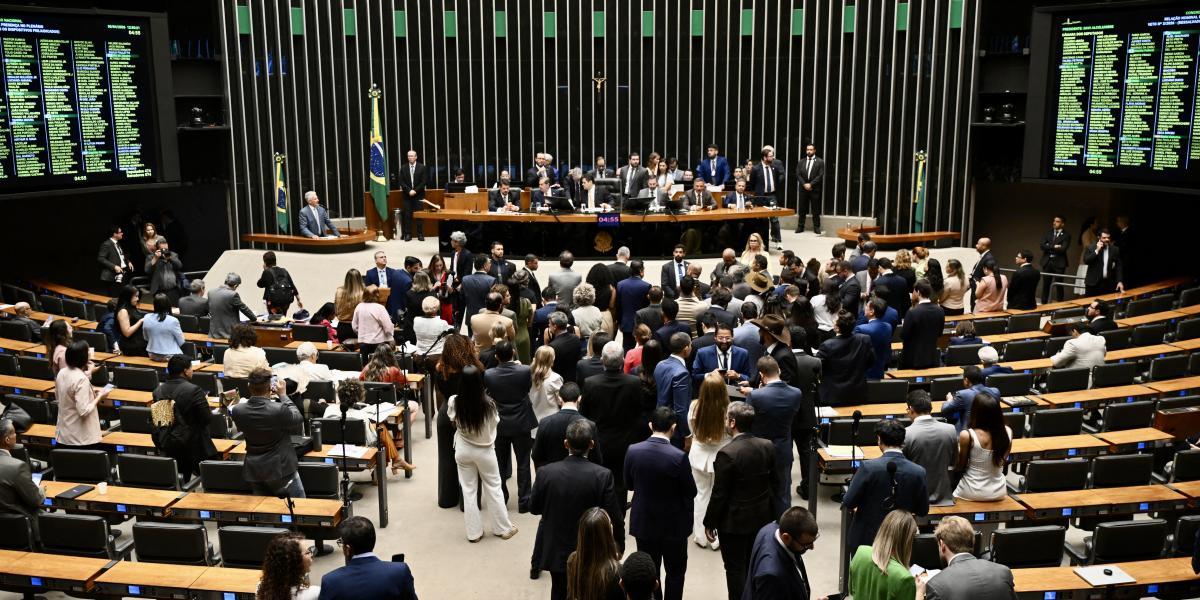
Brazil’s Congress overrode President Luiz Inácio Lula da Silva’s full veto of a bill that could reduce prison time for people convicted over the Jan. 8, 2023 attacks on Congress, the Supreme Court and the presidential palace.
“RIO DE JANEIRO (CN) — Brazil’s Congress on Thursday overrode President Luiz Inácio Lula da Silva’s full veto of a bill that could reduce prison time for people — including former President Jair Bolsonaro — convicted over the Jan”
The vote came on Thursday, when the veto was rejected by 318 lawmakers in the lower house and 49 senators, surpassing the absolute majority required in both chambers, according to Courthouse News.

The Guardian described the same Thursday session as the lower house overturning the veto with 318 votes, well above the 257 required, and the senate following by 49 votes, with 41 needed.
The bill, approved by Congress in December, is now set to become law, Courthouse News reported, and it changes how criminal sentences are calculated and enforced.
Under the bill, penalties for coup d’état and violent abolition of the democratic rule of law would not be added together when the crimes are committed in the same context, and only the harsher sentence would apply with an increase of one-sixth to one-half.
The bill also allows sentence reductions of one-third to two-thirds for attempted coup or attempted violent abolition of the democratic rule of law when the crimes were committed in a crowd, provided the defendant did not finance the acts or play a leadership role.
The bill’s effect on Bolsonaro depends on later judicial steps, with the Guardian noting lawyers must file a request for a sentence review with the supreme court.
How It Could Cut Bolsonaro
The legislative change is aimed at the sentencing framework for crimes tied to the Jan. 8, 2023 coup attempt, and it is explicitly connected to former President Jair Bolsonaro’s prison term.
Courthouse News said Bolsonaro was sentenced by Brazil’s Supreme Court in September 2025 to 27 years and three months in prison for five crimes related to his attempt to stay in power after losing the 2022 election.
The Guardian reported that if confirmed by a supreme court justice, Bolsonaro’s sentence would fall from 27 years and three months to 22 years and one month, and it also described a potential shift in time served in a closed regime from an estimated four to six years down to two to four years.
The Guardian added that the former president could move to an open regime as early as 2028, while also emphasizing that the reduction would not be automatic and would require a sentence review request by his lawyers.
AP, via myMotherLode, said it was unclear how much time Bolsonaro would serve, but analysts said the move could shave 20 years off his sentence, and it noted Bolsonaro is currently under house arrest.
RTE.ie, meanwhile, said the opposition carried the vote by a large majority of 318 to 144 in the Chamber of Deputies and 49 to 24 in the Senate, and it described Bolsonaro as 71 and sentenced last year to 27 years behind bars for coup plotting.
tv5monde and El Economista both described the bill as changing how detention time is calculated and as benefiting Bolsonaro and other defendants convicted by the Supreme Court for a coup attempt, with tv5monde also stating that Bolsonaro’s lawyers would have to file a petition for the Supreme Court to recalibrate the leniency arrangement.
Lula, Allies, and Opposition
The veto override unfolded as a direct political confrontation between Lula’s government and the conservative opposition, with lawmakers framing the bill as either a correction of excessive sentences or a threat to democratic order.
“Accessibility helpSkip to navigationSkip to main contentSkip to footer > Jair Bolsonaro’s prison time likely to be reduced as Brazilian lawmakers block Lula veto Subscribe to unlock this article Try unlimited access Only £1 for 4 weeks Then £59 per month”
Courthouse News reported that Bolsonaro allies defended the bill as a correction of sentences they considered excessive, and it quoted Senator Sergio Moro saying, “No one agrees with the invasion of public buildings, but people also cannot be convicted without evidence that they broke a glass of water and receive such harsh sentences,” adding, “I helped build a text that focused only on those convicted over Jan. 8.”
In the same Courthouse News account, Congresswoman Gleisi Hoffmann, a former president of the Workers’ Party and former institutional relations minister in Lula’s administration, said the session was “a disgrace to the country” and “an attack on the Constitution and our democracy,” and she warned, “To cover up for an attempted coup and for coup plotters is the same as saying: do it again.”
AP, via myMotherLode, quoted Sen. Espiridião Amin, a Bolsonaro ally, saying, “This is a first and much awaited step by those who are afflicted. The next stage is full amnesty,” and it also quoted lawmaker Lindberg Farias, a Lula ally, saying, “They want to release Bolsonaro, his jailed generals and stop federal police investigations that implicate them,” and “This is a day of infamy.”
The Guardian included Lula’s own rationale for vetoing the bill in January, quoting him: “This man [Bolsonaro] must remain in prison,” and it also quoted his veto statement that reducing sentences for an attempted coup would encourage similar crimes in the future.
tv5monde and El Economista added further voices from the legislative floor, including Bolsonarist deputy Luciano Zucco saying, “For the greater leader of the right, Jair Messias Bolsonaro, the right votes 'no' to the veto and hopes that broad and general amnesty will come with Flávio Bolsonaro's election,” while Pedro Uczai, the PT leader in the lower house, said, “What happened here today is dangerous; the advance of the far right foreshadows new assaults on democracy in the future.”
The clash also extended to the Supreme Court nomination fight, with myMotherLode noting that the opposition’s win came after Lula’s nominee to a seat in the Supreme Court was rejected by the country’s Senate, a first in 132 years, and with tv5monde describing the sequence as Lula’s second defeat in less than 24 hours.
Legal and Constitutional Fight
Beyond the immediate vote, the sources describe a legal battle over whether the sentencing bill can be applied and whether it violates constitutional principles.
Courthouse News quoted criminal law professor Antonio José Teixeira Martins, saying that with the veto override, the law takes effect as originally drafted and that because it is a more favorable criminal rule, it can apply retroactively and reach cases that have already been decided.

Martins also said defense attorneys will have to ask the judiciary to review the sentences, and he warned that the main legal challenge may center on the law’s constitutionality.
Courthouse News further reported that Martins viewed the change as breaking with the general logic of Brazil’s Penal Code by creating a separate rule for crimes against the democratic rule of law and replacing technical criteria with a broader notion of the crimes’ “context.”
It also said Martins saw a risk of violation of separation of powers if the Legislature is understood to have acted to alter the effects of specific judicial decisions.
The Guardian similarly stressed that the reduction would not be automatic and would require a sentence review request with the supreme court, and it described the bill as reducing not only Bolsonaro’s sentence but also that of about 280 others convicted over the attempted coup.
Courthouse News added that Senator Randolfe Rodrigues said the veto override could be challenged on the grounds that crimes against the democratic rule of law are not subject to amnesty, pardon or sentence reduction, and it said Alcolumbre declared parts of the bill moot because they could conflict with the Anti-Faction Law, enacted in March.
Election Stakes and Aftermath
The veto override is portrayed across the sources as having immediate political consequences ahead of Brazil’s October presidential election and as potentially reshaping the campaign landscape.
“The Brazilian Congress approved, on Wednesday, December 17, a bill aimed at reducing former president Jair Bolsonaro's prison sentence, who was sentenced in September to 27 years in prison for attempted coup d'État”
myMotherLode said the decision was likely to be appealed to the Supreme Court and that it could potentially upend the nation’s October presidential election, while also noting that Bolsonaro’s reduction could shave 20 years off his sentence and that he is currently under house arrest.

The Guardian described the legislative sequence as a second major blow in less than 24 hours for Lula, who will seek re-election in October in what it called a tight race against one of Bolsonaro’s sons, the senator Flávio Bolsonaro, who took part in the vote.
tv5monde and El Economista both tied the session to the election timeline, with tv5monde saying the setback comes six months before the election in which Lula, 80, must seek an unprecedented fourth term, and it described the vote as a law that opens the way to reducing prison sentences of those convicted by the Supreme Court for a coup attempt.
Courthouse News also said the application of the new bill would depend on a judicial decision during the sentence enforcement phase, and it described how the law could reduce Bolsonaro’s sentence and shorten the minimum time he must serve in a maximum-security facility.
Several sources also described the Supreme Court nomination fight as part of the same political moment, with myMotherLode saying Lula had his nominee to a seat in the Supreme Court rejected by the country’s Senate, a first in 132 years, and with tv5monde describing that Wednesday evening rejection as something that hadn’t happened for decades.
In the aftermath, the sources show that the legislative win is not the end of the process, but a step that triggers further court filings, appeals, and election-focused political messaging.
More on South America

Bomb Attack on Colombia’s Pan-American Highway Kills at Least 14 in Cajibío, Cauca
21 sources compared

Mexico, Spain and Brazil Pledge More Aid to Cuba, Urge Protection of Sovereignty
12 sources compared

IMF And World Bank Resume Dealings With Venezuela Under Interim President Delcy Rodriguez
10 sources compared
Peru Holds Presidential Election With 35 Candidates Amid Political Chaos
14 sources compared