
South America · 30 April, 2026 · 8 min read
Brazil’s Congress Overrode Lula’s Veto, Reducing Jair Bolsonaro’s 27-Year Prison Sentence
Brazil’s Congress overturned Lula’s veto, reducing Jair Bolsonaro’s 27-year coup sentence. Legislation could substantially shorten Bolsonaro’s sentence and affect elections.
9 of 11 outlets skipped it: courthouse News describes specific sentencing mechanics with granular ranges (one-sixth to one-half increases; attempted-coup/attempted-violent-abolition reductions of one-third to two-thirds) and mentions Bolsonaro sentencing details (five crimes, date/length)..
18outlets compared
Same story, two versions
tap a side to read it in full
The Guardian
““If confirmed by a supreme court justice, Bolsonaro’s sentence would fall from 27 years and three months to 22 years and one month.””Read the original ↗
The Killeen Daily Herald
““The reduction of Bolsonaro’s sentence… will not be automatic””Read the original ↗
One framing emphasizes formal ‘confirmation by a supreme court justice,’ while another stresses that release/changes are not automatic—both point to legal uncertainty, but they locate the gatekeeping power differently (confirmation vs. lawyer-initiated sentence review).
Veto Overridden in Brazil
Brazil’s Congress overrode President Luiz Inácio Lula da Silva’s full veto of a bill that could reduce prison time for people including former President Jair Bolsonaro, after lawmakers rejected the veto on Thursday.
“The veto was rejected by 318 lawmakers in the lower house and 49 senators”
The Courthouse News report says the veto was rejected by 318 lawmakers in the lower house and 49 senators, surpassing the absolute majority required in both chambers, and that the bill is now set to become law.

Reuters, via 102.7 WBOW, described the move as Congress overturning Lula’s veto on a bill that “sharply reduc[es]” Bolsonaro’s 27-year prison sentence for plotting a coup after losing the 2022 election.
The Guardian reported that in the session on Thursday the lower house overturned the veto with 318 votes, well above the 257 required, and the senate followed by 49 votes, with 41 needed.T
The Courthouse News account says the bill, known in Brazil as the sentencing calculation bill, changes how criminal sentences are calculated and enforced, including how penalties for coup d’état and violent abolition of the democratic rule of law would be applied when committed in the same context.
It adds that in those cases only the harsher sentence would apply, with an increase of one-sixth to one-half, and that it allows sentence reductions of one-third to two-thirds for attempted coup or attempted violent abolition when crimes were committed in a crowd, provided the defendant did not finance the acts or play a leadership role.
Multiple outlets also tied the legislative fight to Lula’s broader political calendar, with the Guardian saying it marked “a second major blow in less than 24 hours” for the leftwing president ahead of his October re-election bid.
What the Law Changes
The bill at the center of the veto override is described as a sentencing calculation bill that alters how criminal sentences are calculated and enforced, with specific rules for coup-related crimes and for attempted offenses committed in crowds.
Courthouse News says the bill would prevent penalties for coup d’état and violent abolition of the democratic rule of law from being added together when crimes are committed in the same context, and that instead only the harsher sentence would apply with an increase of one-sixth to one-half.
It also says the bill allows sentence reductions of one-third to two-thirds for attempted coup or attempted violent abolition of the democratic rule of law when crimes were committed in a crowd, provided the defendant did not finance the acts or play a leadership role.
Reuters, via 102.7 WBOW, said the bill approved in December cut Bolsonaro’s prison term to “just over two years” and reduced sentences for those convicted over their roles in a January 2023 riot in which Bolsonaro supporters invaded and ransacked the presidential palace, Supreme Court and Congress.
The Guardian reported a different but related set of figures, saying if confirmed by a supreme court justice Bolsonaro’s sentence would fall from 27 years and three months to 22 years and one month, and that the time served in a closed regime could drop from between four and six years to between two and four years, meaning he could move to an open regime as early as 2028.T
Fairfield Sun Times, meanwhile, reported that the opposition carried the vote by 318 to 144 in the Chamber of Deputies and 49 to 24 in the Senate, and said the law changing how prison sentences are calculated would reduce Bolsonaro’s term to “a little over two years.”
Across outlets, the legislative change is linked to Bolsonaro’s conviction and current confinement, with Courthouse News saying he was sentenced by Brazil’s Supreme Court in September 2025 to 27 years and three months and with Reuters saying he began serving his sentence in November and is under “humanitarian house arrest” due to health concerns.
Competing Political Voices
The veto override and the bill’s implications drew sharply contrasting reactions from lawmakers and legal figures, with Bolsonaro allies defending the measure and Lula-aligned lawmakers denouncing it as an attack on constitutional order.
“No one agrees with the invasion of public buildings, but people also cannot be convicted without evidence that they broke a glass of water and receive such harsh sentences”
Courthouse News says that during the session Bolsonaro allies defended the bill as a correction of sentences they considered excessive, and it quotes Senator Sergio Moro saying, “No one agrees with the invasion of public buildings, but people also cannot be convicted without evidence that they broke a glass of water and receive such harsh sentences,” adding, “[That is why] I helped build a text that focused only on those convicted over Jan. 8.”
The same Courthouse News report quotes Congresswoman Gleisi Hoffmann saying the session was “a disgrace to the country” and “an attack on the Constitution and our democracy,” and it includes her warning: “Vandalize Congress again. Vandalize the Supreme Court again. Vandalize the presidential palace again. And try to stage a coup to remove an elected president. That is the message we leave for the future.”
It also reports that government-aligned and left-wing lawmakers accused Congress of trying to soften the judicial response to the attacks on the seats of Brazil’s three branches of government.
In a different framing, the Killeen Daily Herald quotes Sen. TEspiridião Amin, a Bolsonaro ally, saying, “This is a first and much awaited step by those who are afflicted. The next stage is full amnesty,” and it describes Lula’s position as weakened in Congress ahead of October’s election.
The Associated Press material carried by WTOP includes a Lula ally’s condemnation, with lawmaker Lindberg Farias saying, “They want to release Bolsonaro, his jailed generals and stop federal police investigations that implicate them,” and calling it “This is a day of infamy.”
Courthouse News also brings in criminal law professor Antonio José Teixeira Martins, who said that with the veto override, “the law takes effect as originally drafted,” and that because it is a more favorable criminal rule it can apply retroactively, while defense attorneys would have to ask the judiciary to review sentences.
How Outlets Framed the Same Vote
While the core fact of the veto override was consistent across outlets, the reporting diverged on what the bill would practically mean for Bolsonaro’s sentence and on how the political stakes were portrayed.
The Guardian emphasized a conditional pathway, saying “If confirmed by a supreme court justice” Bolsonaro’s sentence would fall from 27 years and three months to 22 years and one month, and it described a potential move to an open regime as early as 2028, while also noting that “the reduction of Bolsonaro’s sentence, as he remains under house arrest, will not be automatic; his lawyers will need to file a request for a sentence review with the supreme court.”T
Courthouse News, by contrast, focused on the bill’s mechanics and legal theory, quoting Antonio José Teixeira Martins that “with the veto override, the law takes effect as originally drafted,” and that because it is a more favorable criminal rule it can apply retroactively, while defense attorneys would have to ask the judiciary to review the sentences.
Reuters via 102.7 WBOW framed the outcome in terms of a sharp reduction to “just over two years,” and it described the bill as cutting prison term and reducing sentences for those convicted over roles in the January 2023 riot.
Fairfield Sun Times and WTOP both described the vote counts and the political impact, with Fairfield Sun Times saying the opposition carried the vote by 318 to 144 in the Chamber of Deputies and 49 to 24 in the Senate, and WTOP saying the decision “likely to be appealed to the Supreme Court” and “could potentially upend the nation’s October presidential election.”
National Post offered yet another set of figures, saying the bill “will reduce Bolsonaro’s sentence to 20 years and nine months” and “caps the time he would spend behind bars in a so-called ‘closed regime’ to two years and four months,” while also citing a lower-house calculation that Bolsonaro currently faces “six to eight years.”
Even the Reuters-based account in 102.7 WBOW described Bolsonaro’s confinement as “humanitarian house arrest,” while the Guardian described him as under house arrest and said Lula had not yet commented on the decision.T
Legal Challenges and Election Stakes
The veto override sets up a legal and political fight over whether the sentencing changes can survive judicial review and how quickly they could affect Bolsonaro and other defendants tied to the January 8, 2023 events.
“declared parts of the bill moot because they could conflict with the Anti-Faction Law, enacted in March”
Courthouse News says the session was presided over by Senate President Davi Alcolumbre, who declared parts of the bill moot because they could conflict with the Anti-Faction Law, enacted in March, and it reports that left-wing parties challenged Alcolumbre’s decision and said they plan to take the case to the Supreme Court.
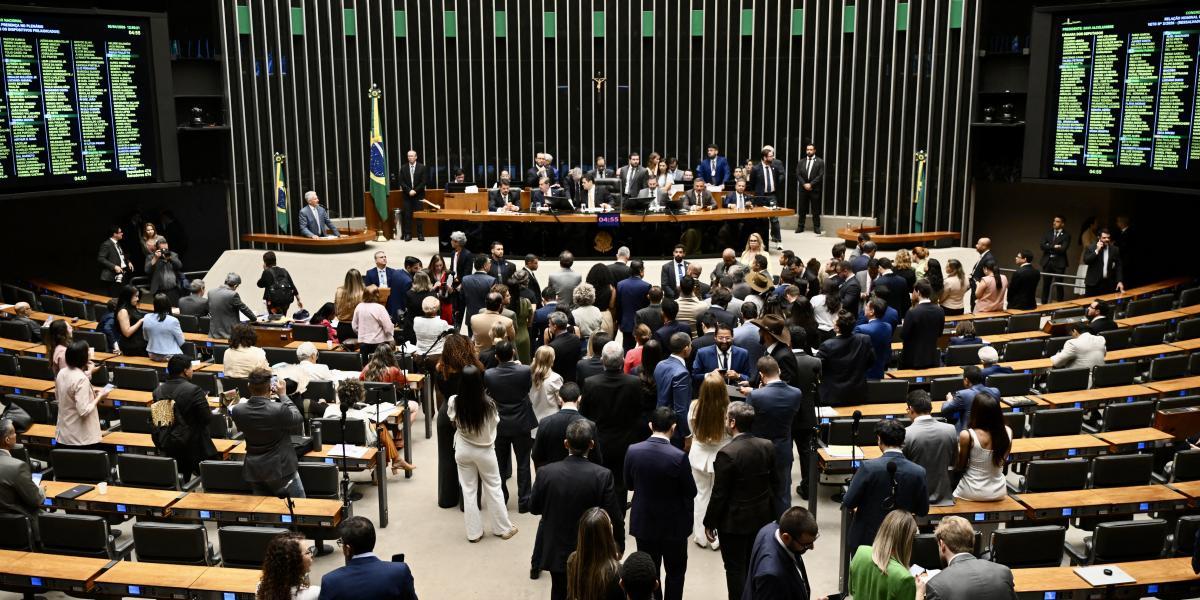
It also says Senator Randolfe Rodrigues, the government leader in Congress, argued the veto override could be challenged on the grounds that crimes against the democratic rule of law are not subject to amnesty, pardon or sentence reduction, while Martins said the main legal challenge may center on the law’s constitutionality.
The Killeen Daily Herald and WTOP both emphasized that the legislation will be challenged in court and that Bolsonaro’s lawyers would need to seek review, with WTOP stating the decision “likely to be appealed to the Supreme Court” and that it “could potentially upend” October’s election.
The Guardian likewise said the reduction “will not be automatic” and that “his lawyers will need to file a request for a sentence review with the supreme court,” while also noting that Lula had vetoed the bill in January saying reducing sentences for an attempted coup would encourage similar crimes in the future and that “This man [Bolsonaro] must remain in prison.”T
Beyond Bolsonaro, the Guardian said the new law reduces not only his sentence but also that of about 280 others convicted over the attempted coup to overturn the result of the 2022 election, and Reuters via 102.7 WBOW said the bill reduced sentences for those convicted over their roles in the January 2023 riot.T
The political stakes were also framed through the election campaign, with the Guardian saying the veto override and the Supreme Court nominee rejection were interpreted as evidence Lula would face a difficult election, and with Fairfield Sun Times describing shouting and jeers in Congress and chanting “freedom” and the name of presidential hopeful Flavio Bolsonaro.T