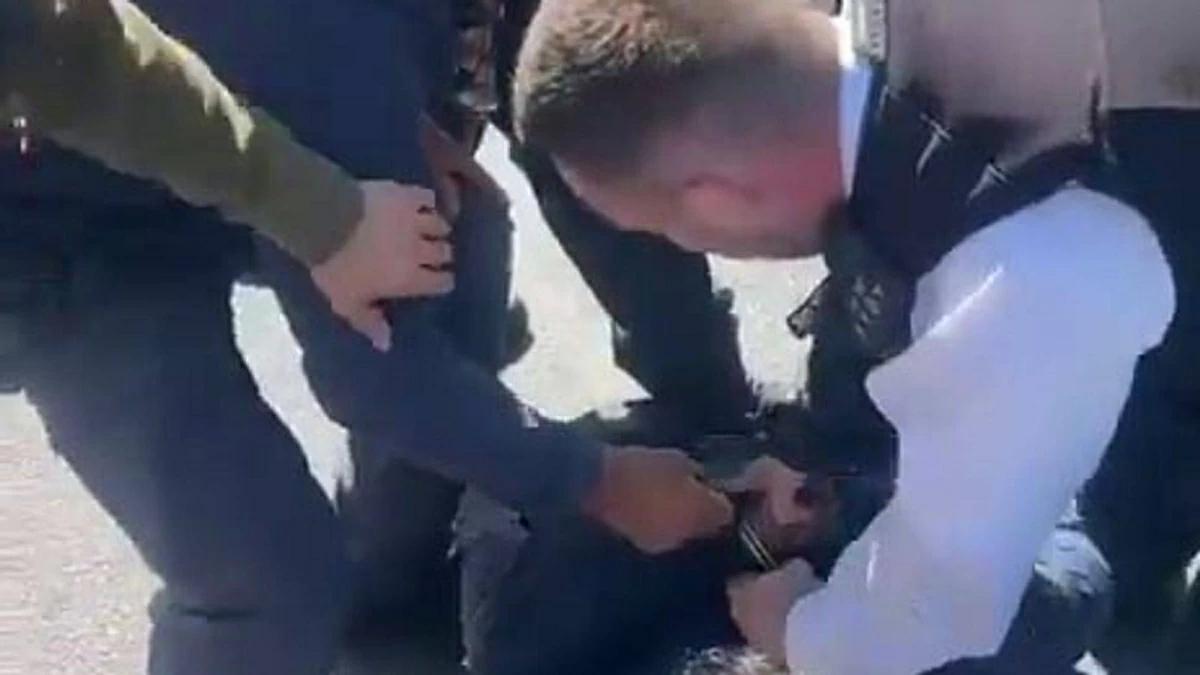
Britain Raises Terror Threat To Severe After Antisemitic Stabbing In Golders Green
Key Takeaways
- Two men stabbed in Golders Green; attack treated as terrorist with suspected antisemitic motive.
- UK raised national terrorism threat level to severe after antisemitic stabbing attacks.
- Antisemitism emergency declared; government pledges increased protection for Jewish communities.
Threat Level Raised
Britain raised its national terrorism threat level to “severe” from “substantial” on Thursday, a day after an antisemitic stabbing attack in north London in which two Jewish men were stabbed in the Golders Green area.
“Antisemitism 'a national security emergency', government terror adviser says Attacks on Jewish people in the UK are "the biggest national security emergency" in almost a decade, the government's adviser on terrorism has told the BBC”
Reuters reported that the increase to the second-highest threat level out of five means a terrorist attack within the next six months is “highly likely,” and said the decision was made independently by the Joint Terrorism Analysis Centre.
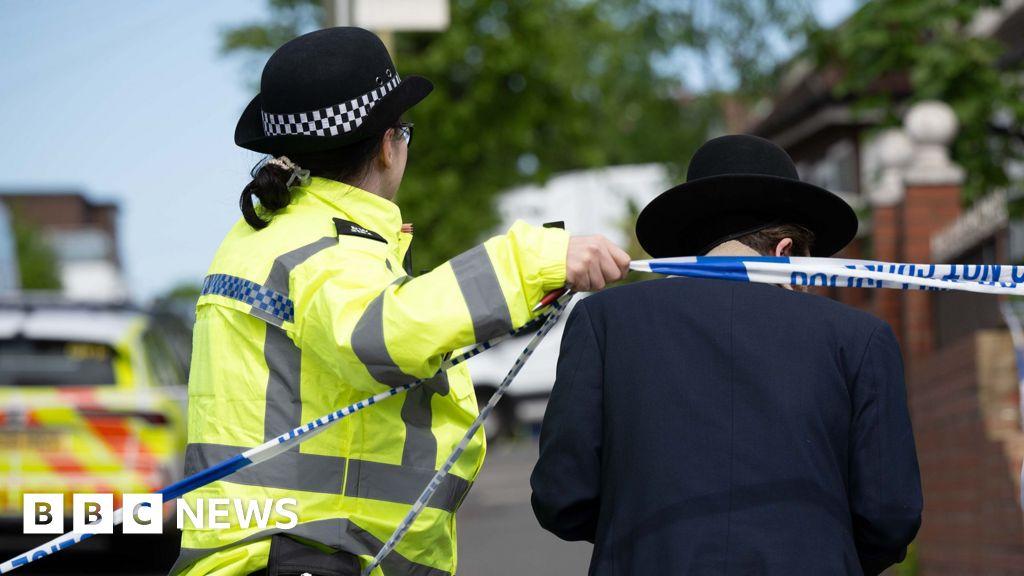
The BBC reported that Jonathan Hall KC said attacks on Jewish people in the UK are “the biggest national security emergency” in almost a decade, and that the threat level was last at “severe” in February 2022.
NPR similarly described the government’s move as an antisemitism emergency response after Wednesday’s stabbing, saying severe is the second-highest rung on a five-point scale and means an attack is “highly likely in the next six months.”
Multiple outlets tied the escalation directly to the Wednesday attack, with CNN and Reuters both describing the stabbing as a terrorist incident and noting the suspect was arrested.
The BBC named the victims locally as Shloime Rand, 34, and Moshe Shine, 76, and said a 45-year-old British national born in Somalia was arrested on suspicion of attempted murder.
In parallel, the BBC said Home Secretary Shabana Mahmood told BBC Breakfast she did not agree that attacks against Jewish people amounted to a national emergency, while also insisting the government was treating the issue as an “absolute priority.”
What Happened in Golders Green
The stabbing attack that triggered the threat-level change took place in Golders Green, north London, where police said two Jewish men were stabbed on Wednesday and treated at the scene before being taken to hospital.
France 24 reported that the victims were “one in his thirties and the other in his seventies,” and said police described the incident as being treated as “terrorist,” with officers investigating whether the assault targeted Jews specifically.

The BBC said the attack was declared a terrorist incident and that the suspect was a 45-year-old British national who came to the UK from Somalia as a child, arrested on suspicion of attempted murder.
CNN reported that one victim was stabbed at a bus stop while putting on his kippah, and the other was stabbed as he walked down the street, and said both men were in a stable condition in hospital.
Reuters described the suspect as having a history of serious violence and mental health issues, and said police confirmed he had previously been referred to the counter-radicalisation scheme Prevent in 2020.
Reuters also said local media reported the suspect had served time in prison for an incident in 2008 when he stabbed an officer and a police dog.
The BBC added that at a meeting of criminal justice agencies on Thursday, Prime Minister Sir Keir Starmer said there was “no getting away from the fact that this was not a one-off,” and described it as “a series of attacks on our Jewish community.”
In parallel, CBS News reported that Starmer was heckled during his visit to Golders Green, where residents shouted insults including “traitor” and “coward,” and described “utter horror” from an Orthodox Jewish resident who said, “We have to live in fear — constantly looking behind our backs.”
Starmer, Mahmood, and Hall Respond
Prime Minister Keir Starmer framed the government’s response as both security and accountability after the stabbing, promising stronger action to protect Jewish people and saying “People are scared, scared to show who they are in their community.”
““If you are visibly Jewish, you’re not safe” in Britain, the country’s chief rabbi said Thursday, expressing the anxiety of the British Jewish community after two men were stabbed in a London neighborhood already reeling from several recent antisemitic attacks”
Reuters reported that Starmer vowed more police in Jewish areas, a crackdown on those spreading antisemitism, and new legislation to deal with state-sponsored threats from the likes of Iran.
In the same Reuters account, Starmer said, “We need stronger powers to tackle the malign threat posed by states like Iran, because we know for a fact that they want to harm British Jews,” and described the government’s plan to fast-track legislation allowing prosecution of people acting as proxies of a state-sponsored group.
The BBC reported that Starmer told a meeting of criminal justice agencies that there was “no getting away from the fact that this was not a one-off,” and said the response must be “swift and visible.”
Home Secretary Shabana Mahmood told BBC Breakfast she did not agree that attacks against Jewish people amounted to a national emergency, but insisted the government was treating the issue as an “absolute priority,” while also describing it as an emergency for her in her role as home secretary.
Jonathan Hall KC, the government’s adviser on terrorism, told the BBC that attacks on Jewish people are “the biggest national security emergency” in almost a decade and said British Jews were “now thinking they cannot live a normal life.”
Laurence Taylor, head of counter-terrorism policing, told Reuters and CNN that Britain was seeing an “elevated threat to Jewish and Israeli individuals and institutions in the UK,” and said police were working “against an unpredictable global situation that has consequences closer to home, including physical threats by state-linked actors.”
Chief Rabbi Sir Ephraim Mirvis told the BBC that Wednesday’s attack “proves that if you are visibly Jewish, you're not safe and far more needs to be done,” while the Board of Deputies of British Jews and the Jewish Leadership Council said they were “sickened” and that security measures were essential but “not the answer.”
Funding, Policing, and Protests
Alongside the threat-level change, the government announced additional funding for security and policing in Jewish communities, while Starmer faced heckling and criticism from within the community.
The BBC reported that the government announced an extra £25m in funding for increased police patrols and security in Jewish communities, and said the funding would be used to put further protections in place around synagogues, schools and community centres.
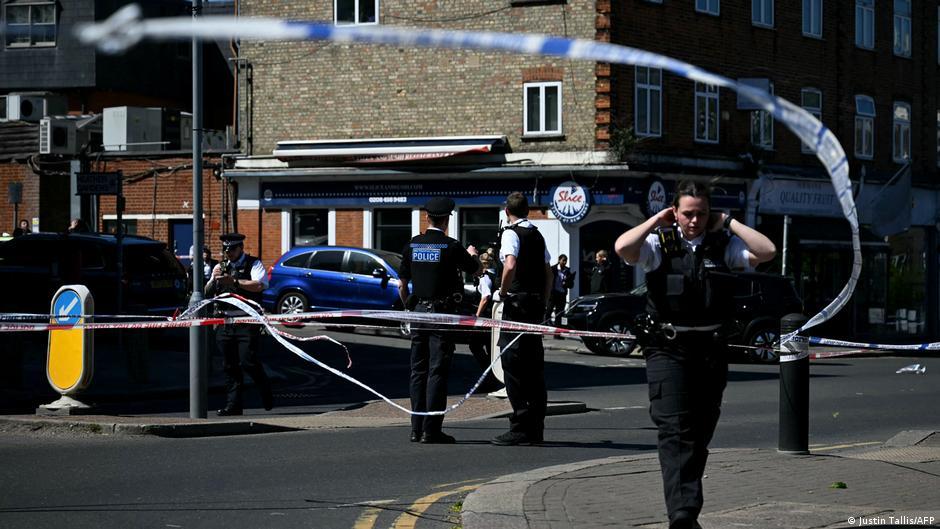
CNN reported that the government announced a further £25 million ($34 million) to help fund increased security for Jewish communities, focusing on synagogues, schools and community centers, and said it was in addition to £33 million ($44.5 million) the government previously pledged earlier this year, according to PA Media.
Reuters said Starmer promised more police in Jewish areas and a crackdown on those spreading antisemitism, and described the government’s plan to fast-track legislation for prosecution of people acting as proxies of a state-sponsored group.
NPR described Starmer’s televised response at 10 Downing St., quoting him saying, “Antisemitism is an old, old hatred. History shows that the roots are deep, and if you turn away, it grows back,” and said he also promised a “swift and visible” criminal justice response.
CBS News reported that Starmer was heckled Thursday during his visit to Golders Green, with residents shouting insults including “traitor” and “coward,” and quoted an Orthodox Jewish resident saying, “We have to live in fear — constantly looking behind our backs.”
CBS News also quoted Ben Grossnass, a volunteer with Shomrim, saying, “There's been a number of arson attacks on synagogues, and a huge uptick in antisemitism locally in our community,” and said the community was “in shock, understandably.”
In the same CBS account, Dov Forman, a 22-year-old author and activist from Golders Green, said, “No one here is shocked or surprised that this has happened,” and argued that chants at pro-Palestinian protests calling “globalize the intifada” had been “allowed to go unchecked in this country for years.”
Competing Frames and Next Steps
Reporting on the broader wave of antisemitic violence and the government’s response shows sharp differences in emphasis, particularly around whether the issue is framed as a security emergency, a national emergency, or a wider societal failure.
“Two people were injured on Wednesday in a stabbing in London, and British police say the attack is being treated as 'terrorist,' with officers investigating whether the assault targeted Jews specifically”
The BBC presented Jonathan Hall KC’s view that attacks on Jewish people are “the biggest national security emergency” in almost a decade, while also quoting Home Secretary Shabana Mahmood saying she did not agree that attacks against Jewish people amounted to a national emergency and that she was treating it as an “absolute priority.”
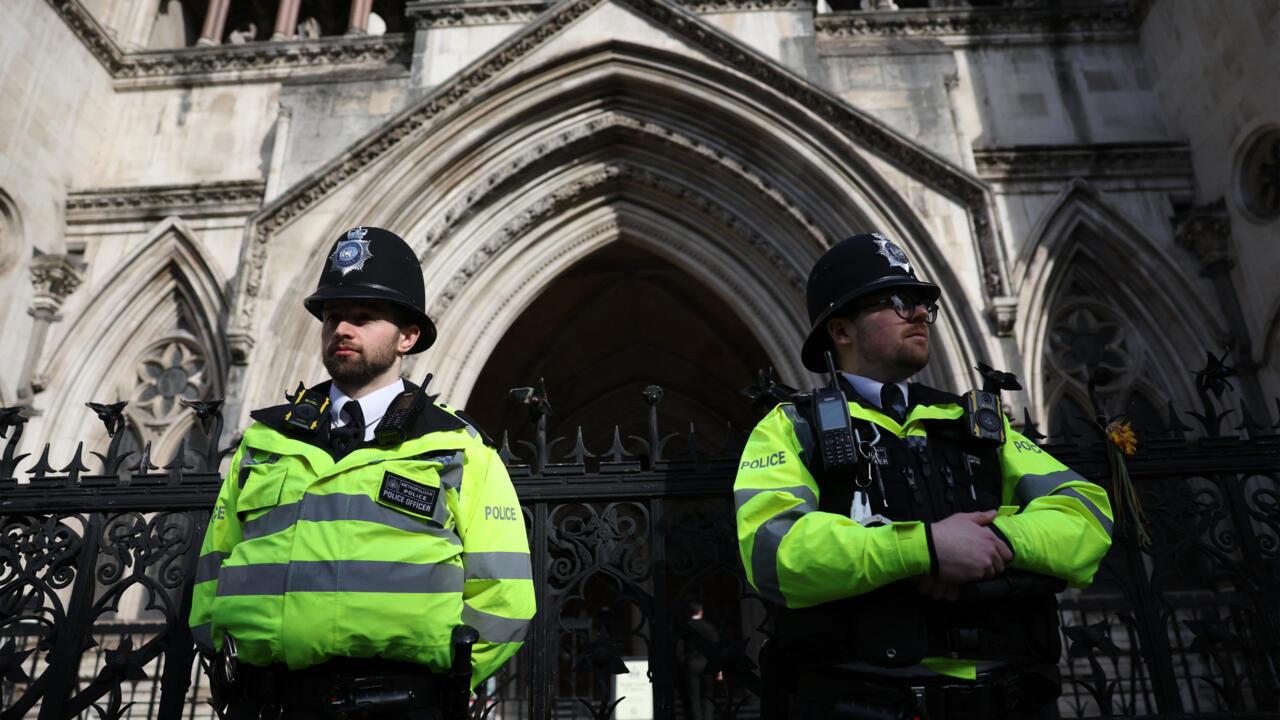
NPR described the government’s stance as an antisemitism emergency and said police have arrested a 45-year-old man on suspicion of attempted murder and labeled the stabbing attack as an act of terrorism, while also noting detectives were working to determine motive and whether there was any link to Iranian proxies.
CNN similarly said the Joint Terrorism Analysis Centre raised the threat level to “severe” and quoted Laurence Taylor that threats were driven by a rise in both Islamist and extreme right-wing terrorism, and it reported that claims of responsibility by a shadowy Iranian-backed group were being investigated.
Reuters, meanwhile, reported that officials said the assessment reflected the latest intelligence and a longer-term rise in extremist threats, and said the classification came against a spate of recent attacks in London and mounting security concerns linked to foreign states.
The Jerusalem Post framed the moment as “the end of a golden era,” describing a call by the Campaign Against Antisemitism for Britain’s March Against Antisemitism and Extremism in the center of London on May 10, and quoted Gideon Falter saying, “it feels like I booked a front row seat for the fall of civilization.”
In that same Jerusalem Post account, Falter said, “The Jewish community is the canary in the coal mine,” and warned that if action is not taken urgently, “there will be more extremists in this country with an inclination to violence than the security forces could possibly keep track of or address.”
Looking ahead, the BBC said the government’s enhanced security measures would mean “people can go about their business,” while also stressing that security could only tackle the “end of the problem” and that more must be done to address antisemitism “at its root.”
More on Britain
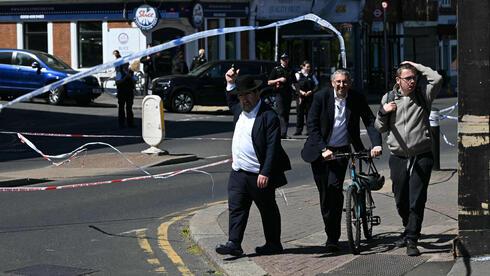
UK Raises Terror Threat Level to Severe After Golders Green Stabbing of Two Jewish Men
97 sources compared

Sir Christian Turner Says U.S. Only Special Relationship Is Probably Israel
14 sources compared

British Influencer Rachel Kerr Missing After Checking Out of Caribbean Village Agadir, Morocco
14 sources compared

King Charles III Warns U.S.-U.K. Relationship Cannot Rest on History Alone in Congress Speech
24 sources compared