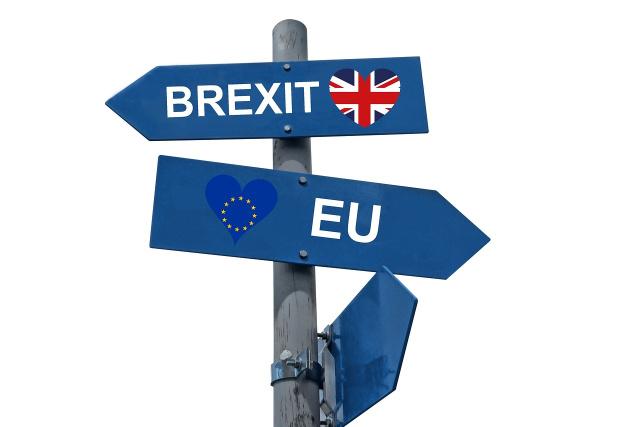
British Business Leaders Say Brexit Has Fallen Short Of Promises After 10 Years
Key Takeaways
- Post-Brexit UK economy underperforms, with measurable GDP costs and weaker growth.
- Trade with the EU penalized; investment decline and job-market disruption.
- GDP per capita 6-8% lower than it would have been without Brexit.
A decade of costs
Ten years after Britain voted to leave the European Union, British business leaders on both sides of the 2016 referendum say Brexit has fallen short of what was promised, with Simon Boyd of REIDSteel telling The Associated Press, "It's very sluggish."
“The British people have spoken and the answer is: we are out”
CNN said the June 23, 2016 Brexit referendum marked the start of the United Kingdom’s drawn-out divorce from the European Union, with 51.9% of Britons opting to leave and 48.1% to remain.

Michael Saunders, a senior adviser at consultancy Oxford Economics and a former Bank of England official, told CNN that "Brexit is a constant drag on the economy," adding that it reduces the level of gross domestic product compared to what it would otherwise be.
The same CNN report said economists broadly agree that leaving the EU has weighed on the UK’s economic growth potential, with estimates ranging from 2% to as much as 8% of foregone output.
The India Today report also pointed to a decade of strain, citing that EU countries still account for 41 per cent of Britain’s exports and half its imports, according to the latest government figures.
Voices diverge on blame
While some figures who supported Brexit argue it has been undermined by politics, Boyd said in the India Today report that Brexit had not matched what was promised and blamed "politicians whom he said were not committed to delivering it."
In the same India Today account, Creon Butler of Chatham House said leaving the European single market had lasting consequences, telling reporters, "it has been a major loss of wealth and prosperity for us through the choice we made to leave."

CNN quoted Michael Saunders saying Brexit continues to reduce government revenue and prompting tax hikes and spending cuts, as the report described economists broadly agreeing the decision damaged growth potential.
The Novinite report said Michael Saunders described Brexit as "a constant drag on the economy," while also citing a pro-Leave economist, Julian Jessop, who said the "initial impact has clearly been negative."
The India Today report said Prime Minister Keir Starmer has begun talks with the EU to rebuild a closer relationship, with a survey by Ipsos, the Policy Institute at King's College London and UK in a Changing Europe finding 48 per cent of 2,245 adults in May said Brexit was going worse than they expected.
What comes next
The ABC report said the United Kingdom left the European Union on 31 January 2020 and completed its exit from the Single Market and the customs union on 1 January 2021, while also describing a continuing debate over the economic cost and the place the UK occupies in Europe.
“Ten years ago, Britain chose to abandon its lucrative membership of the world’s largest single market”
It added that Prime Minister Keir Starmer has been driving a "reset" strategy for relations with Brussels since taking office at Downing Street, aiming to strike deals in trade, energy, education, culture, and security that would reduce some of the frictions created by Brexit.
The same ABC report said the estimates gathered by UK in a Changing Europe indicate that the potential economic benefits of that rapprochement would be modest, with the long-run GDP increase hardly exceeding 0.5%.
In parallel, the India Today report said Britain has since signed dozens of trade deals with countries including Australia, India and the United States, even as EU countries still account for 41 per cent of exports and half of imports.
CNN said the Brexit process began with the June 23, 2016 referendum and that the watershed decision triggered a period of political instability and economic upheaval that is still being felt a decade later.
More on Britain
Keir Starmer Resigns as Labour Forces Exit After Andy Burnham Oath in Parliament
19 sources compared

King Charles Publishes Personal Tax Bill to Enhance Transparency of Royal Finances
11 sources compared

Police Scotland Investigate Anti-Muslim Attacks in Edinburgh After Five Men Injured
10 sources compared

East Midlands Railway Trains Collide Near Bedford, Killing Driver and Injuring Dozens
12 sources compared