Crypto09 April, 20261 min read
Chainalysis Projects Stablecoin Volumes Could Reach $1.5 Quadrillion By 2035
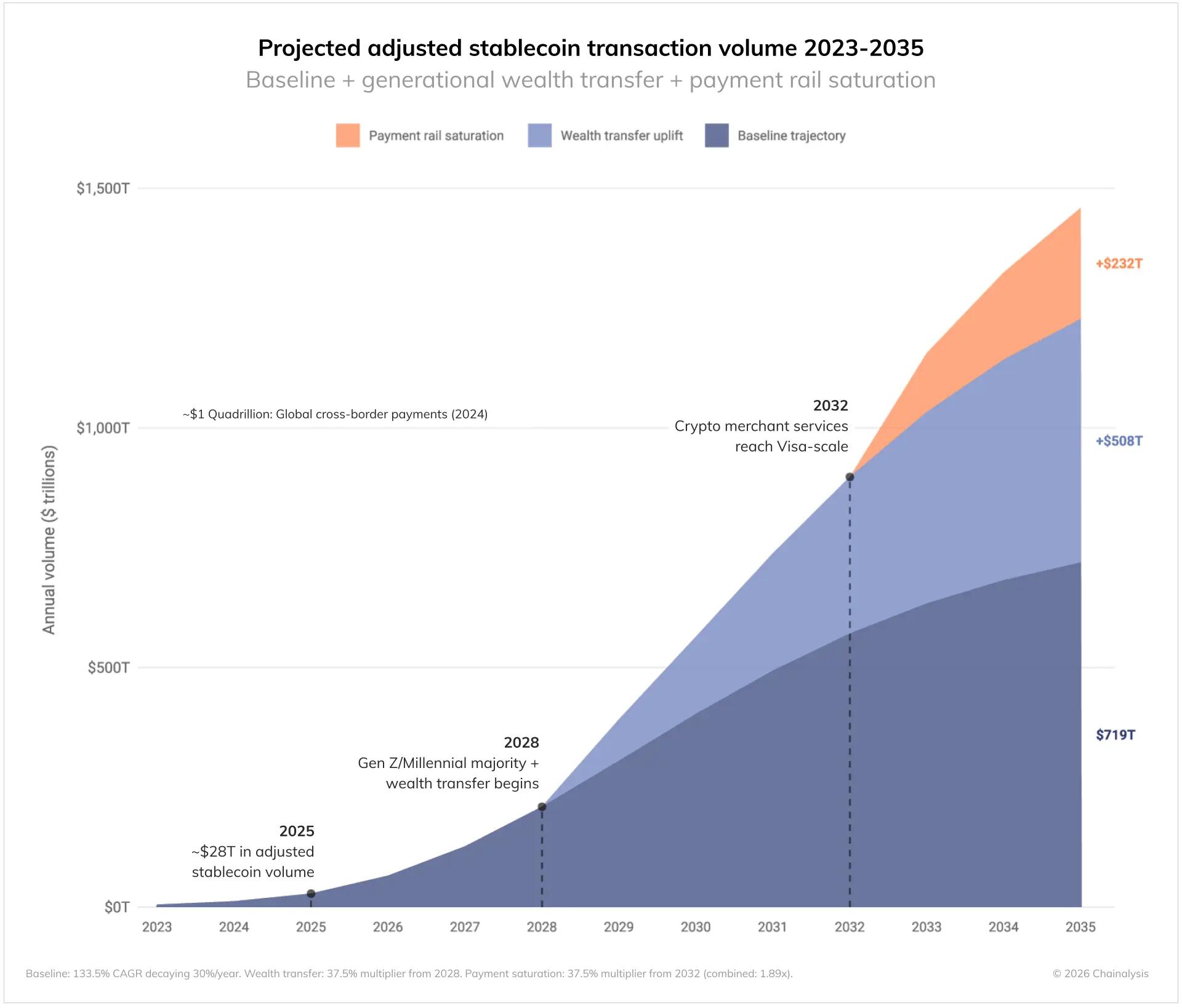
Stablecoin transaction volumes could reach $1.5 quadrillion by 2035. Base projection estimates $719 trillion by 2035; catalysts could push to $1.5 quadrillion.

Stablecoin Surge
Chainalysis forecasts adjusted stablecoin volumes could hit $719 trillion by 2035 through organic growth alone. Factoring in macroeconomic catalysts, volumes could approach $1.5 quadrillion. Stablecoins processed roughly $28 trillion in real economic activity in 2025, excluding trading noise.
Stablecoin payment volumes could match Visa and Mastercard off-chain volumes between 2031 and 2039. The generational shift alone could add $508 trillion in annual volumes by 2035.

Competitive Pressure
Chainalysis projects on-chain stablecoin payments could match Visa and Mastercard volumes no later than 2039. Stablecoins enable near-instant settlement, 24/7, as well as programmable transactions. Paying with stablecoins is moving from being a deliberate choice to becoming invisible infrastructure.
Stripe and Mastercard’s acquisitions of Bridge and BVNK signal a market where stablecoins are part of core payments infrastructure. Standard Chartered flagged that stablecoin usage is rising faster than expected.
Regulatory and Privacy Challenges
The rapid advancement of AI presents a growing challenge to blockchain privacy. A substantial percentage of stablecoin transaction volume is driven by automated trading and bot functions. This raises questions about the true economic utility of stablecoins for everyday transactions.
Regulatory frameworks are evolving, but concerns persist around reserve asset quality and AML controls. The durability of current privacy models under future AI advancements remains a significant unknown.
Hybrid Future
The future for stablecoins likely involves a hybrid approach. Traditional payment networks provide established trust and global merchant acceptance. Stablecoins carve out specific use cases where their efficiencies are most impactful.
The rapid growth and integration of stablecoins into mainstream finance is undeniable. The path forward will require navigating regulatory complexity and technological challenges.
