
Technology and Science · 21 April, 2026 · 7 min read
China And India’s Solar Surge Kept Fossil Generation Flat In 2025, Ember Finds
China filed a WTO complaint against India over solar subsidies. China and India are central to the reported historic solar shift.
Framing of the story: global energy-transition achievement vs. trade-dispute focus.
2 of 3 outlets skipped it: a record surge in clean power met global electricity demand growth in 2025, preventing any increase in fossil fuel generation..
3outlets compared
Same story, two versions
tap a side to read it in full
Climate Home News
“A record surge in clean power met all global electricity demand growth in 2025, preventing any increase in fossil fuel generation, according to energy think tank Ember.”Read the original ↗
pv magazine España
“China ha presentado una denuncia ante la Organización Mundial del Comercio (OMC) contra las subvenciones que este país concede a su sector fotovoltaico, según ha confirmado el Ministerio de Comercio chino.”Read the original ↗
Shows how one outlet frames the same broad topic as a positive, global energy-transition milestone, while another centers on a legal-political dispute surrounding solar subsidies.
Clean power surge
In 2025, a “record surge in clean power” met all global electricity demand growth, preventing any increase in fossil fuel generation, according to energy think tank Ember. Ember said solar recorded its “fastest growth rate in eight years” and met around 75% of new electricity demand alone. Together with wind, hydropower and other low-carbon sources, the solar surge drove clean generation to rise by 887 TWh, slightly exceeding demand growth of 849 TWh and pushing fossil generation down by 0.2%, Ember said in a report published on Tuesday.
Ember’s managing director Aditya Lolla said, “We have firmly entered the era of clean growth,” adding, “Clean energy is now scaling fast enough to absorb rising global electricity demand, keeping fossil generation flat before its inevitable decline.” The shift was driven by what Ember called a “historic” reversal in China and India, where rapid clean energy expansion outpaced electricity demand growth, leading to declines in fossil generation in both countries for the first time this century. In China, fossil generation dropped by 0.9%, its first decline since 2015, as rapid additions of solar and wind outpaced rising demand, Ember said.
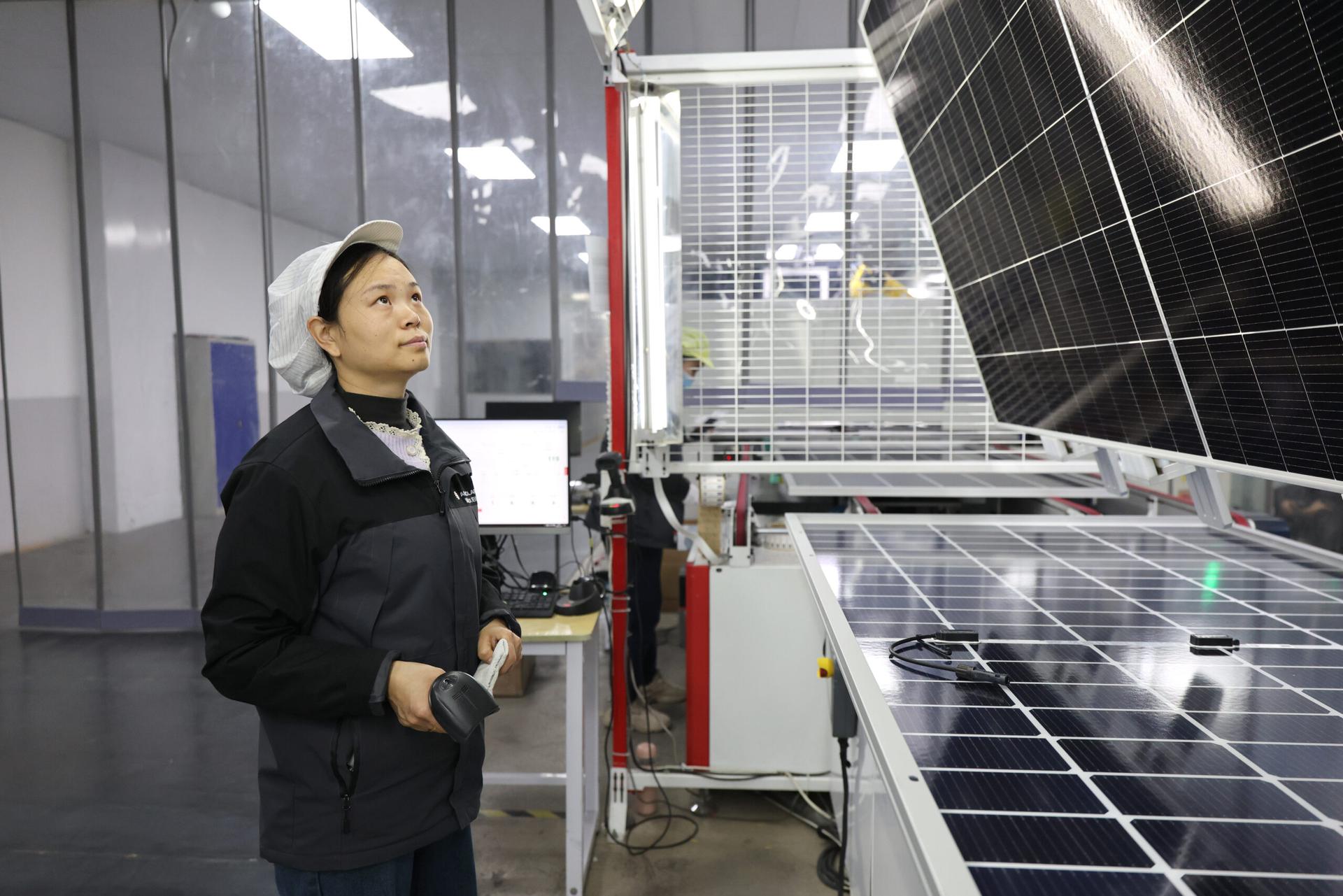
In India, fossil generation fell by 3.3%, driven by record increases in solar and wind, strong hydro production and relatively slower demand growth, Ember said. Ember also said the change helped push renewables to around 34% of global electricity generation in 2025, overtaking coal for the first time in the modern era.
IEA and security framing
The Ember findings were reinforced by new analysis from the International Energy Agency (IEA), which Climate Home News said showed solar becoming the single largest driver of global energy supply growth beyond the electricity sector. CThe IEA’s Global Energy Review, published on Monday, found that solar PV accounted for more than a quarter of the increase in global energy demand in 2025, making it the first time any modern renewable source has taken the top spot. The IEA also reported that solar recorded the “largest annual increase ever seen for any electricity generation technology,” according to the same article.
Climate Home News then linked the clean-energy acceleration to energy security arguments made by UN Climate Change head Simon Stiell, who spoke at the opening of the Green Transformation Week conference in South Korea. Stiell said, “War has once again revealed the soaring costs of fossil fuel dependency,” and warned that volatile energy markets are “holding economies around the world in a chokehold.” He argued that “Wars don’t disrupt the supply of sunlight for solar power, and wind power does not depend on vulnerable shipping straits,” framing renewables as less exposed to disruption than fossil fuels.

Stiell encouraged countries to accelerate the transition to clean energy to regain control of their economies and national security, while Ember’s Aditya Lolla said clean energy is “redefining the foundation of energy security in a volatile world.” Lolla added, “it is already helping countries reduce exposure to fossil fuel imports and costs while meeting rising electricity demand,” tying the 2025 generation shift to import and cost exposure.
WTO complaint over subsidies
While clean power expanded, trade disputes over solar subsidies also moved through formal channels. pv magazine España reported that China presented a complaint to the World Trade Organization (OMC) against India regarding subsidies for India’s photovoltaic sector, confirmed by China’s Ministry of Commerce. PThe ministry said that on Friday (19 de diciembre) it filed a request for consultations with India at the WTO in relation to India’s solar subsidies and its tariff measures on information and communication products.
The Chinese ministry asserted that the measures violate several WTO obligations, including “aranceles vinculantes y el trato nacional,” and that they constitute “subvenciones de sustitución de importaciones, que están prohibidas por la OMC.” The ministry added that this gives India’s domestic industries an “ventaja competitiva desleal” and harms China’s interests. In a statement, the ministry said, «Se trata de otro paso firme de China para salvaguardar los derechos e intereses legítimos de sus industrias nacionales, tras su demanda contra las subvenciones de la India a los vehículos eléctricos y las baterías».
It also said, «Instamos una vez más a la India a que cumpla sus compromisos pertinentes en la OMC y corrija inmediatamente sus prácticas erróneas». pv magazine España described the WTO’s role in regulating disputes tied to clean-energy technologies and said it helps prevent local-content rules and subsidies from unfairly favoring domestic green-tech firms.P
Global solar market signals
pv magazine Mexico’s “Solar pills” roundup placed the China-vs-India WTO complaint alongside a series of solar and grid-related developments across multiple countries, showing how policy and financing decisions are continuing in parallel with trade friction.
The roundup said Japan plans to tighten laws governing large-scale solar energy and could suspend financial support under its feed-in tariff and feed-in premium schemes for large ground-mounted solar systems starting in April 2027.
It reported that Electrica of Romania is managing two solar tenders, including a 62.5 MW project open for bids until February 17, 2026, and a 77.6 MW project open for tender until February 12, 2026.
The same roundup said Korean Eximbank is backing the largest solar project in Guam, investing in a 132 MW solar storage project plus 325 MWh in Guam, developed by a consortium of Korean developers.
It also said financing was secured for a 134 MW solar project in North Macedonia, with the European Bank for Reconstruction and Development and Germany’s development bank KfW signing a financing package of 87 million euros (102.5 million dollars) for that 134 MW project.
In Zambia, the roundup said Zambia National Energy Corp. Ltd. (ZNEC) launched a tender to deploy solar plants and battery energy storage systems (BESS) in the country’s 156 constituencies under a national electrification initiative.
For Ireland, it reported that Ireland’s Sustainable Energy Authority (SEAI) provisional data for 2025 showed publicly accessible solar generation increased from an average of 0.73 TWh in 2024 to 0.99 TWh in the first nine months of 2025.
The roundup also reiterated that China filed a WTO complaint against India’s solar subsidies, stating that China’s Ministry of Commerce filed a complaint arguing the subsidies give India an unfair advantage and harm Chinese interests.
What comes next
The sources connect the 2025 clean-energy acceleration to both near-term policy shifts and longer-running institutional disputes. Ember framed the 2025 outcome as a turning point, with Aditya Lolla saying clean energy is scaling fast enough to keep fossil generation flat “before its inevitable decline,” while Climate Home News tied the argument to Simon Stiell’s claim that “War has once again revealed the soaring costs of fossil fuel dependency.” CAt the same time, the WTO complaint filed by China’s Ministry of Commerce against India’s solar subsidies sets up a process that pv magazine España described as involving consultations requested on Friday (19 de diciembre).P
The Chinese ministry’s statement demanded that India “cumpla sus compromisos pertinentes en la OMC y corrija inmediatamente sus prácticas erróneas,” while pv magazine España also noted that the WTO was in crisis in October because its main dispute-settlement authority had stopped functioning. pv magazine Mexico’s roundup showed that governments and financiers are continuing to move forward with solar tenders and financing packages, including Romania’s 62.5 MW and 77.6 MW tenders with February 17, 2026 and February 12, 2026 deadlines, and North Macedonia’s 134 MW project supported by an 87 million euros (102.5 million dollars) financing package. PIt also reported that Zambia’s ZNEC launched a tender for solar plants and BESS across 156 constituencies under a national electrification initiative, and that Ireland’s publicly accessible solar generation rose from 0.73 TWh in 2024 to 0.99 TWh in the first nine months of 2025.
Together, the articles depict a landscape where clean power growth is accelerating while trade and regulatory friction over solar subsidies and oversight continues to play out through WTO channels and national policy adjustments. The next steps in the trade dispute, as described in the sources, center on the WTO consultations request and the broader dispute framework that pv magazine España said is meant to prevent clean-energy rules from becoming “barreras comerciales ocultas.”P