
China · 23 March, 2026 · 4 min read
China urges US, Israel to halt military action in Middle East, warns of vicious cycle
China calls on U.S. and Israel to halt Middle East military actions. Warns of a vicious cycle risking global growth and Chinese exports.
Oil-security impact of the Strait of Hormuz disruptions.
5 of 6 outlets skipped it: iran's Defense Council said the only way to pass through Hormuz for non-belligerent states is by coordinating passage with Iran..
6outlets compared
Same story, two versions
tap a side to read it in full
AL-Monitor
“China on Monday urged all parties involved in the Middle East conflict affecting the Strait of Hormuz to end military operations to prevent a "vicious cycle" and return to negotiations.”Read the original ↗
StratNews Global
“China, on Monday, urged all parties involved in the conflict in West Asia, particularly the U.S. and Israel, to cease military operations, warning of the "vicious cycle" in a war that analysts say, if prolonged, could undermine global growth and weaken demand for Chinese exports.”Read the original ↗
Different outlets foreground the same diplomatic appeal with slightly different emphasis (return to negotiations vs. general cessation) while all invoking the 'vicious cycle' framing, illustrating how framing around a de-escalation message can vary yet remain aligned on the gravity of the situation.
China's Diplomatic Call
China has issued a strong diplomatic call for the United States and Israel to cease military operations in the Middle East. Beijing's intervention came amid escalating tensions in the region. Chinese officials expressed grave concern that ongoing military campaigns could create a conflict trajectory that would be difficult to reverse.
“China has called on the United States and Israel to cease military operations in the Middle East, cautioning that the region risks descending into a 'vicious cycle' of violence and instability.”
Chinese special envoy to the Middle East Zhai Jun delivered a poignant message following his shuttle-diplomacy trip that included stops in Saudi Arabia, the United Arab Emirates, and Kuwait. Zhai Jun stated 'The one who tied the bell must be the one to untie it.' This diplomatic push reflects China's consistent advocacy for de-escalation and dialogue as the preferred means of resolving conflicts in the strategically important region.

Vicious Cycle Warning
Chinese officials have explicitly warned that the use of force in the Middle East would create an intractable 'vicious cycle' of conflict that threatens regional stability. In a separate briefing, China's foreign ministry spokesperson Lin Jian cautioned that continued hostilities would only deepen the crisis. Lin Jian stated 'the war should never have been started.'
Beijing's assessment suggests that military operations risk creating a situation where violence begets more violence. This makes diplomatic solutions increasingly difficult to achieve. The Chinese government's warning reflects growing international concern over the widening scope of military operations and their potential to destabilize the entire region beyond current conflict zones.

Strait of Hormuz Crisis
The geopolitical tensions have been severely compounded by the closure of the Strait of Hormuz. This has triggered what is being described as the worst oil crisis since the 1970s. The Strait of Hormuz is located between Iran and Oman and carries approximately one-fifth of global oil and liquefied natural gas supplies.
“The geopolitical tensions have been compounded by the closure of the Strait of Hormuz, a critical maritime chokepoint through which a significant portion of the world's oil supply passes. The closure has triggered what is being described as the worst oil crisis since the 1970s, sending shockwaves through global energy markets and raising fears of severe economic repercussions worldwide.”
Its closure has sent shockwaves through global energy markets. This raises fears of severe economic repercussions worldwide. The situation escalated when Trump imposed a 48-hour deadline on Tehran to reopen the waterway to all shipping.
Iranian attacks have effectively closed this vital international shipping lane. This creates an unprecedented energy crisis with potentially far-reaching consequences for global economic stability.
Economic Concerns
China's intervention in the Middle East crisis is driven by significant economic concerns. Particularly regarding the potential impact on its export sector and overall economic growth. Analysts warn that if the conflict persists, it could undermine global growth and weaken demand for Chinese exports.
Emerging markets are key drivers of Chinese trade and are particularly vulnerable. These markets have limited oil reserves and heightened sensitivity to rising energy costs. According to Goldman Sachs analyst Hui Shan, 'Weakening growth in China's emerging market trading partners will likely weigh on Chinese exports to these countries in the coming quarters.'
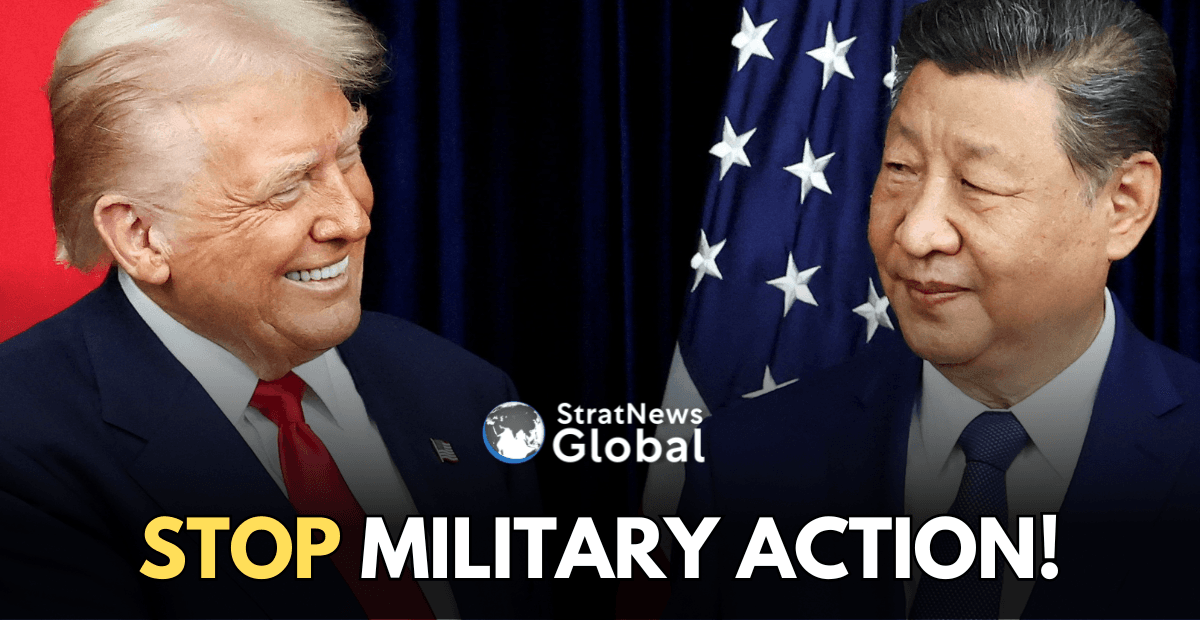
This economic calculus has made China increasingly vocal about the need for de-escalation. The country seeks to protect its economic interests amid growing global instability.
China's Economic Position
Despite the economic risks, China appears relatively better positioned to absorb the impact of higher oil prices compared to many other nations. The country's energy mix is approximately 60% coal, giving it some insulation from oil price volatility. It maintains ample oil stockpiles and imports via the Strait of Hormuz represent only around 5% of total energy consumption.
“China is relatively better positioned to absorb higher oil prices with coal accounting for about 60% of its energy mix, ample oil stockpiles and imports via the Strait of Hormuz, representing only around 5% of total energy consumption. Still, rising oil and gas prices could lift inflation and end producer price deflation, according to the chief China economist.”
However, rising oil and gas prices could still lift inflation and end producer price deflation. According to China's chief economist, the bank has already adjusted its economic forecasts. China has cut its projection for second-quarter growth while raising its inflation outlook for 2026.
China has indicated it will maintain close communication with all parties. Special envoy Zhai Jun stated China will make 'unremitting efforts to ease tensions and promote regional peace and stability.' This highlights Beijing's commitment to diplomatic solutions in the face of mounting global challenges.
International Context
China's diplomatic intervention adds to a growing chorus of international voices urging immediate cessation of hostilities in the Middle East. The convergence of military operations and disruption to global energy supplies has intensified calls from several nations for a diplomatic resolution. Analysts and governments around the world are closely monitoring developments as the situation continues to evolve.
The potential for further escalation remains a significant concern. China's warning about the 'vicious cycle' of violence resonates with historical lessons from conflicts like the Iraq War. These conflicts demonstrated how prolonged military interventions can lead to widespread regional instability and economic disruption.
As the crisis deepens, international pressure for de-escalation continues to mount. Beijing is positioning itself as a key advocate for peaceful resolution amid growing global economic uncertainty.