
China’s UN Envoy Fu Cong Blasts US Bullying as Sanctions Widen Before Trump-Xi Talks
Key Takeaways
- Hormuz closure dominates Trump-Xi talks; reopening and ceasefire are urgent priorities.
- Fu Cong, China's UN ambassador, denounces U.S. coercion as sanctions widen.
- China holds UNSC presidency; Hormuz will be main focus of Trump-Xi talks.
UN envoy targets US
China’s top UN diplomat, Fu Cong, used a Friday appearance to attack the United States over what he called “bullying” as sanctions widened and as leaders prepared for a planned Beijing summit.
“Toggle Play China's UN Envoy: Hormuz closure will dominate Trump-Xi talks China’s UN Ambassador Fu Cong says maintaining the ceasefire and reopening the Strait of Hormuz are “urgent” priorities, warning the issue will be high on the agenda if it remains closed during President Donald Trump’s upcoming visit to Beijing”
Fu Cong told reporters, “We don’t believe it’s fair to sanction Chinese ships or companies,” and he linked the curbs to the Iran conflict and to a fragile ceasefire.
He described “The Iran war” as “the biggest example of the rise of unilateralism, power politics and some bullying practice by certain partners,” adding that it was “dealing heavy blows to the rule of law in international affairs.”
The South China Morning Post framed the remarks as coming as Beijing assumed the rotating one-month presidency of the UN Security Council.
The same report said “Curbs tied to Iran and a fragile ceasefire cast a shadow over the leaders’ planned Beijing summit as tensions between the powers mount.”
Fu Cong’s criticism centered on sanctions affecting Chinese shipping and firms, while his broader argument tied the Iran war to unilateral action and coercive behavior.
The Reuters-linked reporting in the South China Morning Post also placed the comments in the context of the Iran war’s spillover into international diplomacy ahead of Trump-Xi talks.
Hormuz becomes the agenda
As Beijing prepared for the Trump-Xi summit, Chinese officials and representatives repeatedly returned to the Strait of Hormuz as the central issue.
The جهان صنعت نیوز report said Fu Cong told “World Industry News” that “maintaining the ceasefire and reopening the Strait of Hormuz are urgent priorities,” and it warned that if the Strait of Hormuz remains closed, it “will top the agenda of Donald Trump's upcoming trip to Beijing and his meeting with his Chinese counterpart Xi Jinping.”

The same report said that, according to a report by Al Jazeera, China’s permanent representative to the UN also stated that Beijing’s view is to reopen the Strait of Hormuz “as soon as possible.”
It added that the Chinese representative described the root of instability as “the closure of the Strait of Hormuz,” calling it “an illegal war by the United States and Israel against Iran.”
The report also said Fu Cong expressed concern about statements that the ceasefire might end, saying “we are very concerned by remarks that the ceasefire is temporary and that there is a need to begin attacks.”
In the same account, China emphasized that the ceasefire must be preserved and that the international community should oppose any resumption of hostilities.
The report further stated that Fu Cong said “China has always supported peace” and that “Wang Yi, the country’s foreign minister, is in regular contact with all parties,” while Beijing supported “Pakistan's mediation role.”
Behind-the-scenes mediation
Multiple reports portrayed China as playing a behind-the-scenes role in the US-Iran negotiation process, even as the talks repeatedly stalled.
The العربي الجديد report said that “China played a behind-the-scenes role in pressing toward negotiations between the United States and Iran in Pakistan,” and it described how Trump told AFP on April 8 that he believed China had pushed Iran “to sit at the negotiating table and accept a two-week ceasefire.”
It then cited an AFP quotation of “a senior Pakistani official familiar with the talks on April 10” who confirmed China’s “pivotal role,” saying “hope was fading, but Beijing intervened and persuaded the Iranians.”
The same Arabic-language report said the official added that “although Beijing played a pivotal role, they could not achieve a breakthrough,” and that the breakthrough “ultimately happened after Beijing convinced the Iranians.”
It also described Chinese media commentary on the stalled negotiations, saying that with negotiations delayed “it is unclear whether the American president would be ready to consider stabilizing relations between Washington and Beijing.”
The report tied the diplomatic uncertainty to the Hormuz blockade, stating that “the continued blockade around the Hormuz Strait places Beijing in a difficult position and could derail the anticipated Trump–Xi summit.”
It further said that China urged “all parties to remain calm and exercise restraint,” stressing that “war is the root cause of disrupting navigation,” and it quoted a Chinese Foreign Ministry spokesperson, Gou Jiakun, saying China hopes parties will “adhere to the temporary ceasefire arrangements and avoid reigniting war.”
Economic stakes and energy links
China’s concerns about the Iran conflict were described in economic and energy terms, with the Strait of Hormuz portrayed as a direct threat to Chinese supply chains and trade.
The العربي الجديد report said China views developments in the Middle East with “deep concern,” especially because “the American blockade and the continued closure of the Hormuz Strait” threaten “Chinese supply chains, energy security, and trade with Gulf states.”

It provided specific figures, stating that “Gulf states accounted for 42% of China's imports of crude oil last year,” and that “around 12% of China's crude oil imports came from Iran.”
The report also said “China imports a third of its natural gas needs from the Middle East,” with “Qatar supplying China up to 28%.”
In the same account, it described a “real dilemma” for Beijing, attributed to “the stubbornness of the American and Iranian sides,” and it quoted a Taipei-based researcher at the Institute for Strategic Studies, Kun Wang, saying the issue “goes beyond tactics and timing.”
Kun Wang said Beijing “cannot continue its cautious approach,” because the cost would include “harming its vital interests whether related to dispatching its exports or its energy supplies.”
The report added that “the tightening of U.S. oversight around the Hormuz Strait will undoubtedly include Chinese-flagged ships carrying Iranian oil,” and it said “ships may hide behind the flags of other countries,” describing this as “a tactic Beijing has used to navigate around American sanctions.”
Tensions spill into summit
As the Trump-Xi summit approached, the reporting described a growing risk that the Hormuz blockade and the Iran negotiations could derail the planned meeting and intensify US-China friction.
The العربي الجديد report said Chinese media commented that “with the negotiations delayed, it is unclear whether the American president would be ready to consider stabilizing relations between Washington and Beijing,” and it linked that uncertainty to the Hormuz blockade.
It also stated that China had repeatedly urged restraint, stressing that “war is the root cause of disrupting navigation,” and it quoted Gou Jiakun saying China hopes parties will “adhere to the temporary ceasefire arrangements and avoid reigniting war.”
The same report described how Trump told AFP on April 8 he believed China pushed Iran to accept a two-week ceasefire, while the AFP-cited Pakistani official on April 10 said “hope was fading,” but Beijing intervened.
In parallel, the South China Morning Post framed Fu Cong’s UN remarks as coming as “Curbs tied to Iran and a fragile ceasefire cast a shadow over the leaders’ planned Beijing summit.”
The جهان صنعت نیوز report then made the link explicit by saying reopening the Strait of Hormuz would be an “urgent” priority and that if it remained closed it “will top the agenda” of Trump’s trip to Beijing.
The combined effect across these accounts is that China’s diplomatic posture is being shaped by the same operational issue—Hormuz closure—and by the same political issue—sanctions and coercive behavior—raised in Fu Cong’s UN comments.
More on China
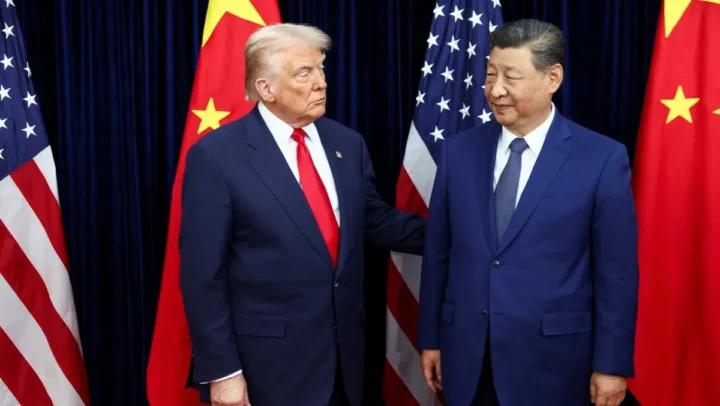
Trump And Xi Jinping Head To Beijing Summit As China Pushes Taiwan Independence Agenda
12 sources compared

China Sends Ping Ping And Fu Shuang To Zoo Atlanta Ahead Of Trump’s Beijing Visit
15 sources compared
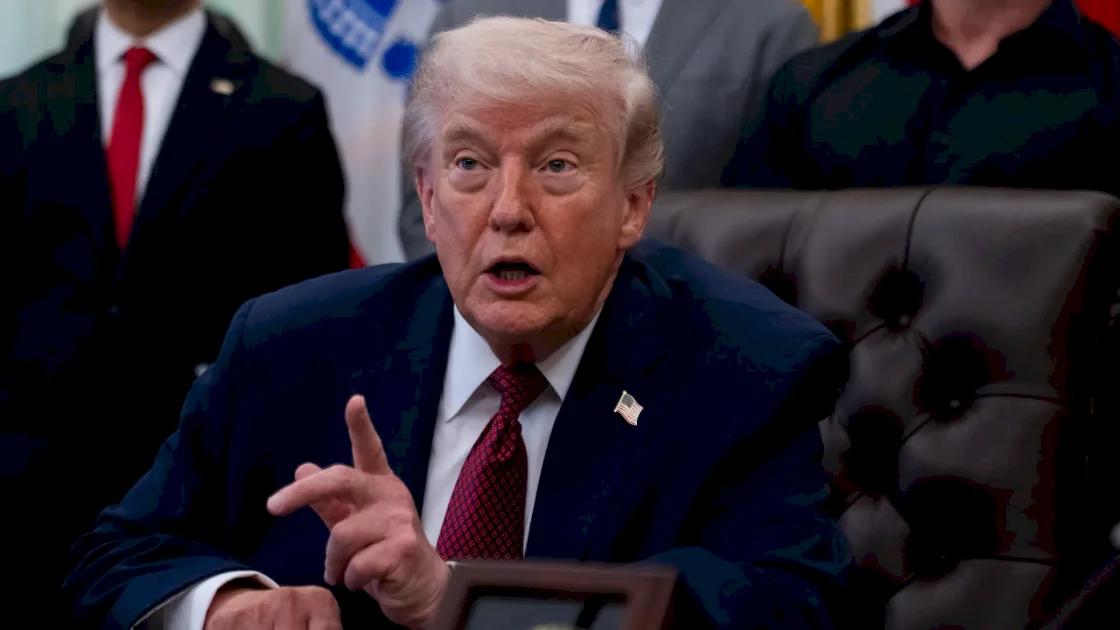
Trump Extends U.S.-Iran Ceasefire Indefinitely After Iran Misses Talks in Islamabad
21 sources compared

Baroness Jacqui Smith Moves To Make Phone Bans Statutory In England Schools
10 sources compared