Trump Extends U.S.-Iran Ceasefire Indefinitely After Iran Misses Talks in Islamabad
Key Takeaways
- Trump extended the U.S.-Iran ceasefire indefinitely, creating an open-ended pause.
- China welcomed the ceasefire extension.
- Coverage frames talks as in limbo with renewed rhetoric from both sides.
Ceasefire extended, threats persist
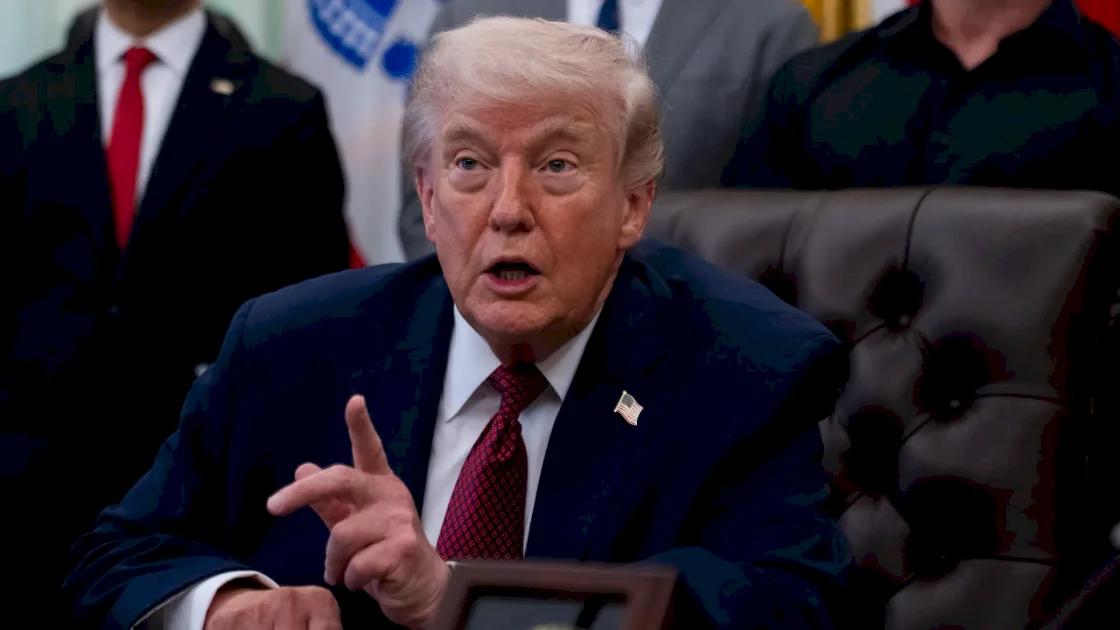
President Donald Trump extended the U.S.-Iran ceasefire indefinitely, turning what had been a looming deadline into an open-ended pause while mediators sought a new round of face-to-face talks between the US and Iran.
The Daily Express US framed the decision as a reprieve from “the looming end to the ceasefire,” while also emphasizing that “the gaps between the sides remain wide.”

In the same reporting, Trump was asked whether the U.S. would resume bombing if the ceasefire expired, and he replied, “We’re ready to go.”
The Daily Express US also said Trump announced the extension while giving mediators additional time to arrange talks between the US and Iran and while a planned trip to Pakistan by Vice President JD Vance to lead the American negotiating team remained on hold.
The Mirror US similarly described the extension as being made “at the request of Pakistan,” with Trump citing Iran’s government as “seriously fractured” and directing the “Military to continue the Blockade.”
CNN’s account added that Trump’s extension came after Iran refused to show up to talks in Islamabad, leaving Vice President JD Vance “cooling his heels at home,” and CNN reported that Trump wrote on Truth Social that he had put US attacks on hold at the request of Pakistan until talks conclude “one way or the other.”
Hormuz deadlock and seizures
While Trump’s ceasefire extension was announced, the sources tied the pause to continued pressure in the Strait of Hormuz and to competing claims about maritime incidents.
Daily Express US said the Strait of Hormuz “remains effectively closed over Iranian attacks in the waterway,” and it described “some attacks Saturday,” alongside “a fear that Iran mined a portion of the strait used by transiting ships during peacetime.”

It added that “the United States, meanwhile, has begun blocking ships from Iranian ports,” and it described a U.S. Navy action in which “Marines rappelling onto it from helicopters” boarded an Iranian container ship that “tried to run through the US blockade this weekend.”
Daily Express US reported that Iran condemned the incident as “piracy” and a violation of international law.
Drop Site News, in contrast, asserted that “Iran’s Islamic Revolutionary Guard Corps fired on a container ship in the Strait of Hormuz on Wednesday,” damaging the vessel “without causing casualties or environmental harm,” according to the United Kingdom Maritime Trade Operations, while also saying Iran’s Nour News “disputed that account.”
The Week’s framing connected the ceasefire to the strategic importance of maritime routes, saying “the Strait of Hormuz, a vital oil transit route, remains closed by Iranian threats,” and it described Washington as anxious about “the Houthis targeting the Bab al-Mandab strait.”
Why talks stalled in Islamabad
Multiple outlets linked the extension to the failure to reach a workable negotiating moment in Pakistan, particularly around Islamabad talks that were expected to proceed with Vice President JD Vance.
Daily Express US said an earlier round of negotiations between Iran and the US was held in Pakistan from April 11 into the early morning the following day, and it described Vance taking part in “the highest-level talks between America and Iran since the 1979 Islamic Revolution.”
CNN reported that Trump’s extension came as “Iran refused to show up to talks in Islamabad aimed at ending the war,” leaving Vance at home, and CNN said Trump wrote on Truth Social that he had put US attacks on hold at the request of Pakistan until talks conclude “one way or the other.”
CNN also described internal Iranian constraints, reporting that top officials believe there was “little point in Vance traveling to Pakistan for the talks,” because Iran didn’t reply to US proposals due to leaders lacking consensus on their position or on how far to empower negotiations on the country’s uranium stockpile.
The Week added that Trump extended the ceasefire after “his diplomatic outreach through Vice President J.D. Vance's proposed trip to Islamabad had to be cancelled,” and it said Tehran showed “no interest in engaging on Washington's terms.”
Drop Site News asserted that “Iran would not attend a second round of talks,” saying it was “primarily because Pakistan had promised that Trump would lift the blockade and he did not.”
Competing narratives on leverage
The sources portrayed the ceasefire extension as a contest over leverage, with Washington emphasizing blockade pressure and Tehran emphasizing that talks cannot proceed while restrictions remain.
The Week described Washington’s approach as “an aggressive economic campaign,” saying Treasury Secretary Scott Bessent's doctrine of “economic fury” produced “a tightening naval blockade aimed at squeezing Iran's oil revenues.”

It said the thinking in Washington was that if the ceasefire holds long enough, “storage facilities at Kharg Island will reach capacity,” forcing Iran to shut down oil production and “deepening the economic pain.”
The Week then contrasted Iran’s view, stating that “Iran feels it is an unacceptable precondition that makes talks impossible,” and it added that “Iranian officials say they won't negotiate under what they regard as an economic siege.”
Drop Site News similarly claimed that Trump’s extension followed a request from Pakistani Field Marshal Asim Munir and Prime Minister Shehbaz Sharif, and it said Trump directed the military to “maintain the naval blockade and remain on full readiness for the duration of the extension.”
The Mirror US added a separate Iranian reaction, quoting Abbas Araghchi on X that American forces boarding an Iranian oil tanker constituted “an act of war.”
What happens if the pause ends
Even as the ceasefire was extended, the sources repeatedly returned to the possibility of renewed attacks and to the consequences of continued maritime instability.
Daily Express US said Trump was asked about resuming bombing if the ceasefire expired and he responded, “Well, I expect to be bombing because I think that's a better attitude to go in with. We're ready to go.”

The Mirror US reported that Trump threatened on Truth Social that he would “knock out every single Power Plant, and every single Bridge in Iran” should a deal not be signed.
CNN described the political and strategic stakes of the extension, saying Trump’s critics were mocking his “blink” while also arguing that the derision would be justified if Trump risked “more Iranian and US lives” by doubling down on the war.
The Week warned that “A return to open conflict could set off a chain of disruptions across critical maritime routes,” and it described the Houthis and the Bab al-Mandab strait as a specific concern.
Drop Site News added a separate escalation risk through its description of oil spills visible from space, saying “Multiple oil spills spreading across the Persian Gulf and the Strait of Hormuz are visible from space,” and it cited CNN’s reporting that “environmental experts” warned of “an impending ecological disaster.”
More on Iran
Israeli Strike Kills Ayatollah Ali Khamenei, Buried at Imam Reza Shrine in Mashhad
19 sources compared
Iran Attempts To Restore Nuclear Sites Damaged In US And Israel Strikes, CNN Satellite Images Show
15 sources compared
Abbas Araghchi and Prince Faisal Bin Farhan Discuss Regional Developments After US Attacks
11 sources compared

Trump Says U.S. Agreed to Continue Iran Talks, Ceasefire Is Over
19 sources compared