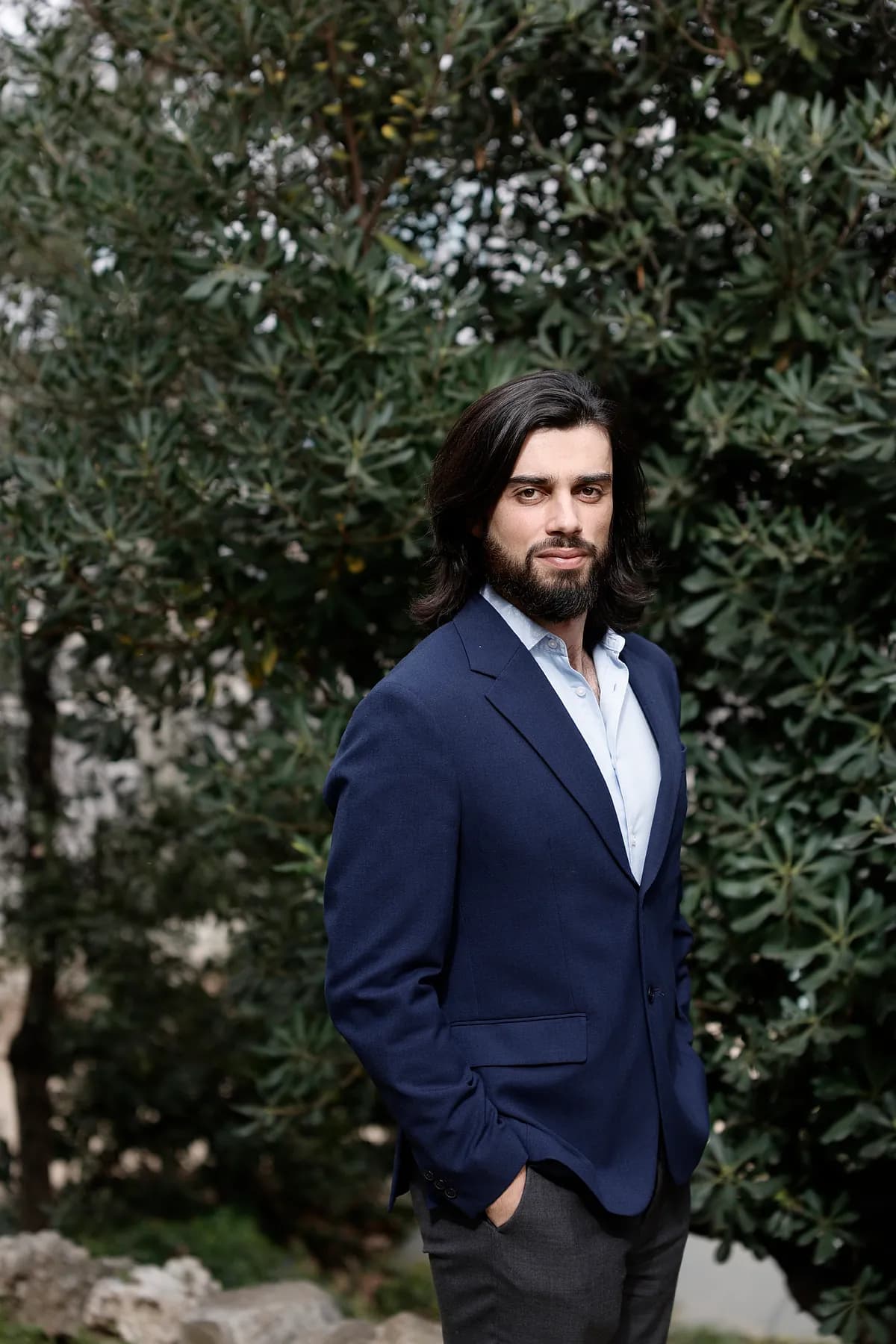
Daniel Bashandeh, Iranian-Spanish analyst: "The Islamic Republic has lost all its legitimacy"
Key Takeaways
- Daniel Bashandeh is an Iranian-Spanish political analyst specializing in Islamic studies.
- He represents a young Iranian diaspora demanding the end of Iran's theocracy.
- He said Iran's Islamic Republic has lost all legitimacy.
Analyst background and claim
Daniel Bashandeh (Madrid, 1994), son of an Iranian and a Spanish woman, is a consultant and political analyst specializing in contemporary Islamic studies and the geopolitics of the Middle East who represents the young Iranian diaspora calling for the end of the theocracy that governs the country.
“Son of an Iranian and a Spanish woman, Daniel Bashandeh (Madrid, 1994) is a consultant and political analyst specializing in contemporary Islamic studies and the geopolitics of the Middle East”
He emphasizes differentiating Iran as a country from the Islamic Republic as a regime and says the Iranian people are nothing like the regime.
Bashandeh asserts that the regime has lost all its legitimacy before its people and argues that most Iranians want democracy and political openness rather than the current system.
Regime nature and leadership
Bashandeh describes the Islamic Republic as a regime that has governed for a political and social minority, promoted confrontation and division among Iranians, and pushed a political Islam from state institutions that has limited Iran's development.
He says the system is at a 'point of no return' because younger generations and many revolutionaries no longer identify with revolutionary values, and he places much of the blame on Jamenei for building a network of loyalties that preserved his power.
Bashandeh notes that Jamenei's death after the US and Israeli operation has been a very hard blow for the Islamic Republic and questions whether the system of velayat-e faqih (the figure of the supreme leader) has a future.
Regional actors and strategy
Bashandeh frames the situation as part of a regional struggle for power in which Israel views Iran as its main regional competitor and the United States, by aligning with Israel, participates in that struggle.
“Son of an Iranian and a Spanish woman, Daniel Bashandeh (Madrid, 1994) is a consultant and political analyst specializing in contemporary Islamic studies and the geopolitics of the Middle East”
He says Washington has no clear plan for Iran, that US and Israeli military operations aim at the demilitarization of Iran, and that this external pressure complicates the prospect of a viable internal transition.
Bashandeh warns that Trump might unilaterally decide to strike and then withdraw for political gain, and he argues that Netanyahu has found in Trump the best ally because Israel cannot sustain this war without US help.
Domestic pressures and prospects
On domestic pressures and prospects, Bashandeh stresses Iran's demographic complexity and says the regime plays on fears of fragmentation even as a certain unity is emerging against the Islamic Republic.
He blames the regime for prioritizing ideology over governance, says international sanctions deeply affect daily life and have been used as an excuse to maintain political control, and points to the Revolutionary Guards' dominance of the economy as a barrier to internal reform.
Bashandeh says no one wants their country bombed, that Iranians would have preferred change driven from within accompanied by public accountability for deaths and repression, and concludes the Islamic Republic will find it very difficult to continue exactly as it was after Jamenei's fall.
More on Iran
Trump Says U.S. Bombed Military Sites on Kharg Island, Iran's Oil Hub
14 sources compared
FBI Warns of Iranian Drone Plot Based on Unverified Tip; California Says No Credible Threat
10 sources compared

White House Demands ABC Retract Report Claiming Iran Sought To Launch Drone Attacks On California
11 sources compared

Iranian Proxy Claims It Shot Down US Refueling Plane in Iraq; US Military Says Otherwise
17 sources compared