South America29 April, 20265 min read
Delcy Rodríguez Wears Venezuela Map Pin, Sparking Essequibo Dispute With Guyana and CARICOM
This article is an automated aggregation of coverage from news outlets. Our editorials offer in-depth analysis curated by the NewsCord team.
Delcy Rodríguez wore a gold map pin depicting Venezuela's Essequibo claim, sparking a diplomatic row. Guyana denounced the pin as a symbol asserting territorial claims during Rodríguez's Caribbean visits.
Pin ignites Essequibo row
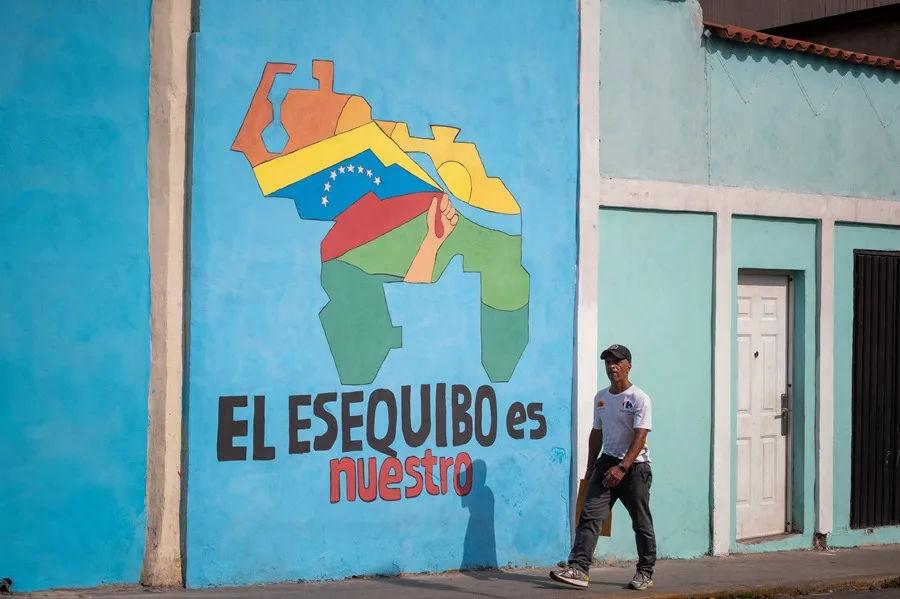
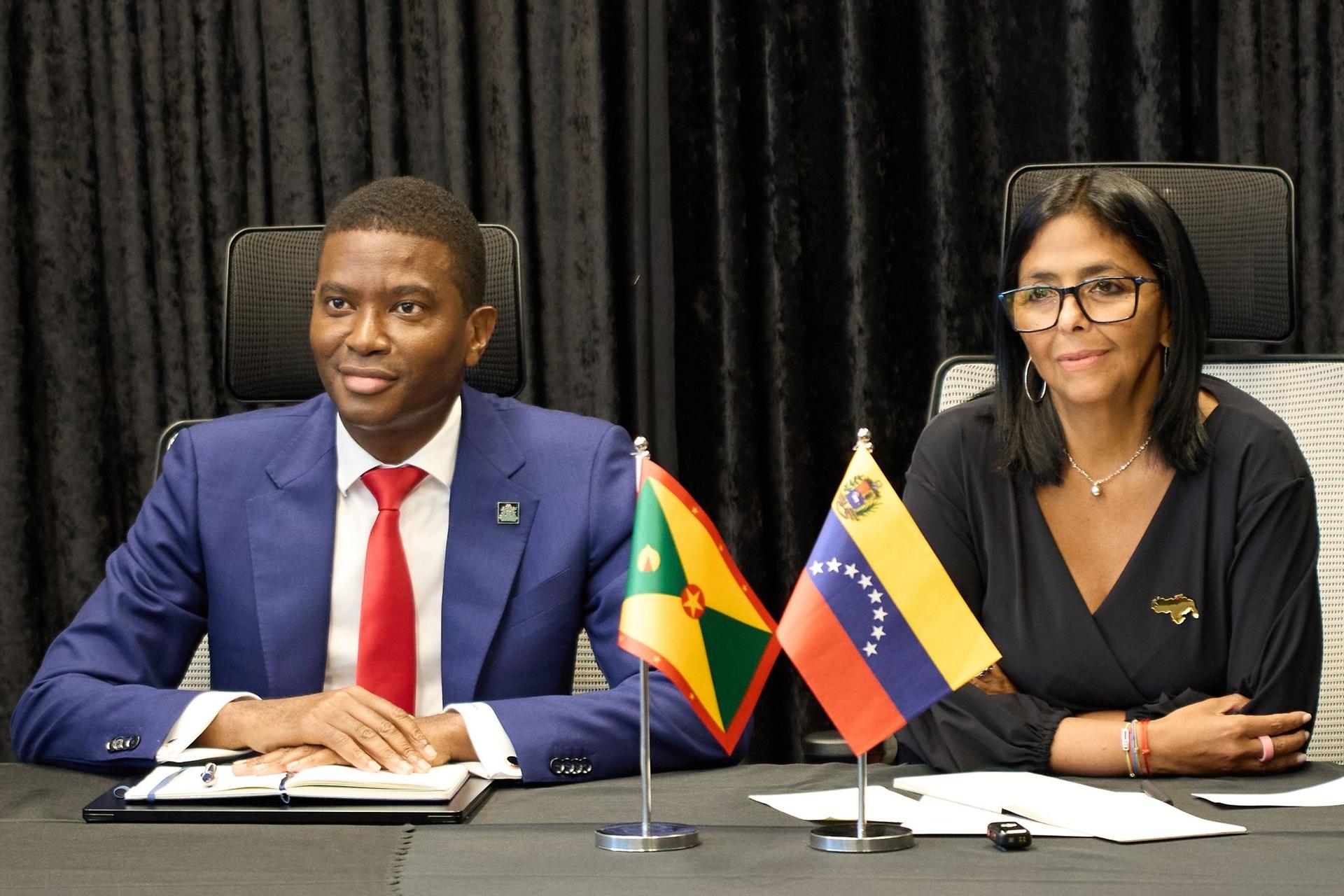
A golden decorative brooch depicting a map of Venezuela, including the Essequibo region that Caracas claims from Guyana, became the spark for a diplomatic dispute after it was worn by acting Venezuelan President Delcy Rodríguez during official visits in the Caribbean. Al-Jazeera Net reported that during two official visits, Guyana’s President Irfaan Ali criticized Rodríguez’s brooch, calling it a “display of symbols” that asserts Venezuela’s territorial claim “a very unfortunate matter.” In response, Rodríguez said later that day, “They are making a big fuss because I always use Venezuela's map on its edge—the only map I have known my entire life.”
She added, “Now even the way we dress up bothers them, and I told the foreign minister: well, tell them to come and burn history books too, because Venezuela's rights to Essequibo are historical, and there is no dispute about them.” Rodríguez further stated, “There is no room for us to let ourselves be dragged into looting or legitimizing the theft of Essequibo.” The dispute also drew in CARICOM: Al-Jazeera Net said CARICOM issued a statement confirming that the group’s platforms and commitments should not be used, directly or indirectly, to promote claims or give the impression of legitimizing them.

Caribbean leaders weigh in
The pin episode quickly expanded into a broader diplomatic exchange between Guyana and Caribbean institutions, with Guyana complaining to Caribbean leaders after Rodríguez wore the map on her attire.
The Manistee News Advocate, citing AP, said Guyana complained to Caribbean leaders on Tuesday after Rodríguez wore a “controversial pin” during official visits depicting the map of Guyana’s western region that Venezuela has long claimed as its own.
It reported that Guyanese President Irfaan Ali sent a note to Terrance Drew, the prime minister of St. Kitts and Nevis and chairman of a Caribbean trade bloc known as Caricom, warning that Rodríguez’s use of the pin could be misinterpreted as her hosts’ “acquiescence or tolerance” of Venezuela’s territorial claims.
Ali said in the note that “Caricom’s principled support for Guyana must be reflected not only in declarations but in the context and conduct of official engagements,” and he insisted Venezuela should not be allowed to display “symbols and maps” of Essequibo.
The AP report also said Rodríguez questioned the focus on her choice of official attire and reiterated Venezuela’s claim, saying the pin reflects “the only map of Venezuela that I’ve known in my life.”
It added that Caricom issued a statement later Tuesday acknowledging Ali’s letter and saying that “platforms and engagements should not be used, whether directly or indirectly, to advance or appear to legitimize claims that are the subject of ongoing judicial proceedings.”
Caracas presses negotiations
Beyond the pin controversy, Venezuela’s government framed the Essequibo dispute as a matter for “good faith negotiations,” tying its position to the Geneva Agreement and to the legal pathway it says should govern the dispute. Venezuelanalysis.com reported that the Venezuelan government commemorated the 60th anniversary of the Geneva Agreement and urged Guyana to engage in “good faith negotiations” to settle the longstanding dispute over the Essequibo Strip. In a statement published on Tuesday, Caracas celebrated six decades of the agreement and reiterated that the treaty is “the only valid legal instrument for reaching a mutually acceptable solution to the dispute” over the 160,000 square-kilometer territory.
The communique said the treaty was submitted to the United Nations and argued that it overruled the controversial 1899 arbitration ruling which awarded the territory to the United Kingdom. Venezuelanalysis.com also said Caracas referenced a popular mandate from the December 3, 2023, referendum that saw over 90 percent of respondents back the country’s rights over the Essequibo Strip, and it quoted the declaration concluding: “The only possible solution to the territorial controversy is to engage in good faith negotiations, to achieve a satisfactory arrangement for the two parties that signed the Geneva Agreement.” The Guyanese government responded on Wednesday with its own statement, arguing that the Geneva Agreement did not annul the 1899 Arbitral Award but rather established a framework for resolving the dispute that arose when Venezuela questioned the border’s validity in 1962.
ICJ fight and legal timing
Caracas’ negotiation push coexisted with a direct rejection of the International Court of Justice’s jurisdiction, according to Venezuelanalysis.com, which described a sequence of statements and procedural steps. Venezuelanalysis.com reported that hours after Guyana’s response, the Venezuelan government issued a second statement accusing Guyana of attempting to distort the spirit of the Geneva Agreement and reiterating Caracas’ position rejecting the ICJ’s jurisdiction over the border controversy. It quoted the document: “Venezuela will not recognize any decision emanating from the International Court of Justice on the territorial dispute surrounding Guayana Esequiba.”
Even as it rejected the court’s authority, Venezuelanalysis.com said the Venezuelan government participated in a documentation-gathering process before the ICJ during 2023 and 2024, with Acting President Delcy Rodríguez, then vice president, leading the country’s legal efforts. The outlet reported that in August 2025, Caracas submitted further evidence backing its Essequibo sovereignty claim and challenging Georgetown’s historical and legal arguments. Venezuelanalysis.com said the case will advance to the oral hearings phase in May 2026, placing the dispute on a defined procedural timetable.
Oil, threats, and brand-new pressure
The dispute’s legal and symbolic fights are intertwined with oil-driven escalation and with statements about security and external backing, as multiple outlets connect the Essequibo crisis to petroleum and to the wider regional context. Al-Jazeera Net said oil complicates the dispute and described the Essequibo region as covering about 160,000 square kilometers, with the Essequibo area accounting for two-thirds of Guyana’s land and home to 125,000 of Guyana’s 800,000 residents. It reported that tensions escalated in 2015 after ExxonMobil discovered massive crude oil reserves in Essequibo, and it said the dispute peaked in 2023 when Georgetown began putting oil fields in the region up for auction.
Al-Jazeera Net also said Caracas held a 2023 referendum affirming sovereignty over the area and threatened to annex most of the region and make it the 24th state of Venezuela. The same source tied the dispute to U.S.-Venezuela developments, saying Venezuelan President Nicolás Maduro remains in U.S. custody following an operation carried out by Washington in early January that resulted in his arrest. Le Figaro reported that Venezuela’s interim government argued on Tuesday for a “good faith negotiation” with Guyana and said Washington says it will defend that country in case of conflict with Venezuela, while Irfaan Ali said the overthrow of Maduro “does not eliminate nor reduce” what he considers a threat from Caracas to the Essequibo.