
Despite declaring their readiness, why are the Houthis hesitating to engage in the war?
Key Takeaways
- Israeli-American war on Iran entered its tenth day
- Attention is turning to Ansar Allah (Houthis) to gauge their readiness to fight
- Despite increasingly bellicose statements by the group's leader, the Houthis hesitate to engage
Ansar Allah in Yemen
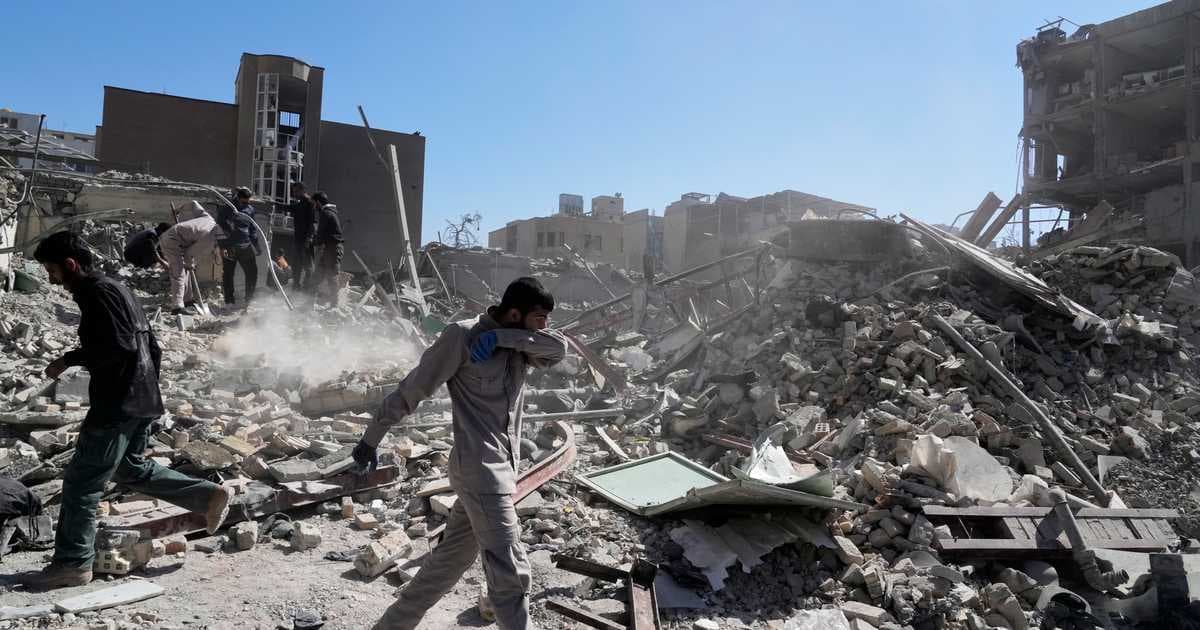
As the Israeli-American war on Iran enters its tenth day, attention has turned to Ansar Allah (the Houthis) in Yemen.
“As the Israeli-American war on Iran enters its tenth day, attention is turning to Ansar Allah (the Houthis) in Yemen, one of Tehran’s most prominent allies in the region, to gauge their readiness and willingness to engage in the fighting — especially after Lebanon’s Hezbollah and Iraqi factions joined the front”
Despite increasingly bellicose statements by the group's leader, Abd al-Malik al-Houthi — who said they were on full alert and that 'their hands are on the trigger' — the group has not formally declared entry into the battlefield.
Yemeni sources reported intensive field movements, including military reinforcements to Sanaa and Marib, pushes toward al-Jawf, deployments toward Hodeidah and its islands, activation of air-defence platforms, organised solidarity demonstrations, flights by unidentified aircraft believed to be reconnaissance, and evacuation of vital facilities.
An emergency committee in Houthi-controlled areas approved measures to raise readiness.
Israeli media reported detection of launch-platform activity in Yemeni territory, and an Israeli army radio military official said their 'eyes are on the Houthis.'
The article also notes that during the two-year Israeli offensive on the Gaza Strip the Houthis carried out hundreds of attacks with rockets, unmanned aerial vehicles and boats targeting the occupied Palestinian territories and commercial ships and warships the group said were linked to Israel or the United States.
Houthi restraint drivers
Sources in the article describe Houthi restraint as the product of complex, multidimensional calculations.
Those calculations include understandings with Washington and Riyadh, Iranian assessments about timing, and the group's own depletion after two years of direct confrontations that "cost it hundreds of lives, including senior military and political leaders, and caused widespread destruction to vital facilities."
The Houthis reaffirmed commitment to the principle of "unity of the arenas" during a February 10 meeting in Muscat between Muhammad Abdulsalam and Iran's Ali Larijani.
The piece recalls prior diplomacy, noting Omani mediation in May 2025 halted reciprocal attacks with Washington and an October 10 ceasefire ended operations with Israel.
It also says a roadmap with Saudi Arabia agreed at the end of 2023 has not been implemented due to delays in signing.
Houthi war assessments
Quoted analysts present divergent assessments of if and when the Houthis will enter a wider war.
“As the Israeli-American war on Iran enters its tenth day, attention is turning to Ansar Allah (the Houthis) in Yemen, one of Tehran’s most prominent allies in the region, to gauge their readiness and willingness to engage in the fighting — especially after Lebanon’s Hezbollah and Iraqi factions joined the front”
Brigadier General Mujib Shamsan says Sanaa is monitoring the movements of the 'American and Zionist enemy,' is 'at a state of readiness,' and will join 'at the suitable moment' to 'surprise the enemy' with missiles, drones, naval force or air defences.
Dr Ali al-Dhahab argues Houthi readiness is lower than during the Gaza war because of continuous severe strikes that depleted personnel and disrupted supply chains.
Dr Ali al-Dhahab says the conflict's limited time horizon and geographic confinement — plus an apparent lack of an Iranian signal — explain current restraint.
He predicts any attacks would focus on ships in the Red Sea and Bab al-Mandeb and toward Israel, and could hit Saudi Arabia and the UAE if those states engage offensively.
Adnan al-Jabrani says the Houthis are prepared but await a turning point.
Ismail al-Suhaili describes two currents within the movement — an ideological current closely tied to Iran and a pragmatic current fearing escalation — and says the group prioritises political survival and maintaining de facto authority.
Ismail al-Suhaili notes strikes have 'eliminated its government and its military commander, Mohammed al-Ghamari,' and expects possible phased escalation via the Red Sea if Iran sustains the war or if the conflict widens.
More on Iran-Israel

Escalation in Iran Pushes Oil Near $120, Sparks Gas Price Surge in Los Angeles
10 sources compared
U.S. Intercepts Iran Message Activating Sleeper Cells After U.S.-Israel Strike Kills Khamenei
14 sources compared

Iran Threatens To Confiscate Property Of Iranians Abroad Who Support US And Israel
14 sources compared
Ukraine Sends Drones, Experts to Shield U.S. Bases in Jordan From Iran
16 sources compared