USA20 April, 20267 min read
Donald Trump Extends U.S. Ceasefire With Iran Indefinitely Until Talks Conclude
Indefinite ceasefire extension until negotiations conclude and Iran submits a unified war-ending proposal. Extension granted at Pakistan's request.
AP News was read line by line by the Watchdog: 5.3. See the score →
Ceasefire extended indefinitely
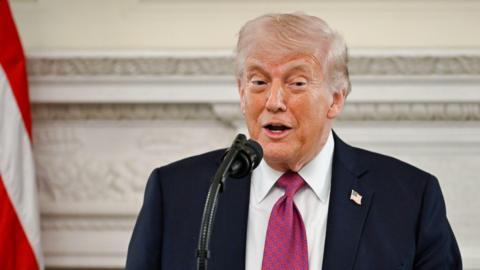
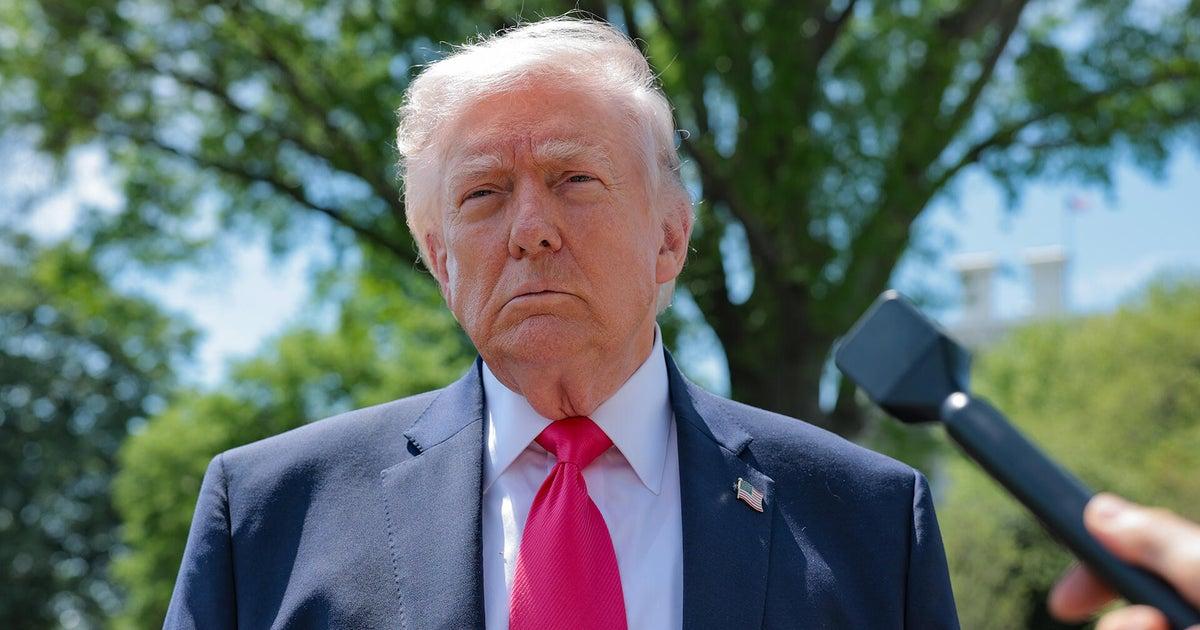
President Donald Trump said the United States would extend its ceasefire with Iran indefinitely, granting more time for Tehran to submit negotiating terms and for discussions to conclude. CNN’s Nic Robertson reported that Robertson was in Islamabad with the latest from where Iranians and Americans were expected to meet, as Trump extended the ceasefire “until negotiations conclude.” NBC News said Trump posted on Truth Social that he would extend the ceasefire until Iran’s leaders “can come up with a unified proposal,” and that the ceasefire was set to expire on Wednesday.
AP reported that Trump announced the extension a day before it was to expire, as a new round of peace talks was on hold, and that the announcement appeared to ease fears that fighting would promptly resume. CBS News likewise said Trump extended the ceasefire “until talks between the U.S. and Iran are ‘concluded,’” and that he blamed Iran’s “seriously fractured” government for the delay.

Politico reported that Trump said he would not go forward with new strikes on Iran at the request of Pakistani officials, extending the ceasefire while keeping a blockade in place. Across the coverage, the extension was paired with continued U.S. pressure: NBC News said a U.S. blockade of Iran’s ports would remain, while AP said Trump’s announcement included that the U.S. would continue the blockade.
Pakistan mediation and shifting trips
The ceasefire extension was framed in multiple reports as tied to Pakistan’s mediation efforts and to uncertainty over whether U.S. officials would travel for talks. AP said Pakistan had planned to host a second round of talks, but the White House put on hold Vice President JD Vance’s planned trip to Islamabad as Iran rebuffed efforts to restart negotiations. AP reported that Pakistani leaders, including Prime Minister Shehbaz Sharif, worked intensively to get both sides to agree to a second round of ceasefire talks, and that Sharif later thanked Trump for his “gracious acceptance” of Pakistan’s request.
CBS News said the two-week ceasefire was originally set to expire Tuesday night, and that by Trump’s announcement of the extension, Vance was still in Washington, despite earlier reporting that he was on his way. Politico reported that Trump said he would not launch new strikes on Iran at the request of Pakistani officials, and that Trump said Pakistani Prime Minister Shehbaz Sharif and Field Marshal Asim Munir asked the U.S. to “hold our Attack on the Country of Iran until such time as [Iranian] leaders and representatives can come up with a unified proposal.”
CNBC reported that Trump extended the ceasefire at the request of Field Marshal Asim Munir and Prime Minister Shehbaz Sharif of Pakistan, and quoted Trump’s statement that the U.S. was asked to “hold our Attack on the Country of Iran” until a unified proposal was submitted. NBC News added that despite uncertainty over Tehran’s participation, Trump sounded positive about new peace talks and said, “We’re going to end up with a great deal,” while also saying Iran had “no choice” but to send a delegation to Pakistan.
Blockade remains, Iran rejects terms
While Trump extended the ceasefire, multiple outlets reported that the U.S. naval blockade of Iranian ports and the blockade’s role in the Strait of Hormuz remained central to the dispute. NBC News said Trump’s extension came with the statement that the U.S. blockade of Iran’s ports would remain in place, and it described Iran’s position that it would not negotiate under threat. Al Jazeera reported that Trump said the U.S. naval blockade on Iran would remain, and that Iran insisted the blockade represented a violation of the ceasefire while saying it would not negotiate under the “shadow of threats” or while the blockade remained in place.
AP reported that Iran’s Foreign Ministry spokesman Esmail Baghaei told Iran’s state TV there has been “no final decision” on whether to agree to more talks because of “unacceptable actions” by the U.S., apparently referring to the U.S. blockade of Iranian ports. CBS News said both sides accused each other of violating the ceasefire, with Iran blocking ships from transiting the Strait of Hormuz while the U.S. blockades Iranian ports.
CNBC reported that a key point of conflict remains the Strait of Hormuz, which Iran effectively closed at the start of the war, and that Trump said he agreed to the ceasefire on condition that the strait be fully reopened. Al Jazeera also reported that an adviser to Iran’s parliamentary speaker said the ceasefire extension could be a “ploy to buy time” for potential military escalation, while Foreign Minister Abbas Araghchi described the U.S. naval blockade as an “act of war” and a violation of the truce.
Strait of Hormuz incidents
Alongside the ceasefire extension, the reporting described continued maritime incidents in and around the Strait of Hormuz and the broader pressure campaign at sea. NDTV reported that Iran fired at a ship in the Hormuz hours after Trump’s ceasefire announcement, saying Iran opened fire at a container ship in the Strait of Hormuz, damaging the vessel and raising the stakes, and it cited the UK Maritime Trade Operations centre saying the incident occurred around 7:55 AM and that the Iranian gunboat did not warn the ship before it started firing. Fox News similarly said the UKMTO reported that Iran’s paramilitary Revolutionary Guard fired on a container ship in the Strait of Hormuz, causing “heavy damage” to the ship, and it added that the incident occurred about 15 nautical miles northeast of Oman.
NBC News described a container ship attacked by an Iranian gunboat, saying the British military’s United Kingdom Maritime Trade Operations center reported that the Iranian Revolutionary Guard approached the vessel and “fired upon the vessel,” causing “heavy damage to the bridge,” while also stating that all crew members were safe and there was no fire or environmental impact reported. The same NBC News report also said Iran demanded the immediate release of a cargo ship seized by the U.S., and it described U.S. forces boarding another sanctioned tanker overnight as part of the effort to disrupt support for Iran.
AP reported that the U.S. said its forces boarded an oil tanker previously sanctioned for smuggling Iranian crude oil in Asia, and that the Pentagon said the U.S. forces boarded the M/T Tifani “without incident,” while also stating that “international waters are not a refuge for sanctioned vessels.” Taken together, the accounts show that even as diplomacy was extended, maritime actions and attacks continued to occur in the same strategic corridor that the ceasefire was meant to stabilize.
Casualties, stakes, and next moves
The reporting also tied the ceasefire extension to the broader human and economic stakes of the Iran conflict, including casualty figures and the pressure campaign’s impact on oil flows.
NBC News included a “DEATH TOLL” section quoting Iran’s forensics chief saying nearly 3,400 people had been killed in Iran since U.S.-Israeli strikes began Feb. 28, and it listed additional figures including more than 2,200 killed in Lebanon, 32 killed in Gulf states, and 23 killed in Israel, along with “Thirteen U.S. service members” killed and “two more” dying of noncombat causes.
Al Jazeera reported that violence continued across the region during the ceasefire extension, including Israeli settlers killing two people, including a child, in the occupied West Bank, and it described Israeli strikes in southern Lebanon wounding civilians and damaging homes despite a 10-day ceasefire.
Al Jazeera also said the Islamic Revolutionary Guard Corps (IRGC) warned that oil production across the Middle East could be targeted if attacks were launched from Gulf neighbours’ territory, and it reported that shipping through the Strait of Hormuz remained severely limited, raising concerns over global oil flows.
Fox News quoted Trump saying Iran is “collapsing financially” and said he told the public that Iran is “Losing 500 Million Dollars a day,” while also describing the blockade as “BLOCKADED (CLOSED!).”
The Hill reported that the U.S. military has used up nearly half of its stockpile of Patriot air defense interceptor missiles and heavily expended six other key missile stockpiles during its seven-week strike campaign against Iran, citing CSIS analysis that the U.S. fired almost 50 percent of its Patriot missile stockpile and more than half of THAADs.
Across the outlets, the extension appears as a pause in hostilities rather than a resolution, with maritime incidents, sanctions, and casualty tolls continuing to shape the next decisions.