
Virginia Voters Approve Redistricting Referendum, Potentially Shifting U.S. House Balance
Key Takeaways
- Virginia voters approved a constitutional amendment temporarily empowering Democrats to redraw congressional districts.
- The measure could tilt the U.S. House balance by up to four seats.
- AP called the victory; results indicate Democrats gaining seats in the 2026 map.
Virginia votes on redistricting
Virginia voters went to the polls on Tuesday to decide a constitutional amendment that could redraw the state’s congressional map and potentially shift the balance of power in Washington.
“Voters in Virginia head to the polls on Tuesday to decide on a measure that could redraw the state’s congressional map and potentially shift the balance of power in Washington”
Al Jazeera said the measure would temporarily authorize adopting a new congressional district map, describing it as a move that could boost Democrats’ representation in the House during the upcoming midterm elections in November.

The Al Jazeera explainer also said the referendum “gauges Virginians' views on allowing the state legislature to create new congressional districts that could grant Democrats four additional seats in Congress,” and it framed the vote as “to restore fairness in the upcoming elections.”
The text of the amendment, as quoted by Al Jazeera, reads: “Should the Constitution of Virginia be amended to allow the General Assembly to temporarily adopt new congressional districts to restore fairness in the upcoming elections, while ensuring Virginia’s standard redistricting process resumes for all future redistricting after the 2030 census?”
Al Jazeera said Virginia currently sends 11 members to the House, with “six of them are Democrats, and five are Republicans,” and it described the proposal as aiming to help Democrats win “up to 10 of the 11 seats.”
NBC4 Washington said the contest “could still decide control of the closely divided U.S. House this fall,” and it described the measure as giving the Democratic-majority General Assembly temporary power to redraw the state’s congressional districts.
NBC News’ live results framing also emphasized that “There aren’t any candidates on the ballot,” but that the contest could still decide control of the House.
How the vote works
The Virginia referendum was structured as a statewide constitutional amendment with no candidates on the ballot, but it still carried consequences for the congressional map.
Al Jazeera said the proposed constitutional amendment was “the only statewide contest on the ballot,” and it explained that voters could cast ballots either early or on Election Day.

It also gave specific polling hours in GMT, saying “Polls open at 10:00 GMT” and “Polls close at 23:00 GMT,” and it described vote counting as beginning after polls closed.
NBC4 Washington, meanwhile, said “Poll hours on Tuesday were 6 a.m. to 7 p.m. ET,” and it added that “Any voter registered in Virginia can cast a ballot.”
NBC4 Washington also said voters were asked to “show an acceptable form of ID or sign a statement affirming their identity,” and it noted that eligible voters were permitted to register that day.
The Al Jazeera explainer emphasized that the amendment would allow the General Assembly to temporarily adopt new congressional districts, while “ensuring Virginia’s standard redistricting process resumes for all future redistricting after the 2030 census.”
NBC4 Washington stressed that even if Democrats are successful, “the public vote may not be the final word,” because “The state Supreme Court is considering whether the redistricting plan is illegal in a case that could make the referendum results meaningless.”
Campaigning and competing claims
The redistricting referendum drew heavy political attention, with national figures and state leaders arguing that the outcome would affect the national House balance.
Al Jazeera said “Major political figures, including former President Barack Obama and House of Representatives Speaker Mike Johnson, have weighed in on the high-stakes vote,” and it described nearly “$100m spent on campaigning around it.”
Fox News reported that National Republican Congressional Committee Chair Rep. Richard Hudson of North Carolina said the narrow passage “can’t redraw reality,” adding: “This close margin reinforces that Virginia is a purple state that shouldn’t be represented by a severe partisan gerrymander.”
Fox News also quoted Hudson arguing that “Virginia Democrats can’t redraw reality,” and it said passage would give the Democratic-controlled Virginia legislature temporary redistricting power through the 2030 election.
On the Democratic side, Fox News quoted DCCC Chair Rep. Suzan DelBene saying the result was “a massive rebuke of Donald Trump and Republicans’ efforts to rig the midterm elections,” and it said she framed the vote as a victory for “every American who wants fair representation in Congress.”
Fox News also quoted Gov. Abigail Spanberger saying “Virginia voters have spoken,” and it described her as framing the vote as a response to President Donald Trump, including her statement that Virginians approved “a temporary measure to push back against a President who claims he is ‘entitled’ to more Republican seats in Congress.”
NBC4 Washington added that Trump called in to a conservative talk show and said: “If the Democrats, look, if they get additional House seats at some point, if they get these additional seats, they're going to be making changes at the federal level,” and it also quoted Spanberger saying the measure was “pushing back against what other states have done in trying to stack the deck for Donald Trump in those congressional elections.”
What the vote could change
The stakes of the Virginia referendum were repeatedly framed in terms of how many seats Democrats could gain in the U.S. House and how that might affect control of the chamber.
Al Jazeera said Democrats now want to redraw the map to “favour them in a way that could help them win up to 10 of the 11 seats,” and it described a breakdown in which “Eight districts would be safely Democratic,” “Two would be competitive but lean Democratic,” and “Only one would be safely Republican.”
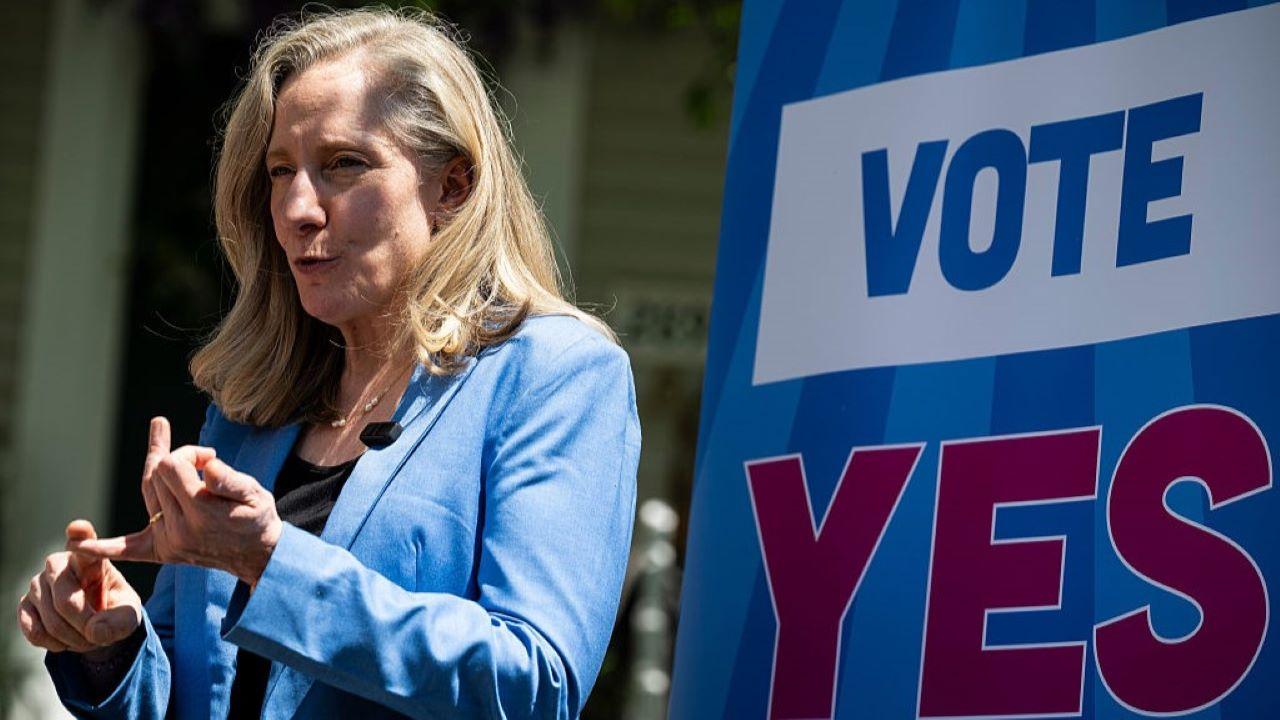
NBC4 Washington quantified the potential gain as “the Democratic Party could gain the upper hand in 10 districts, a net pickup of four seats,” and it described the contest as “the latest move in an escalating redistricting arms race.”
Fox News said the passage could “result in a 10-1 advantage for Democrats in Virginia's congressional delegation, up from their current 6-5 edge,” and it added that “if upheld by Virginia’s Supreme Court, the redrawn map could give the Democrats four additional left-leaning U.S. House seats ahead of the midterms.”
USA Today described the approved maps as transforming Virginia’s 11-member delegation “from a 6-to-5 Democratic edge to an overwhelming 10-to-1 advantage,” and it said that if the margin of victory is less than one-half of 1%, the defeated side could ask for a state-funded recount.
The New York Times framed the outcome as potentially eliminating “four of the state’s five Republican-held seats for the 2026 midterm elections,” and it said the new map could give Democrats “four more House seats.”
Across the coverage, the common thread was that the referendum’s effect would depend on legal review, with NBC4 Washington noting the state Supreme Court’s consideration of whether the plan is illegal and USA Today describing possible court challenges and recount rules.
After the call: lawsuits and reactions
Once the referendum was called, lawmakers and party leaders issued competing interpretations of what the vote meant and what would happen next.
“Virginia Redistricting Referendum Results Amendment: Congressional Redistricting Election Live Blog Rep”
WSET reported that Democratic Gov. Abigail Spanberger said, “Virginia voters have spoken, and tonight they approved a temporary measure to push back against a President who claims he is ‘entitled’ to more Republican seats in Congress,” and it quoted her saying, “We responded the right way: at the ballot box.”
WSET also included a response from Democratic Attorney General Jay Jones, who said, “The people of the Commonwealth showed up at the polls and voted in support of the constitutional amendment,” and he added, “My office stands ready to defend the will of the voters and enforce our laws.”
WSET quoted U.S. Rep. Morgan Griffith, R-Va., saying, “the fight is not over, and they're challenging this legally,” and it included his view that “the courts will have to find that the ballot question was not proper and that the districts are not compact and that the process for changing the Constitution was not followed.”
WSET also quoted Republican House GOP Leader Terry Kilgore saying, “Serious legal questions remain about both the wording of this referendum and the process used to put it before voters,” and he added, “Tonight marks the end of the campaign. It does not mark the end of this fight.”
USA Today similarly described that the measure “may still face some obstacles,” including the possibility that “The Virginia Supreme Court could weigh in later,” and it said the court could “throw out the redistricting decision on grounds stemming from lawsuits.”
USA Today laid out recount mechanics, saying that referendum recounts can be requested if “the victory margin is either 50 votes or less, or a difference of 1% or less,” and it noted that “the requestors foot the bill up front for a recount instead of the state paying for it.”
More on USA

7th Circuit Upholds Illinois Protect Illinois Communities Act Ban on Semiautomatic Guns
12 sources compared

Indiana State Police Trooper Justin Heflin Shot During Pursuit; Suspect Kevin W. Meyers Found Dead
10 sources compared

Donald Trump Fires Election Assistance Commission Members, Leaving No Commissioners
12 sources compared

Eight Accused Of Planning Terror Attack At Casa Blanca UFC Freedom 250 Event
18 sources compared