
Virginia Voters Approve Democratic-Led Redistricting Plan, Potentially Boosting Democrats’ House Seats
Key Takeaways
- Virginia voters approved a mid-decade redistricting measure to redraw congressional districts.
- The new map could net as many as four Democratic House seats.
- The measure temporarily gives Democrats authority to redraw districts, overriding bipartisan rules.
Virginia’s Referendum Passes
Virginia voters approved a mid-decade redistricting plan Tuesday that could boost Democrats’ chances of winning four additional U.S. House seats in November’s midterm elections, according to AP and other outlets.
“Virginia voters approve redistricting plan that could boost Democrats’ seats in Congress Virginia voters approve redistricting plan that could boost Democrats’ seats in Congress Virginia voters approved a mid-decade redistricting plan Tuesday that could boost Democrats’ chances of winning four additional U”
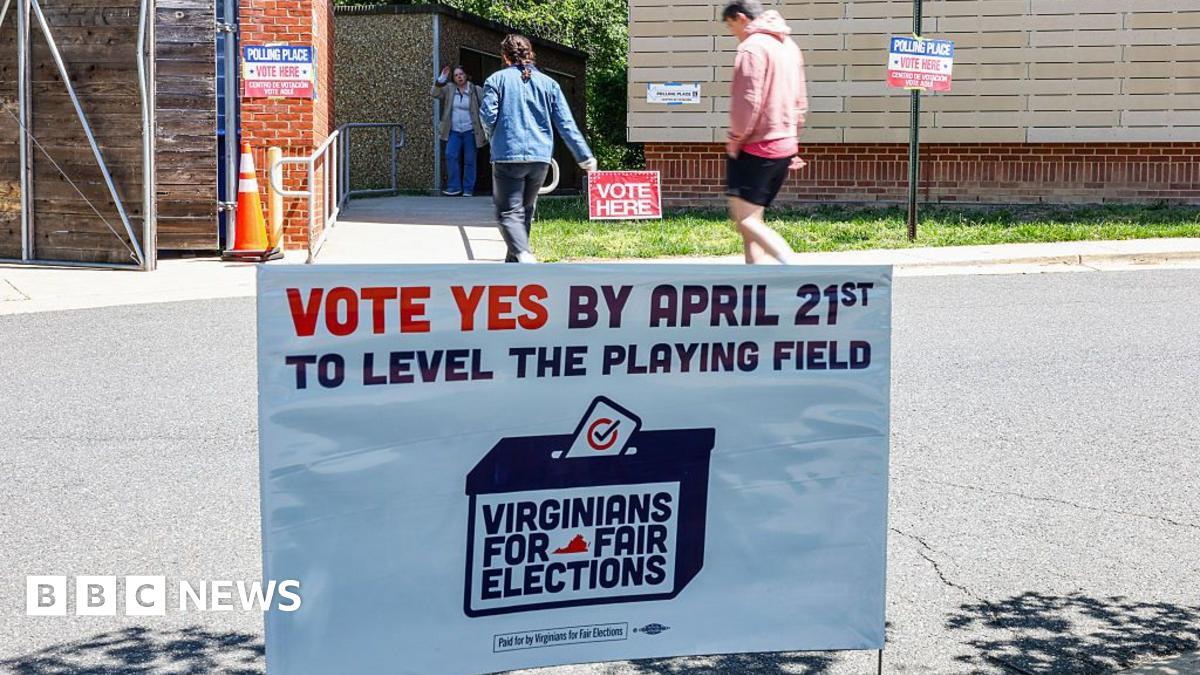
The constitutional amendment narrowly backed by voters bypasses a bipartisan redistricting commission to allow the use of new districts drawn by Virginia’s Democratic-led General Assembly, AP reported.

BBC described the ballot measure as redrawing the state’s congressional map to help Democrats flip as many as four House seats held by Republicans, with “Control of Congress” decided in the November midterm elections.
The BBC account also said Democrats currently hold six out of the state’s 11 seats and the updated map could allow them to hold up to 10.
CBS News projected that the new map would give Democrats an advantage in 10 House districts, leaving just one safe Republican seat, and said it could help Democrats pick up as many as four House seats.
France 24 similarly reported that Virginians voted Tuesday to back a new electoral map that could hand Democrats four more seats, reshaping the political landscape ahead of November’s midterm elections.
In the middle of the vote count, NBC News and Decision Desk HQ tracked results in a live blog format, while The New York Times published “Live Election Results” for the referendum.
The stakes were framed immediately by Democratic leaders: AP quoted Don Scott saying, “Virginia just changed the trajectory of the 2026 midterms,” and BBC carried the same line from Scott alongside his claim that Virginians “leveled the playing field for the entire country.”
How Trump Triggered the Fight
The Virginia vote landed in the middle of what multiple outlets described as a national redistricting arms race that began after President Donald Trump urged conservative states to re-examine voting maps to help Republicans keep a slim House majority.
BBC said the national redistricting arms race was launched after Trump urged conservative states to re-examine voting maps to help Republicans keep the party’s slim congressional majority, and it described gerrymandering as illegal only if it is based on race.
WWNY (AP) described the timeline as a “battlefield” narrowing and a “timeline” tightening in a congressional redistricting contest among states seeking a partisan advantage ahead of the November midterm elections.
WWNY said Trump triggered an unusual round of mid-decade redistricting last year when he urged Texas Republicans to redraw House districts to give the GOP an edge in the midterm elections, and it said California Democrats reciprocated, causing redistricting efforts to cascade across states.
AP News connected Virginia’s referendum to that same national push, saying the redistricting in Texas led to a burst of redistricting nationwide and that Republicans believed they could win up to nine more House seats in newly redrawn districts in Texas, Missouri, North Carolina and Ohio.
AP also said Democrats believed they could win up to five more seats in California and one more seat under new court-imposed districts in Utah, while Virginia’s referendum could help nullify Republican gains elsewhere.
Several outlets emphasized that redistricting usually follows the national census every 10 years, but that Trump’s mid-decade push broke the normal cadence, with WWNY stating “Voting districts typically are redrawn once a decade, after each census.”
BBC added that Texas became the first state to launch a mid-decade change amid pressure from Trump, and it said Texas’ new map would give Republicans an advantage in five additional seats.
Reactions From Both Parties
The Virginia referendum triggered immediate reactions from political leaders and campaign figures, with Democrats portraying the vote as a check on Trump and Republicans emphasizing legal and fairness concerns.
“Virginia voters on Tuesday approved a new congressional map that would give Democrats an advantage in 10 House districts, leaving just one safe Republican seat, CBS News projects”
BBC reported that in his first public comments on Virginia’s measure, Trump said that if House Democrats win a majority in the midterm elections, “it's going to be a disaster,” and he added, “I don't know if you know what gerrymandering is, but it's not good.”
AP News quoted Democratic state House Speaker Don Scott celebrating the result and also quoted Democratic Virginia Gov. Abigail Spanberger shifting attention to the November election, saying, “I understand the urgency of winning congressional seats as a check on this President, and I look forward to campaigning with candidates across the Commonwealth working to earn Virginians’ trust.”
AP also included a Republican response from Virginia House Republican Minority Leader Terry Kilgore, who said, “Serious legal questions remain about both the wording of this referendum and the process used to put it before voters,” and that “Those questions have not been resolved, and they now move where they belong: to the courts.”
AP further quoted U.S. Rep. Richard Hudson, chair of the National Republican Congressional Committee, saying the “close margin reinforces that Virginia is a purple state that shouldn't be represented by a severe partisan gerrymander.”
CBS News carried a statement from House Minority Leader Hakeem Jeffries saying, “While many expected Democrats to roll over and play dead, we did the opposite,” and it also quoted the Democratic National Committee saying, “Virginians refused to let Trump play games with Americans' right to fair representation.”
CBS News also quoted Rep. Richard Hudson calling the bid an “egregious power grab” and saying the close result “reinforces that Virginia is a purple state that shouldn't be represented by a severe partisan gerrymander.”
USA TODAY quoted Marc Morial, CEO and president of the National Urban League, saying, “This was an important response to what Trump initiated,” and it quoted him saying, “I don’t think he anticipated that Virginia voters, especially those on the Democratic side of the Commonwealth, responded so forcefully.”
How Outlets Framed the Same Vote
While all outlets agreed Virginia voters approved a redistricting measure, they differed in emphasis—on the number of seats, the fairness framing, and the campaign spending and legal uncertainty.
BBC focused on the national redistricting arms race and on how the ballot measure could help Democrats flip as many as four House seats held by Republicans, adding that the referendum was “the most expensive ballot measure in Virginia's history by far,” with “Over $80m (£59m) was raised as of earlier this month by groups on both sides of the effort.”

AP News emphasized the constitutional mechanics and the court risk, saying the constitutional amendment “bypasses a bipartisan redistricting commission” but that “the state Supreme Court is considering whether the plan is illegal in a case that could make the referendum results meaningless.”
France 24 highlighted the political consequence of turning the vote into a potential liability for Republicans, describing it as a direct response to Trump’s push and saying it “intensifies the national battle over gerrymandering.”
CBS News projected that Democrats would have an advantage in 10 House districts and described the referendum as leaving “just one safe Republican seat,” while also reporting that the race was “pitched by Democrats as a way to counter President Trump's push” and that Republicans called it an “egregious power grab.”
The Hill and National Review both stressed the money and the campaign messaging, with The Hill citing that “More than $64 million went into Virginians for Fair Elections” and that a “no”-vote group brought in “around $21 million,” while National Review said “Nearly $100 million was spent campaigning on the measure” and quoted Virginians for Fair Maps campaign manager Mike Young saying, “No amount of money is going to let Virginians ignore what they saw when those maps were published.”
USA TODAY added a procedural lens, reporting that if the margin of victory is less than one-half of 1%, the defeated side has the right under Virginia election law to ask for a state-funded recount, and it quoted L. Louise Lucas posting “THANK YOU VIRGINIA” with an expletive-laden video victory lap.
The New York Times presented the vote as a “Live Election Results” special election to determine if Virginia voters will change the state’s constitution to allow for congressional redistricting, and it described “Yes” being ahead of pre-election benchmarks by a six pt. margin in counties that had reported enough votes.
Courts, Recounts, and Next States
Even after Virginia’s referendum passed, multiple outlets described the outcome as potentially reversible through courts and recount procedures, while also pointing to the next redistricting fight in Florida.
“The voters of Virginia head to the polls this Tuesday to decide whether to approve or reject a proposed amendment to the state constitution to redraw the electoral districts, which would redefine its political map and have a direct impact on control of Congress in Washington”
AP News said the public vote “may not be the final word” because “The state Supreme Court is considering whether the plan is illegal in a case that could make the referendum results meaningless.”

USA TODAY added that if the margin of victory is less than one-half of 1%, the defeated side can request a state-funded recount, and it stated that Virginia election law allows recount requests if the victory margin is “either 50 votes or less, or a difference of 1% or less.”
USA TODAY also reported that the recount request must be submitted by a group of registered voters within 10 days of the declaration of the outcome, and it said local electoral boards across the state will meet this week to certify the results.
The Hill described the possibility that “a possible ruling from the Virginia Supreme Court, however, could still invalidate Tuesday’s vote,” and it framed the referendum as Democrats’ “last chanceto pass new congressional lines” as both parties battle for House control.
WWNY (AP) provided a broader map of where redistricting battles were headed next, saying next up could be Florida, where lawmakers are to begin a special session April 28 for a Republican attempt at congressional redistricting.
WWNY also reported that the state constitution says districts cannot be drawn with intent to favor or disfavor a political party or incumbent, and it said the Virginia Supreme Court allowed the referendum to proceed but had yet to rule whether the effort is legal.
Looking ahead, the AP News report said the back-and-forth redistricting battle also could continue in Florida, where the Republican-led Legislature is to convene April 28 for a special session that could result in more favorable congressional districts for Republicans.
More on USA

Virginia Voters Approve Redistricting Referendum, Potentially Shifting U.S. House Balance
19 sources compared
Donald Trump Extends U.S. Ceasefire With Iran, Keeps Blockade of Iranian Ports
12 sources compared

Donald Trump Extends U.S.-Iran Ceasefire Until Talks Conclude, Keeps Blockade of Iranian Ports
24 sources compared

Tucker Carlson Says He’ll Be Tormented After Apologizing for Trump Support
11 sources compared