
Donald Trump Meets Xi Jinping in Beijing to Discuss Iran War and Strait of Hormuz
Key Takeaways
- Trump travels to Beijing to meet Xi Jinping for high-stakes summit.
- Iran war and Hormuz crisis dominate discussions at the Trump-Xi talks.
- Beijing seeks to help end the Iran war and leverage talks.
Summit as Iran shadow
President Donald Trump departed the White House en route to Beijing to meet Xi Jinping, downplaying differences over the US and Israel’s conflict in Iran as he said, “We’re going to have a long talk about it. I think he’s been relatively good, to be honest with you,” and then added, “We have a lot of things to discuss. I wouldn’t say Iran is one of them, to be honest with you, because we have Iran very much under control.”
Trump had unsuccessfully pressed Xi to use China’s leverage to prod Iran to agree to US terms to end the more than 2-month-old war, or at the very least reopen the Strait of Hormuz, through which about 20 percent of the world’s crude flowed before the war began.

The CNBC report said the meetings in Beijing are set for Thursday and Friday, and described the summit as “fraught with risk” for trade, Taiwan, and Iran, with Arthur Dong saying, “The stakes are extraordinarily high.”
The Hill reported that Trump and Xi are expected to discuss Beijing’s focus on continued access to U.S. technology and Trump’s pursuit of China’s purchase of American products, such as Boeing jets, while Iran continues to loom as “the dark cloud” following Trump to the meeting.
DW reported that Trump pressed Xi, without success, to use Beijing’s substantial leverage to urge Iran to accept American terms to end the war or at least reopen the Strait of Hormuz, and said the Pentagon estimated the war in Iran has cost about $29 billion.
Trade, Taiwan, and leverage
Beyond Iran, the summit is also expected to be dominated by a long-standing dispute over Taiwan, with CNBC reporting that Trump and Xi want to “reconfirm their relationship and have that kind of stability,” and Kyle Chan saying, “All the other stuff is gravy.”
CNBC said the White House spokeswoman Anna Kelly told reporters Sunday that Trump’s chief goal is to continue “rebalancing the relationship with China and prioritizing reciprocity and fairness to restore American economic independence,” while the Hill said Trump and the U.S. remain bogged down in Iran, preventing vessels from moving through the Strait of Hormuz.

The Hill quoted Treasury Secretary Scott Bessent saying on Fox News that “Iran is the largest state sponsor of terrorism, and China has been buying 90 percent of their energy,” as it also described China’s selective leverage with Iran and its refusal to join efforts to reopen the strait.
Al Jazeera reported that US officials have taken pains to downplay how big a topic the US-Israel war on Iran will be during Trump’s visit, and said Trump again gave conflicting messages by telling reporters, “We have a lot of things to discuss. I wouldn’t say Iran is one of them, to be honest with you, because we have Iran very much under control.”
The Hill also said China has even told its domestic oil refineries to ignore U.S. sanctions levied against them for processing Iranian crude, and that the Chinese government threatened countermeasures on people and businesses that complied with the U.S. sanctions.
What’s at risk next
The Guardian’s Simon Tisdall wrote that Trump needs Xi’s promise not to arm Iran if all-out fighting resumes and needs Xi’s help keeping the strait of Hormuz open as part of a mooted framework peace deal, while warning that Trump’s hopes for diplomatic success are overshadowed by his latest war of choice.
“United States President Donald Trump has departed the White House en route to Beijing, where he will meet with his Chinese counterpart Xi Jinping”
The Hill said the U.S. has battered Iran militarily but has been unable to open the strait, and it warned that the war has entangled 20 percent of the world’s oil supply in the process, with the conflict threatening global trade, oil shipments, and both leaders’ economic interests.
Arab News reported that Secretary of State Marco Rubio and Treasury Secretary Scott Bessent stepped up calls for China to use its influence to help reopen the strait, and said the State Department announced on Friday it was sanctioning four entities, including three China-based firms, for providing sensitive satellite imagery that enables Iranian military strikes against US forces in the Middle East.
DW said the State Department told Reuters that senior officials from the United States and China agreed that no country or organization should be allowed to levy charges for navigation through international waterways such as the Strait of Hormuz, signaling an effort to find common ground on pressuring Iran.
In the background of the summit, Arab News also reported that Beijing has called the sanctions “illegal unilateral pressure” and enacted a blocking statute passed in 2021 and never used until now, while the Pentagon said the war in Iran has cost about $29 billion and ammunition has not been depleted.
More on USA

Mike Huckabee Says Israel Sent Iron Dome Batteries And Personnel To United Arab Emirates
15 sources compared

CBO Estimates Trump’s Golden Dome Missile Defense Costs $1.2 Trillion Over 20 Years
20 sources compared

South Carolina Senate Rejects Trump Push To Eliminate Jim Clyburn’s House Seat
12 sources compared
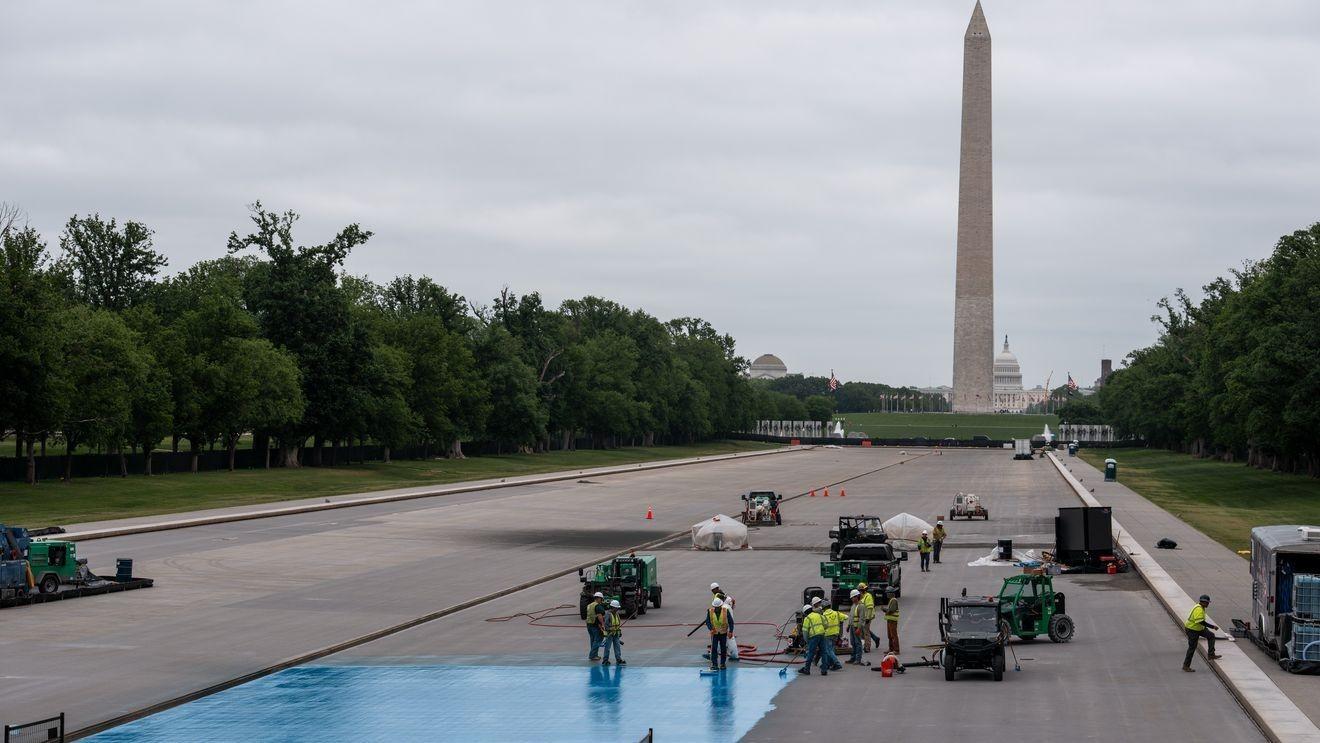
Cultural Landscape Foundation Sues Trump Administration Over $13.1M Lincoln Memorial Reflecting Pool Repairs
10 sources compared