Donald Trump Posts AI Image With Rifle, Threatens Iran With “No More Mr. Nice Guy”
Key Takeaways
- Trump posted an AI-generated image of himself with an assault rifle on Truth Social.
- He warned Iran to get smart soon and that they can't sign a nonnuclear deal.
- The post coincided with stalled talks on a broader Iran-related peace agreement.
Trump’s AI Rifle Threat
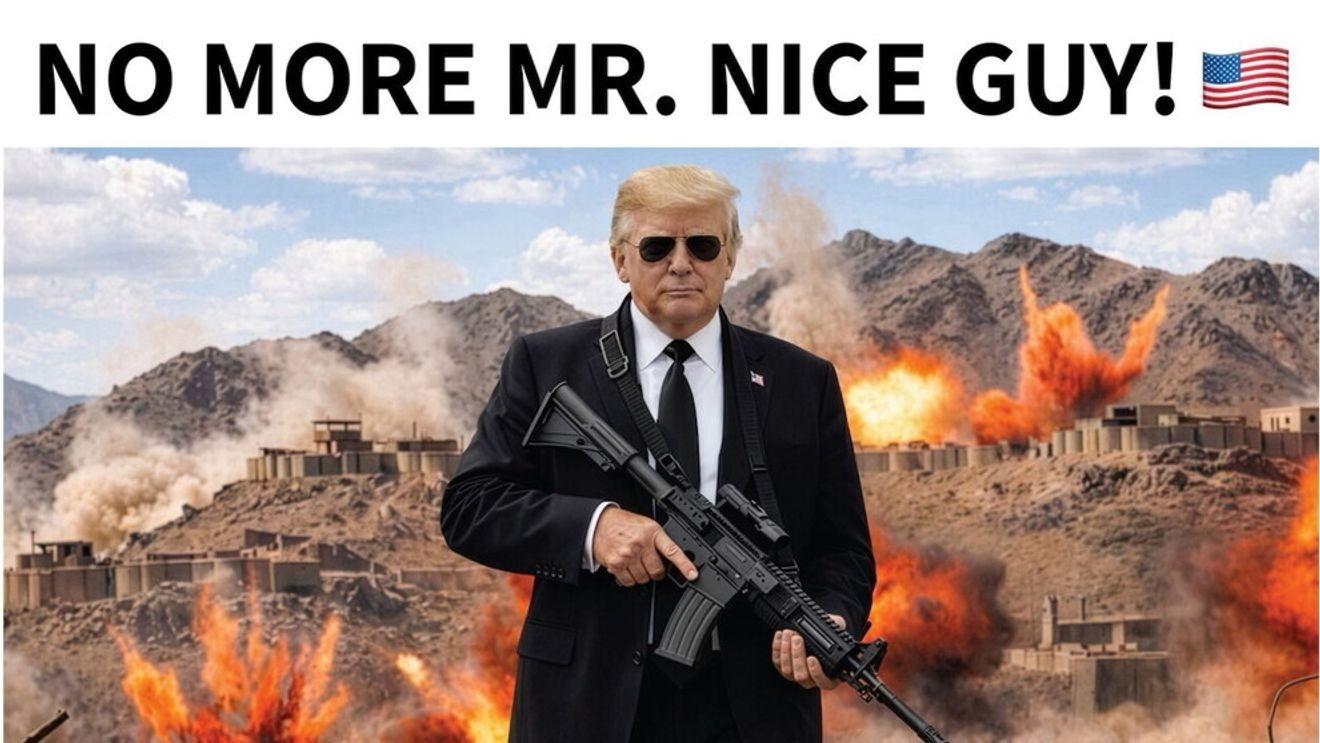
U.S. President Donald Trump escalated his pressure campaign against Iran on Wednesday (29) by posting an AI-generated image of himself holding a rifle on Truth Social, with explosions in the background and the message “No more being nice.”
“USAWith sunglasses and assault rifle: Trump threatens Iran SDA 29”
In the post, Trump wrote that Tehran “is not capable of organizing itself,” and he added, “They don’t know how to sign a non-nuclear agreement. It’s better if they hurry.”

Multiple outlets described the post’s framing as a direct threat, with The Mirror reporting Trump declared “No more Mr. Nice Guy” toward Iran and wrote, “Iran can’t get their act together. They don’t know how to sign a nonnuclear deal. They better get smart soon.”
San Angelo LIVE! similarly quoted the Truth Social caption: “Iran can’t get their act together,” followed by “They don’t know how to sign a nonnuclear deal. They better get smart soon! President DJT.”
CNBC reported the post went up shortly after 4 a.m. ET on Wednesday and included the words “NO MORE MR. NICE GUY!” alongside an AI-generated picture of Trump holding a gun with explosions behind him.
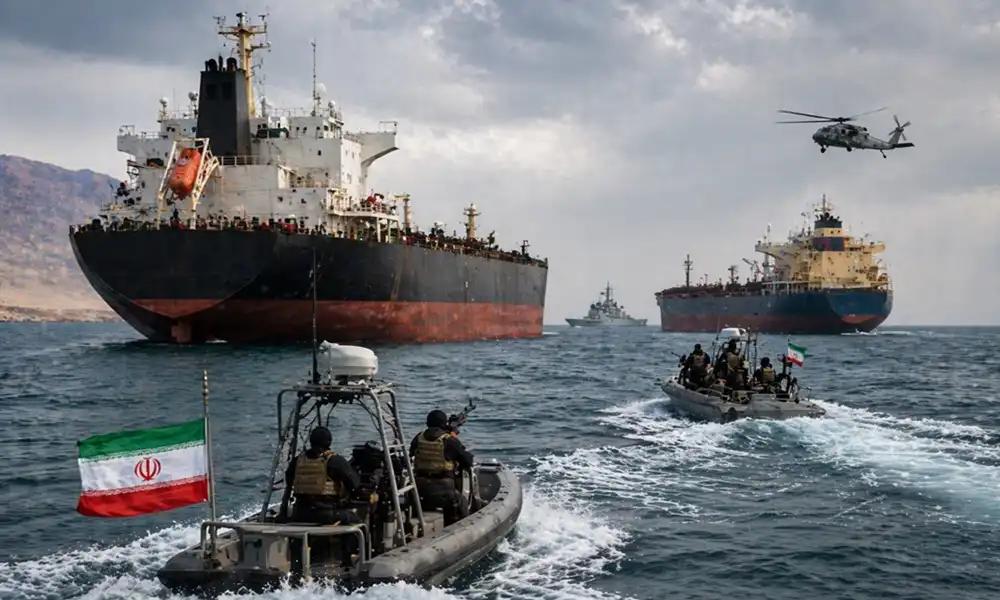
The Mirror also tied the threat to the Strait of Hormuz standoff, describing Washington and Tehran as locked over the waterway while Trump’s post signaled he was not backing down.
Blockade, Negotiations, and Demands
Behind Trump’s AI threat, the sources describe a negotiations deadlock centered on the Strait of Hormuz and the U.S. naval blockade of Iranian ports.
Folha de S.Paulo reported that on the eve of the post, the White House announced it was examining Iran’s latest proposal to reopen the Strait of Hormuz, a sea route through which “about a fifth of the world’s traded oil passes.”

Reuters, as cited by Folha de S.Paulo, said Trump was dissatisfied with the proposal and that he had ordered his team to prepare for a “prolonged blockade of Iranian ports” to force Tehran to concede.
CNBC added that Tehran proposed reopening the Strait of Hormuz if the U.S. lifts its blockade of Iranian ports and the war ends, and it said the proposal would postpone negotiations on Tehran’s nuclear ambitions for a later date.
The Mirror described the reported proposal as a three-stage peace proposal that would postpone discussions on Iran’s nuclear programme, and it said Trump was unlikely to accept it because it would leave unresolved core disputes.
The Wall Street Journal is cited in Folha de S.Paulo as saying Trump trusts he can compel Iran to suspend uranium enrichment for “20 years” and accept strict restrictions, while also telling allies that resuming bombings and withdrawing were too risky options.
Rubio, Talaei Nik, and Hegseth
The sources also place Trump’s threat within a broader set of official statements about what Washington wants and what it rejects.
Folha de S.Paulo quoted Secretary of State Marco Rubio saying the Iranian offer was “better than expected,” while Washington demanded that “Hormuz operate as it did before the war,” and Rubio added, “They are very good negotiators,” before stating that any final agreement must “definitively prevent the country from advancing toward a nuclear weapon.”
In the same reporting, Folha de S.Paulo quoted the spokesperson for the Iranian Defense Ministry, Reza Talaei Nik, warning that Washington “must abandon its illegal and irrational demands,” and stating, “The United States is no longer in a position to dictate its policy to independent nations,” according to state television.
The Mirror likewise quoted Rubio’s position, saying, “We have to ensure that any deal that is made, any agreement that is made, is one that definitively prevents them from sprinting towards a nuclear weapon at any point.”
On the U.S. side, Folha de S.Paulo reported that the head of the Pentagon, Pete Hegseth, gave his first testimony to Congress on the war in the Middle East on Wednesday, and it said the conflict had cost “$25 billion” so far.
The Al Bayan (البيان) source quoted Hegseth defending the war and attacking Democratic critics, saying they “give our enemies propaganda,” and describing Democrats as “reckless, irresolute and defeatist.”
Energy Markets and Public Pressure
Several sources connect the Strait of Hormuz standoff and the blockade to energy prices and domestic political pressure in the United States.
The Mirror reported that Iran’s closure of the waterway in response to U.S.-Israeli attacks has sent oil and gasoline prices soaring, and it said global benchmark Brent crude oil hit nearly “$120 a barrel at its peak - up from $60 at the start of the year.”

It also described the U.S. naval blockade on Iranian ports since “April 13,” aimed at preventing Iran from selling its oil and cutting off a key source of revenue.
Forbes reported that as the Strait of Hormuz remains blockaded, oil prices continued to creep up, with Brent Crude Futures rising to “$114.42 per barrel on Wednesday,” and it cited average U.S. gas prices of “$4.229 per gallon” on Wednesday according to AAA’s national tracker.
The blue News (Local Western) source similarly tied the stalemate to the global economy, saying Iran is “largely blocking the strait” while the USA is responding by blocking ships entering or leaving Iranian ports.
Folha de S.Paulo added that Trump faces internal pressure to end the war, saying his approval rating has fallen to the lowest level of his current term, and it cited a Reuters/Ipsos poll linking dissatisfaction with the cost of living and the unpopular conflict.
Divergent Framing of the Threat
The sources diverge in how they frame Trump’s AI rifle post and the surrounding diplomatic situation, even when quoting the same core message.
“Trump threatens Iran with an AI picture of himself holding a gun WASHINGTON (TNND) — President Donald Trump on Wednesday threatened Iran with an artificial intelligence photo of himself holding a gun”
The Mirror and San Angelo LIVE! treat the post as a straightforward threat, with The Mirror writing Trump declared “No more Mr. Nice Guy” and quoting, “Iran can’t get their act together. They don’t know how to sign a nonnuclear deal. They better get smart soon,” while San Angelo LIVE! presents the Truth Social caption as “Iran can’t get their act together,” followed by “They don’t know how to sign a nonnuclear deal. They better get smart soon! President DJT.”
CNBC emphasizes the timing and the context of stalled talks, saying the post came “shortly after 4 a.m. ET on Wednesday” and noting that U.S. negotiators were due to travel to Islamabad for more talks last weekend but Trump canceled the trip.
Mediaite similarly highlights the early-morning timing, stating Trump posted the image “just after 4 a.m. ET,” and it describes a “planned second round of peace talks recently abandoned” alongside a “fragile ceasefire.”
By contrast, New York Magazine frames the post through a domestic-politics lens, quoting Trump’s claim about Iran and describing the post as part of a “meme war,” while also quoting Trump’s line that Iran admitted it was in a “State of Collapse” and wanted to “Open the Hormuz Strait.”
The Nightly also focuses on the uncertainty around the claim, saying it was “not clear from Mr Trump’s post how Iran had communicated that message,” and it repeats Trump’s Truth Social quote: “Iran has just informed us that they are in a ‘State of Collapse.’”
What Comes Next
The sources portray the next phase of the U.S.-Iran confrontation as a mix of continued economic pressure, blockade management, and renewed diplomatic maneuvering.
Folha de S.Paulo reported that Trump’s team was preparing for a prolonged blockade of Iranian ports to force Tehran to concede, and it described the Iranian proposal as phased, with the first step requiring the end of the war and assurances that the U.S. cannot restart it before addressing the blockade and the future of the Strait of Hormuz.
CNBC added that Tehran’s proposal would postpone negotiations on nuclear ambitions, while Reuters had reported Trump was not happy and the White House was expected to return with a counteroffer.
The Mirror described Trump as unlikely to accept the offer that would postpone nuclear discussions, and it said the U.S. and Iran remained locked in a standoff over the Strait of Hormuz through which “a fifth of the world’s traded oil and gas passes in peacetime.”
Al Bayan (البيان) reported that Trump urged Iran to “calm down quickly” and strike a deal, writing that Iran “has not been able to settle its affairs,” and it repeated Trump’s line that Iran “cannot unite; they do not know how to sign a non-nuclear agreement.”
It also cited The Wall Street Journal’s account that Trump issued orders for aides to prepare for a long blockade of Iran’s ports to force surrender, and it said Trump preferred to keep pressing on Iran’s economy and oil exports by blocking shipments rather than resuming bombing or withdrawing.
More on USA

King Charles III Delivers Joint Address to Congress in Washington, Cites Bonds With United States
11 sources compared

U.S. Supreme Court Voids Louisiana’s Majority-Black District, Weakening Voting Rights Act
15 sources compared
U.S. Prepares Extended Blockade of Iran’s Ports and Strait of Hormuz, Pentagon Estimates $25 Billion
14 sources compared
King Charles III And Queen Camilla Visit New York 9/11 Memorial Ahead Of 25th Anniversary
14 sources compared