Donald Trump Threatens Troop Reduction in Germany, Also Targets Italy and Spain
Key Takeaways
- Trump says the U.S. is studying possible reduction of troops in Germany.
- Spat with Merz over Iran war fuels tensions within NATO alliance.
- Trump also suggested withdrawing troops from Spain and Italy.
Trump’s Troop Threats
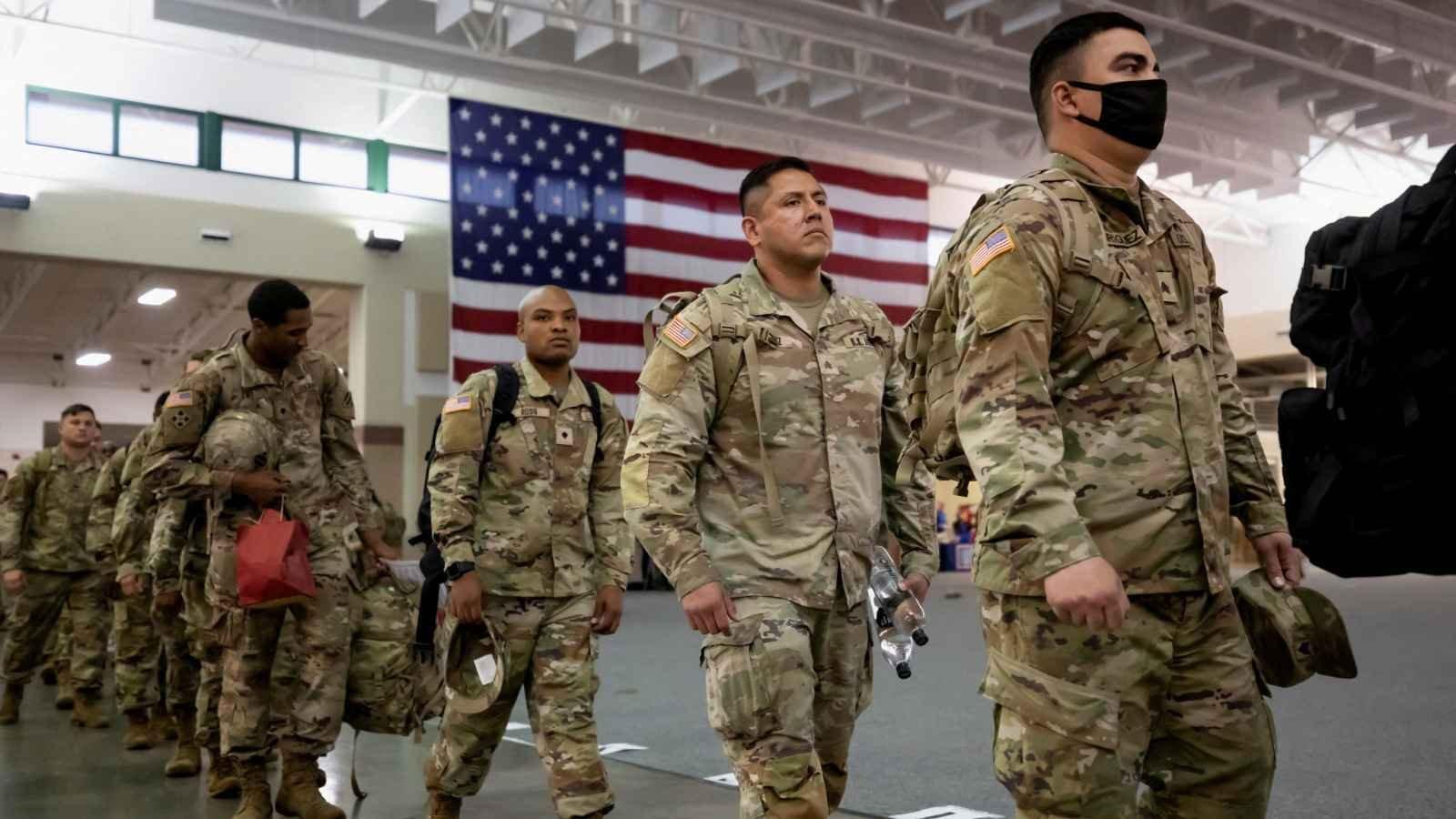
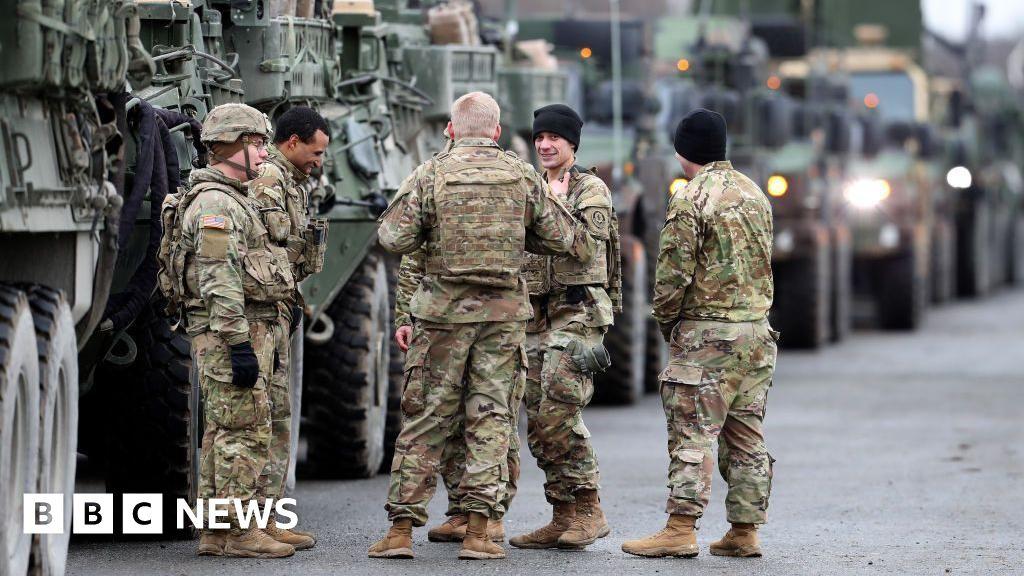
President Donald Trump said the United States is “studying and reviewing the possible reduction of Troops in Germany,” adding that a determination would be made “over the next short period of time,” as his dispute with German Chancellor Friedrich Merz intensified.
“Germany expects US to keep key bases despite Trump troop withdrawal threat Foreign Minister Wadephul says a planned US troop review is unlikely to affect major installations in Ramstein and Stuttgart Ayhan Simsek 30 April 2026•Update: 30 April 2026 BERLIN Germany does not expect the US to abandon key military bases on its soil, despite President Donald Trump’s warning that he may reduce the number of American troops stationed in the country, Foreign Minister Johann Wadephul said Thursday”
Trump then broadened the pressure, telling reporters “Probably ... Look, why shouldn't I?” when asked whether he would consider pulling U.S. troops out of Italy and Spain, and saying Italy “has not been of any help to us” and Spain has been “horrible, absolutely horrible.”

The threats landed as Trump also floated the idea of withdrawing from NATO, with one report noting he has said he is considering withdrawing the United States from NATO.
The BBC described Trump’s remarks as coming days after Merz criticised his approach to the war in Iran, suggesting the U.S. had been “humiliated” by Iranian negotiators.
In parallel, POLITICO reported that Trump’s announcement Wednesday stunned defense officials who scrambled to determine whether the president was serious about following through.
A congressional aide told POLITICO the Pentagon “was not expecting it and has not been planning any kind of drawdown,” while the same POLITICO report said Trump’s social media post was the first many defense officials had heard of a potential new push to take “hundreds, if not thousands” of troops out of Germany.
The NPR/AP account framed the threat as part of Trump’s continued feud with Merz over the U.S.-Israel war against Iran, and it quoted Trump’s own post that the U.S. was studying and reviewing troop reduction in Germany.
How the Iran Spat Escalated
The troop threats were tied in the reporting to a wider dispute over the war in Iran and NATO allies’ responses, with multiple outlets tracing the escalation to Merz’s criticism and Trump’s retaliatory language.
The BBC said Trump’s remarks came after Merz criticised his approach to the war in Iran, suggesting the U.S. had been “humiliated” by Iranian negotiators, and it described Trump’s early Thursday response to Merz as telling him he should spend “more time on ending the war with Russia/Ukraine (Where he has been totally ineffective!).”
Euronews reported that Trump’s tirade followed Merz’s Monday comments that the U.S. was being “humiliated” by the Iranian leadership, and it quoted Merz telling students in Marsberg that “The Iranians are clearly stronger than expected and the Americans clearly have no truly convincing strategy in the negotiations either.”
The Guardian linked the troop row to the Iran negotiations and the strait of Hormuz, noting Merz suggested the Trump team was being outplayed in negotiations with Iran to secure an end to the ongoing war and a reopening of the strait of Hormuz, and it quoted Merz’s line about Iranians being “very skilled at negotiating” and “letting the Americans travel to Islamabad and then leave again without any result.”
Forbes described the same trigger, saying Trump was mulling the drawdown after Merz said the U.S. was “being humiliated” and that negotiations were sluggish, and it quoted Merz’s remark about Iran’s negotiating style.
Several reports also placed the dispute in the context of Trump’s earlier threats toward NATO and his focus on the economically vital strait of Hormuz, including a Guardian account that said on 1 April Trump said he was “absolutely without question” considering withdrawing from Nato because of European allies’ failure to take part in the U.S.-Israeli war on Iran and help secure the strait of Hormuz.
The NPR/AP account added that Merz said Germany was “suffering considerably in Germany and in Europe from the consequences of, for example, the closure of the Strait of Hormuz,” and it said Merz urged that the conflict be resolved hours before Trump posted his threat.
Berlin, Pentagon, and NATO Voices
The reporting captured a sharp contrast between Trump’s public threats and the reactions inside Europe and the U.S. defense establishment, with named officials and aides describing surprise, preparation, and the need to treat the posts seriously.
“President Trump said Wednesday he is considering reducing the number of U”
POLITICO reported that the Pentagon “was not expecting it and has not been planning any kind of drawdown,” and it quoted a congressional aide saying, “But we have to take him seriously because he was serious about it during his first administration,” referring to Trump’s July 2020 order to pull 12,000 U.S. troops out of Germany that was never implemented.
The POLITICO account also said Trump’s initial post came hours after he spoke by phone with Russian President Vladimir Putin, and it described Germany’s Chief of Defence, Gen. Carsten Breuer, as having wrapped up a day of meetings with U.S. officials in Washington to discuss Berlin’s new defense strategy.
In Germany, Foreign Minister Johann Wadephul told reporters in Rabat, Morocco that “We expect the United States to make decisions on this matter in a way that is appropriate among allies and partners, in discussion with us and others,” and he stressed that “this does not in any way call into question the large bases that the US operates in Germany.”
Wadephul said, “The Ramstein Air Base serves an irreplaceable function for both the US and us,” and he added that “the same applies to the US hospital in Landstuhl, as well as the Grafenwoehr training area.”
He also said he spoke by phone with U.S. Secretary of State Marco Rubio on Wednesday and that they discussed recent developments and preparations for NATO’s upcoming summit in Ankara in July.
The BBC described Merz’s approach as stressing the importance of the Nato defensive alliance and “transatlantic solidarity,” and it said Merz made no mention of Trump’s comments during a visit to German soldiers in northern Germany on Thursday.
Different Outlets, Different Emphases
While the core facts of Trump’s troop-review threat and his remarks about Italy and Spain were consistent across coverage, the outlets diverged in how they framed the significance and the immediate institutional response.
The Independent emphasized the personal and punitive tone of Trump’s rhetoric, writing that he lashed out at German Chancellor Friedrich Merz over his criticism of the Iran war, calling him “totally ineffective,” and it reported Trump threatened to cut the 36,400 U.S. troops based in Germany.

POLITICO focused on internal shock and planning gaps, saying Trump’s announcement stunned defense officials and that the Pentagon “was not expecting it,” while it also described the contrast with a “recently concluded monthslong review” of the Pentagon’s global troop footprint that did not call for major pullbacks.
Anadolu Ajansı highlighted Germany’s expectation that the U.S. would keep key bases, quoting Wadephul’s insistence that “this does not in any way call into question the large bases that the US operates in Germany,” and it anchored the diplomatic context in a phone call with Marco Rubio and preparations for NATO’s summit in Ankara in July.
Euronews, by contrast, framed the story as a “fresh tirade” against Merz after Merz’s “humiliated” comments, quoting Trump’s Truth Social post that told Merz to “spend more time ending the war in Russia/Ukraine,” and it also included a quote from former NATO Policy Director Fabrice Pothier saying “There has to be an assumption that the US will not be in the Article 5 mindset.”
The Guardian connected the troop threat to the broader NATO crisis narrative, quoting Ivo Daalder saying it was “hard to see how any European country will now be able and willing to trust the United States to come to its defence,” and it also cited a legal constraint that prevents a president from withdrawing from Nato without a two-thirds Senate majority or an act of Congress.
The BBC centered on the immediate diplomatic spat and the question of whether Trump would pull troops from Nato allies Italy and Spain, quoting Trump’s “I probably will” response and describing Merz’s comments to university students about the “Americans clearly have no strategy.”
What’s at Stake Next
The reporting described potential consequences for NATO’s military posture and deterrence, while also emphasizing that the U.S. has not yet developed concrete logistical plans for any large-scale reduction.
“Following the chancellor's criticism of America's handling of the Iran war, Trump threatened to withdraw US troops from Germany”
The POLITICO report said taking out American forces could remove a major military deterrent against a rearming Russia, which European officials believe is preparing to attack NATO soil in the coming years, and it warned that executing a snap withdrawal would be difficult for a Pentagon already embroiled in an ongoing war in Iran.
POLITICO also said Germany hosts between 35,000 and 40,000 U.S. troops and provides land for basing for free as well as a local workforce to support American troops, and it described the Pentagon running two of its main military hubs out of Germany, including U.S. European and U.S. Africa Command, along with the largest Pentagon hospital outside American soil.
TVP World framed the stakes in terms of NATO’s military posture in Europe and the broader security landscape, saying such a move would have “serious implications” and that analysts questioned the logistical feasibility and strategic rationale.
Anadolu Ajansı, however, stressed continuity of key installations, with Wadephul saying “The Ramstein Air Base serves an irreplaceable function for both the US and us,” and it listed the US hospital in Landstuhl and the Grafenwoehr training area as facilities that remain strategically important.
The BBC noted that many are stationed at Ramstein air base outside the southwestern German city of Kaiserslautern, and it said many are also stationed at the big Ramstein air base and the deployment in Germany is by far its biggest in Europe, with about 12,000 troops in Italy and a further 10,000 in the UK.
The Guardian added a legal constraint, saying U.S. legislation passed in 2024 prevents a president from withdrawing from Nato without a two-thirds Senate majority or an act of Congress, and it described experts characterizing the moment as “the worst crisis Nato has ever confronted.”
More on USA
Kamala Harris Considers 2028 U.S. Presidential Run After 2024 Loss to Donald Trump
19 sources compared
Trump And Xi Jinping Head To Beijing Summit As China Pushes Taiwan Independence Agenda
12 sources compared
U.S. and Iran Clash as War Powers Deadline Nears, Oil Prices Hit Four-Year High
21 sources compared

Trump Signs Executive Order Expanding Access to TrumpIRA.gov Retirement Accounts
10 sources compared