U.S. and Iran Clash as War Powers Deadline Nears, Oil Prices Hit Four-Year High
Key Takeaways
- 60-day War Powers deadline remains in question amid ongoing ceasefire
- Oil prices surged to a four-year high due to the Iran-US confrontation
- Iran asserts control over Strait of Hormuz and rejects U.S. blockade
War, oil, and the 60-day clock
The United States and Iran remained locked in a high-stakes standoff as the War Powers Act 60-day deadline approached, with Defense Secretary Pete Hegseth telling lawmakers that the clock “pauses” during the ceasefire while Democratic senators said the deadline remains Friday.
“United States President Donald Trump says Washington’s blockade of Iranian ports has been a success, urging Tehran to “just give up” as pressure mounts in a deepening standoff over the Strait of Hormuz”
CBS News reported that Hegseth faced off with lawmakers for a second day on Thursday and argued the 60-day deadline was on hold during the current ceasefire, while Democratic senators including Tim Kaine and Elizabeth Warren disagreed and said the deadline remains Friday.

NewsNation said Trump administration officials told it that hostilities with Iran have “terminated” for War Powers purposes amid an extended ceasefire, complicating U.S. efforts to build a coalition to reopen the Strait of Hormuz.
In the same reporting, NewsNation quoted Hegseth saying, “We are in a ceasefire right now, which our understanding, means the 60-day clock pauses or stops in a ceasefire,” and Kaine replied, “Okay. Well, I do not believe the statue would support that.”
Oil markets moved sharply alongside the political dispute: CBS News said oil prices spiked to a four-year high on Thursday, with Brent crude briefly topping $126 a barrel.
NBC News similarly reported that Brent crude surged to $115 a barrel early Wednesday and that gas price averages in the U.S. reached $4.23 a gallon.
The standoff’s economic pressure was framed by multiple outlets as tied to the Strait of Hormuz bottleneck, with NewsNation saying Iran continues to block the strait in response to a U.S. naval blockade targeting its oil exports and CBS News warning that stalled U.S.-Iran talks raised doubts over reopening the strait.
Iran’s message and Hormuz control
Iran’s leadership used the Strait of Hormuz dispute to reaffirm control over shipping and to vow protection of nuclear and missile capabilities, setting the terms for how talks could move forward.
The Guardian reported that Iran’s supreme leader, Mojtaba Khamenei, broke his silence with a statement read by a state television anchor, saying, “Today, two months after the largest military deployment and aggression by the world’s bullies in the region, and the United States’ disgraceful defeat in its plans, a new chapter is unfolding for the Persian Gulf and the strait of Hormuz,” and vowing to guard nuclear and missile programmes.
The Guardian also quoted Khamenei saying Tehran would secure the Gulf region and eliminate what he described as “the enemy’s abuses of the waterway”, adding that “new management of the strait will bring comfort and progress for the benefit of all the nations of the region and economic blessings will bring joy to the hearts of the people”.
CBS News described Khamenei’s statement as saying the only place Americans belonged in the Persian Gulf is “at the bottom of its waters” and that a “new chapter” was being written in the region’s history.
The New York Times reported that Khamenei said Iran would establish “new legal frameworks” for the Strait of Hormuz and would retain its nuclear capabilities, and it quoted the statement: “Foreigners who come from thousands of kilometers away, acting maliciously out of greed, have no place there, except at the bottom of its waters.”
BBC coverage said the Acting Defense Minister of Iran described the situation in the Strait of Hormuz as “military and security” and said the conditions of this waterway can only change after a war.
Across the reporting, the Strait of Hormuz remained central: the Guardian said the closure had put pressure on Trump and on Gulf allies, and it cited vessel traffic levels “as low as three ships a day compared with 120–140 in normal conditions.”
U.S. pressure, blockade, and options
U.S. officials and President Donald Trump framed the standoff around continued pressure on Iran, with multiple outlets describing the naval blockade and the administration’s internal debate over military options.
“Live coverage ending”
NBC News reported that Trump warned Iran “better get smart soon” as he weighed military options for the Strait of Hormuz with peace talks at an impasse, saying members of his national security team presented him with multiple options for whether the U.S. military presence should change and whether operations should become more aggressive.
NBC News also said Trump and top administration officials met with energy executives Tuesday, discussing possible next steps in continuing the blockade of Iran’s ports “for months if needed,” and it identified the meeting as hosted by Treasury Secretary Scott Bessent.
The same NBC report quoted Trump’s Truth Social post: “Iran can’t get their act together. They don’t know how to sign a nonnuclear deal. They better get smart soon!” and noted it was accompanied by an image with the message “NO MORE MR. NICE GUY!”.
CBS News said the world economy was under pressure as Iran maintained its chokehold on the Strait of Hormuz and described Iran’s oil industry as being squeezed by a U.S. Navy blockade halting its tankers from getting out to sea.
NewsNation said the conflict that started in Iran on Feb. 28 has “terminated” for War Powers purposes and described Iran continuing to block the strait in response to a U.S. naval blockade targeting its oil exports.
The AP analysis said Iran’s own oil industry was threatened by the blockade, noting that the U.S. military seized at least two tankers off Asia believed to be carrying Iranian oil and that Iran may be forced to reduce or cease production from some wells “perhaps beginning in as little as two weeks.”
Sanctions, money, and the internet
Beyond the Strait of Hormuz, the U.S. and Iran’s confrontation extended into sanctions, financial networks, and Iran’s domestic internet shutdown, with outlets describing how those pressures intersected with the war.
BBC reported that the United States says 35 entities and individuals linked to Iran that play a role in Iran’s “hidden banking structure” have been sanctioned, and it quoted the Office of Foreign Assets Control describing the networks as facilitating “the transfer of tens of billions of dollars,” in evading sanctions, and in supporting Iran’s terrorism.

BBC added that the U.S. said those “networks give Iran’s armed forces, including the IRGC, access to the international financial system,” and it described what the sanctioned network did, including “collected money for illegal oil sales,” “procured sensitive components for missiles and other armaments systems,” and “transferred funds to Iran’s proxy groups in the region.”
CBS News focused on the internet shutdown, saying Iran’s 90 million people have been cut off from the internet for most of 2026, and it described the economic impact as devastating an online economy that had long defied government restrictions and international sanctions.
CBS News quoted a member of Iran’s Chamber of Commerce, Afshin Kolahi, saying the internet cutoff costs the economy an estimated $30-40 million daily, with indirect losses likely twice that much.
CBS News also cited communications minister Sattar Hashemi, saying about 10 million people have jobs that depend on internet connectivity.
Together, the reporting portrayed a multi-front campaign: financial sanctions targeting “hidden banking structure,” economic strain from the internet cutoff, and maritime pressure tied to oil exports.
Coverage split on the same facts
Different outlets emphasized different aspects of the same U.S.-Iran standoff, producing a visible divergence in framing even when they described overlapping events.
“What we should know: The war between the United States and Israel against the Islamic Republic of Iran began on Saturday, 9 Esfand 1404”
NewsNation centered the legal and procedural dispute, saying hostilities with Iran have “terminated” for War Powers purposes and describing a ceasefire that took effect on April 8, with the 60-day time limit arriving Friday.
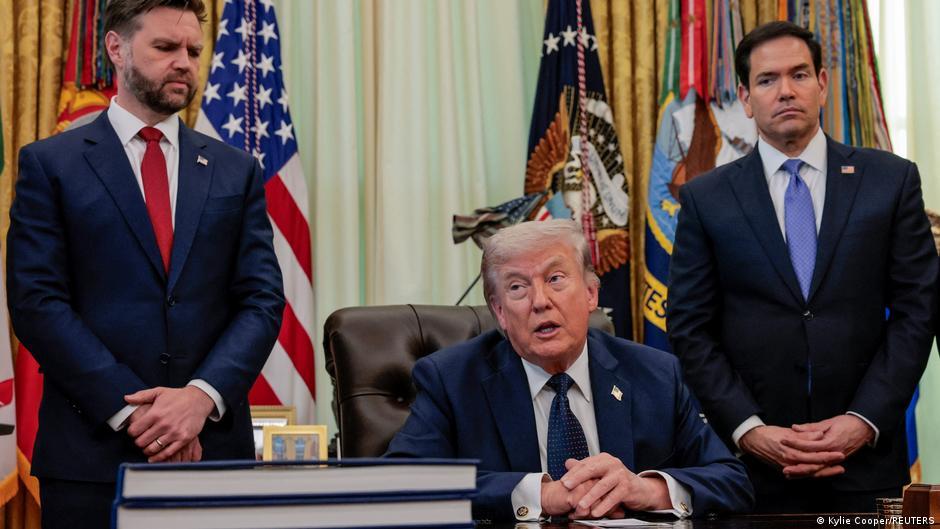
CBS News instead foregrounded the political confrontation in Congress, reporting that Defense Secretary Pete Hegseth argued the 60-day deadline was on hold during the current ceasefire while Democratic senators such as Tim Kaine and Elizabeth Warren disagreed.
NBC News framed the same moment through Trump’s public messaging and the administration’s internal military options, reporting that Trump posted “Iran can’t get their act together. They don’t know how to sign a nonnuclear deal. They better get smart soon!” and that his national security team presented multiple options for the Strait of Hormuz.
The Guardian and CBS News both quoted Mojtaba Khamenei’s defiant language about the Persian Gulf and the strait, but the Guardian’s emphasis was on “new management of the strait” and a “new chapter,” while CBS News highlighted the vow that “the only place Americans belonged in the Persian Gulf is "at the bottom of its waters".”
The Washington Post described the blockade as “genius” in Trump’s words and tied it to global economic costs, while the AP analysis shifted attention to the threat to Iran’s own oil industry, saying Iran may be forced to reduce or cease production from some wells “perhaps beginning in as little as two weeks.”
BBC’s live coverage highlighted Qatar’s warning about a “paused” war and the White House reviewing Iran’s proposal received through Pakistan, including reports that it includes “three stages”.
More on USA

Trump Signs Executive Order Expanding Access to TrumpIRA.gov Retirement Accounts
10 sources compared
U.S. Supreme Court Strikes Down Louisiana Congressional Map In Louisiana V. Callais
20 sources compared
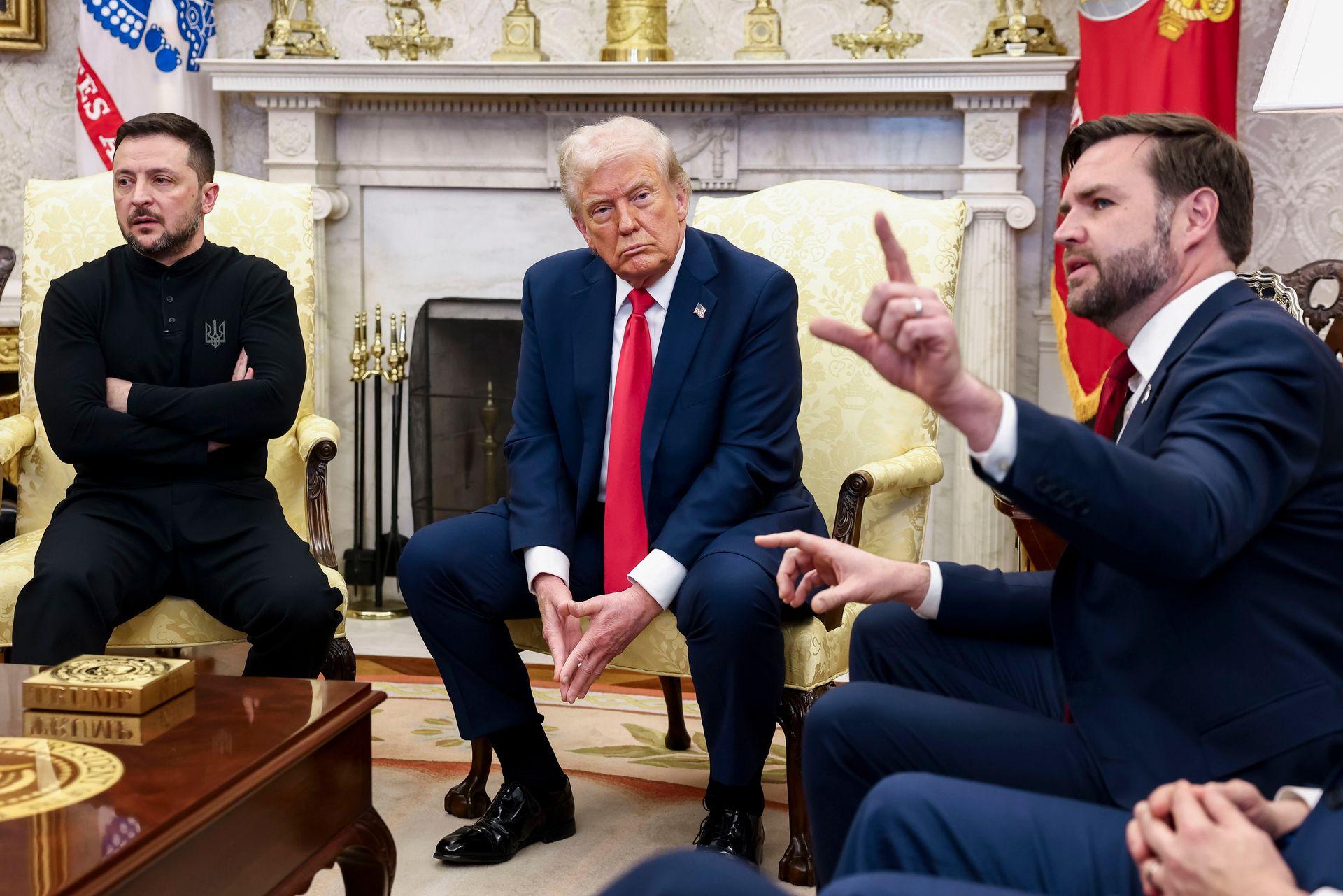
Zelensky Says JD Vance Praising Halted U.S. Aid Helps Russia
10 sources compared
Trump Administration Says Ceasefire Pauses War Powers Clock on Iran War
13 sources compared