U.S. Supreme Court Strikes Down Louisiana Congressional Map In Louisiana V. Callais
Key Takeaways
- Louisiana's 2024 congressional map struck down as unconstitutional racial gerrymander.
- Court narrows Section 2 of the Voting Rights Act, weakening minority protections nationwide.
- Louisiana suspended congressional primaries to redraw maps after the ruling.
Supreme Court strikes Louisiana map
On Wednesday, the U.S. Supreme Court ruled on Louisiana’s congressional map in a case described across outlets as Louisiana v. Callais, striking down the state’s approach to majority-Black districts and weakening how the Voting Rights Act can be used to challenge redistricting.
“Supreme Court weakens the Voting Rights Act and aids GOP efforts to control the House Supreme Court weakens the Voting Rights Act and aids GOP efforts to control the House WASHINGTON (AP) — The Supreme Court on Wednesday hollowed out a landmark Civil Rights-era law that has increased minority representation in Congress and elsewhere, striking down a majority Black congressional district in Louisiana and opening the door for more redistricting across the country that could aid Republican efforts to control the House”
The Associated Press reported that the court, in a 6-3 ruling, found that the Louisiana district represented by Democrat Cleo Fields “relied too heavily on race,” and that “That map is an unconstitutional gerrymander,” as Justice Samuel Alito wrote for the six conservatives.
The AP also said Chief Justice John Roberts described the 6th Congressional District as a “snake” that stretches more than 200 miles (320 kilometers) to link parts of Shreveport, Alexandria, Lafayette and Baton Rouge.
Politico similarly said the ruling “significantly narrowed a key provision of the Voting Rights Act,” and quoted Alito’s reasoning that “Because the Voting Rights Act did not require Louisiana to create an additional majority-minority district, no compelling interest justified the State’s use of race.”
In Spanish-language reporting, Diario Las Américas said the Supreme Court argued the map’s design was based “excesivamente en criterios raciales,” and quoted the court’s statement that “Debido a que la Ley de Derechos Electorales no requería que Louisiana creara un distrito adicional de mayoría minoritaria, ningún interés apremiante justificó el uso de la raza por parte del estado al crear el (mapa)”.
The Conversation framed the decision as a “6-3 decision” that struck down a Black-majority district in Louisiana’s congressional map as “an unconstitutional gerrymander,” and said the court altered how Section 2 of the Voting Rights Act can be applied.
Across the coverage, the ruling’s immediate effect was to force Louisiana to weigh whether its congressional map could remain in place for the midterms.
Louisiana delays House primary
In response to the Supreme Court’s Wednesday decision, Louisiana moved quickly to adjust election timing, with multiple outlets describing how the state suspended its House primary while other races continued.
The New York Times reported that Gov. Jeff Landry issued an executive order delaying House primary elections on Thursday, “a day after the Supreme Court ruled Louisiana’s congressional map unconstitutional,” and that the Senate primary would go forward on May 16.
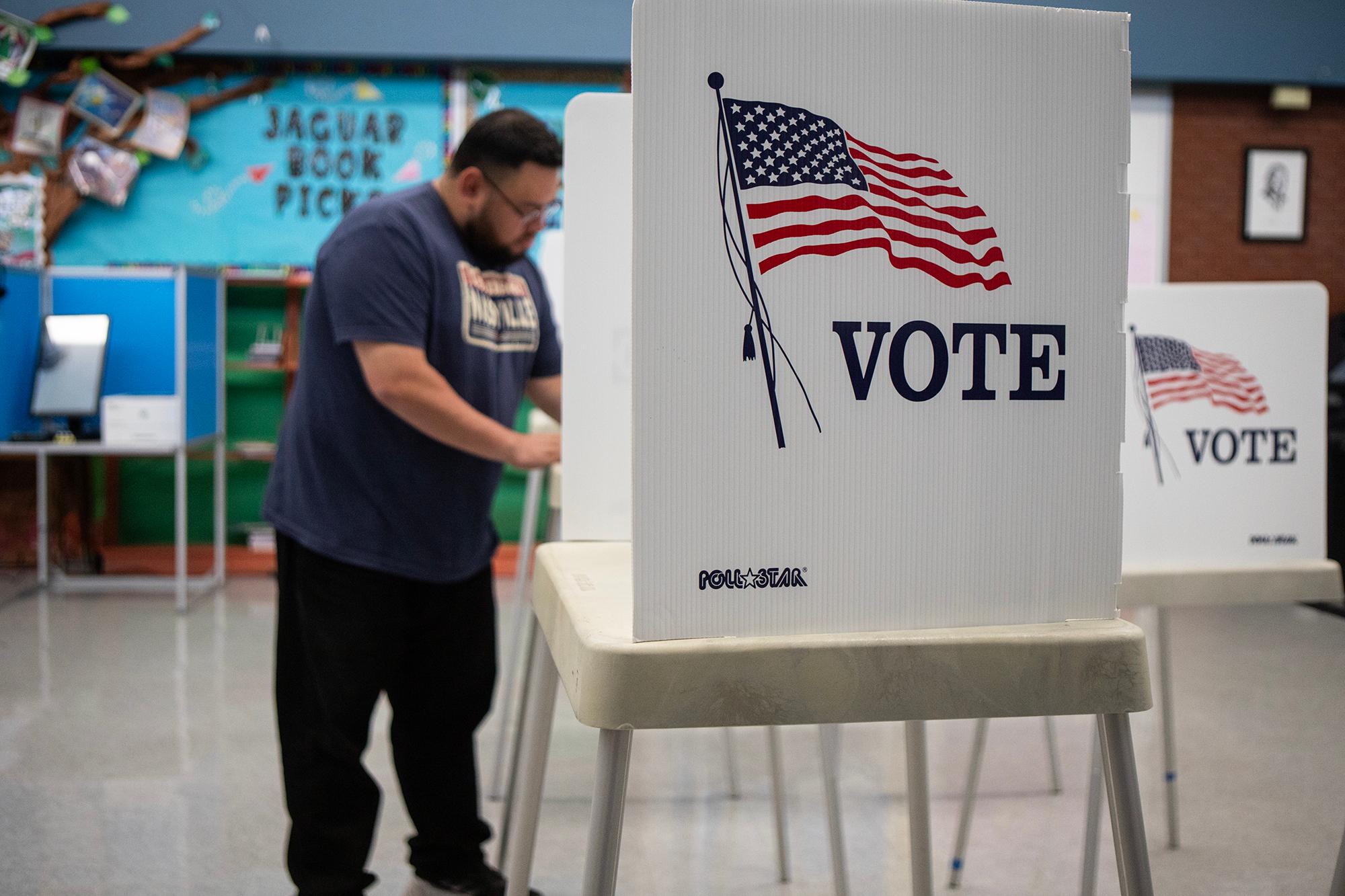
The Times also said Landry “requested that the Legislature reconvene and pass new congressional maps,” while “All other Louisiana races, including a hotly contested Senate primary, will continue,” and “early voting set to begin Saturday ahead of the state’s May 16 primary.”
CBS News described the same sequence, saying Louisiana’s Secretary of State announced the state would, “in the wake of the the state's congressional map one day earlier,” and quoted Secretary of State Nancy Landry’s statement: “Pursuant to 18:401.1(B), I have certified the emergency in light of the Supreme Court ruling. This is a mandatory step prior to the Governor issuing an executive order suspending the upcoming Louisiana U.S. House races.”
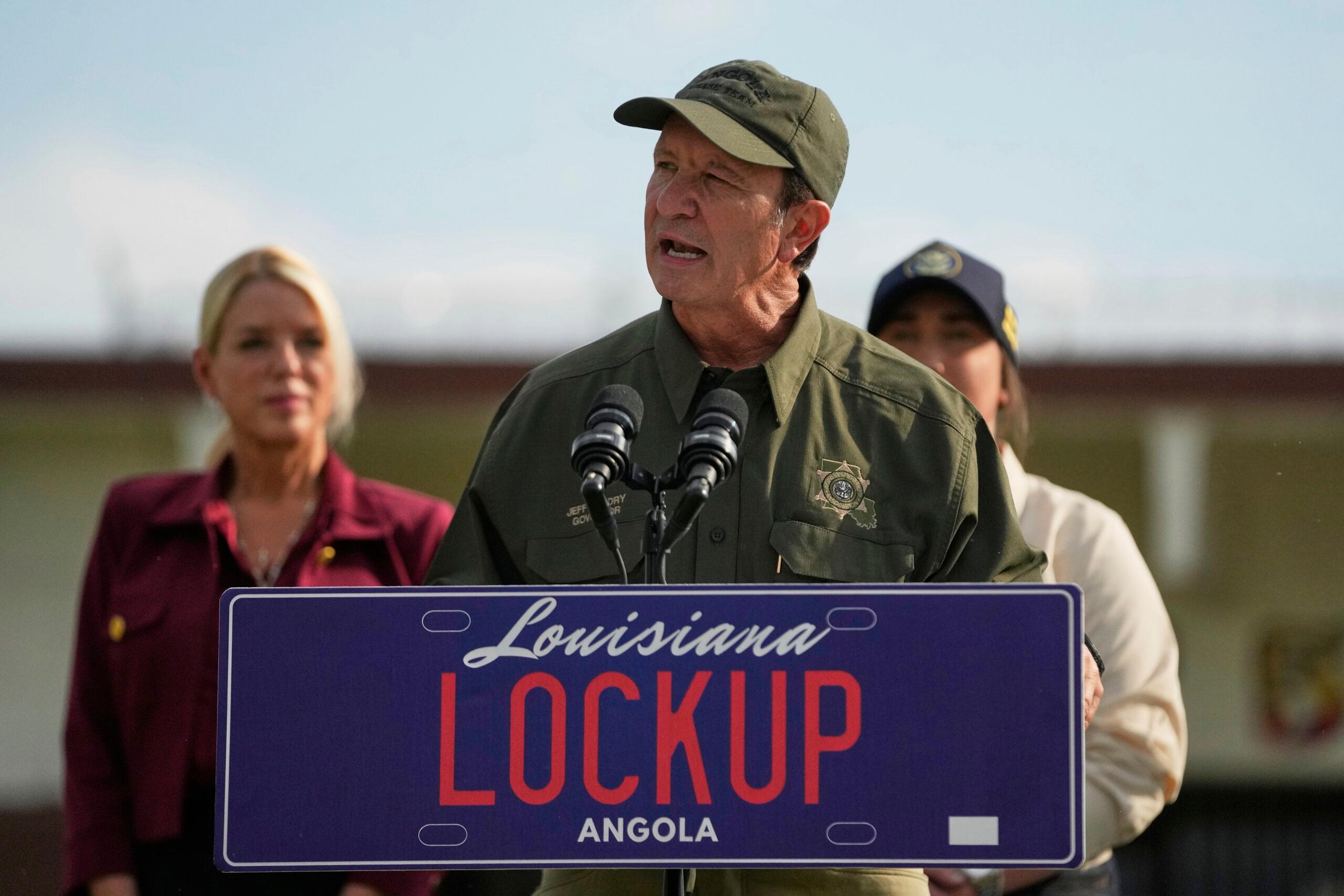
Fortune added that Republican Gov. Jeff Landry issued an executive order postponing the U.S. House primary “in response to a ruling Wednesday by the court that struck down a majority Black congressional district,” and quoted Landry: “Allowing elections to proceed under an unconstitutional map would undermine the integrity of our system and violate the rights of our voters.”
Fortune further said the governor’s order postponed the congressional primary until either July 15 or a date to be set by the Legislature, and that the Republican-controlled secretary of state’s office would post notices at early voting sites.
Together, the reporting shows Louisiana’s election machinery shifting immediately after the ruling, with the House primary suspended and the Senate primary scheduled for May 16.
Reactions from Trump, Democrats, and courts
The ruling and Louisiana’s response triggered sharply divided reactions, with Republican leaders praising the decision and Democrats and civil rights voices warning it would reduce minority representation.
“Louisiana's Secretary of State on Thursday announced the state would in the wake of the the state's congressional map one day earlier”
The New York Times reported that President Trump “lavished praise on Mr. Landry for his ‘tremendous Vision, Strength, and Leadership’ in responding to the decision,” and it also described the court’s ruling as setting off “a chaotic scramble” among Republicans assessing where they could redraw districts for partisan advantage.
CBS News quoted Democratic Rep. Troy Carter saying, “We can realistically end up having six congressional districts with no African-American, or Democratic representation, it's very possible, given what we've seen happen across this country,” and it also quoted Michael Li of the Brennan Center’s Democracy Program: “If you draw a Trump +7 district or even a Trump +10 district, that may not be enough. So why not wait til' an election cycle in 2028 that might be better for your party?”
The AP reported that White House spokeswoman Abigail Jackson wrote in an email, “This is a complete and total victory for American voters. The color of one’s skin should not dictate which congressional district you belong in,” while the chair of the Democratic Congressional Campaign Committee called the decision “appalling.”
The AP also quoted Rep. Suzan DelBene saying the ruling was “the latest in a long line of attacks by President Donald Trump and the conservative court ‘against the fundamental right of every American citizen to vote.’”
In the court’s own language, Politico and NPR both highlighted the majority’s framing and the dissent’s critique: Politico quoted Justice Elena Kagan’s view that the majority “eviscerate the law” and amount to the “demolition of the Voting Rights Act,” while NPR quoted Rick Hasen calling it “one of the most important and most pernicious decisions of the Supreme Court in the last century.”
NPR also quoted Atiba Ellis saying plaintiffs are now being asked to find “a smoking gun, the proof of the racist intent that is sort of objectively and consciously articulated in order to prove their case.”
How outlets frame the same ruling
While all the outlets describe the Supreme Court’s decision as narrowing Voting Rights Act protections, they differ in emphasis—on legal mechanics, on election timing, or on political consequences.
The Guardian framed the decision as discarding “one of the main tools that have been used for decades to protect minority voters from racial discrimination,” and said it was “a severe, and some say terminal, blow to the Voting Rights Act,” while also quoting Donald Trump’s response when asked whether states should now do that: “I would.”

NPR focused on how the ruling changes the evidentiary burden, quoting Rick Hasen that “What's left of the Voting Rights Act is a hollow shell of what it was before,” and quoting Atiba Ellis that plaintiffs are being asked to find “a smoking gun, the proof of the racist intent.”
Politico emphasized the uncertainty created by the “gray area” left by the ruling, describing how the decision “throws into question exactly how states can utilize race in their mapmaking process,” and it laid out the legal background involving Congress’s 1982 amendment and the “effects” test.
The Conversation, meanwhile, provided a longer legal timeline, saying the case had roots in Louisiana’s redistricting after the 2020 Census and describing how Louisiana lawmakers passed Senate Bill 8 in January 2024 to create two districts where Black voters composed a substantial portion of the electorate.
CalMatters highlighted California’s situation, saying the ruling “won’t change California’s congressional districts,” and quoted Justice Samuel Alito’s line that “One may lament partisan gerrymandering, but … partisan gerrymandering claims are not justiciable in federal court,” while also quoting Attorney General Rob Bonta that “the ruling overall endangers minority voters in other states.”
Diario Las Américas framed the decision as “otra derrota para los demócratas” and said the court limited redistricting “por motivos raciales,” while also quoting the court’s reasoning about the Voting Rights Act not requiring Louisiana to create an additional majority-minority district.
What comes next for 2026
The ruling’s consequences are expected to play out through additional redistricting efforts and legal battles, with several outlets describing how timing constraints and midterm deadlines could shape what states can do.
“The Supreme Court’s 6-3 decision in Louisiana v”
CBS News said the Supreme Court’s ruling “could have implications for several southern states,” and it described a CBS News analysis that in “a perfect world for Republicans” southern states could collectively add “between one to nine more GOP-friendly districts for the 2026 midterms,” while also saying the number is expected to grow for the 2028 cycle.
CBS News also stressed obstacles for 2026, including that “Many states either have conducted their primary elections, have them coming up soon or have already passed the qualification deadline for candidates to get onto the ballot,” and it warned that “last-minute changes to the maps could run into trouble with the ‘Purcell principle.’”
The same CBS report gave a state-by-state look, saying Louisiana could be “(potential +1 to 2 R seats)” and that early voting for the May 16 primary was set to start May 2, with ballots already printed.
Fortune similarly said Louisiana’s House primary was postponed until either July 15 or a date to be set by the Legislature, and it quoted House Speaker Mike Johnson saying, “I think all states who have unconstitutional maps should look at that very carefully, and I think they should do it before the midterms.”
NPR added that it is “not yet clear how the decision will affect November's midterm elections” because “candidate filing deadlines and primaries have passed in many states,” while also noting that lawmakers in Tennessee and Georgia quickly called for new districts.
The Guardian described how southern states were “already moving on the back of the ruling to redraw maps to gut the power of Black and other minority voters,” and it said Louisiana postponed its primary elections to allow the state to revert to “a single majority district for Black voters.”
More on USA

Zelensky Says JD Vance Praising Halted U.S. Aid Helps Russia
10 sources compared
Trump Administration Says Ceasefire Pauses War Powers Clock on Iran War
13 sources compared

Trump Deploys ICE Agents to Major Airports as TSA Security Staff Shortage Persists
23 sources compared

Donald Trump Removes Whisky Tariffs After King Charles III and Queen Camilla State Visit
22 sources compared