USA · 30 April, 2026 · 8 min read
Donald Trump Removes Whisky Tariffs After King Charles III and Queen Camilla State Visit
Trump removed whisky tariffs after King Charles III and Queen Camilla's state visit. He scrapped a 10% tariff on Scotch whisky following the royal visit.
Use of the barrel-trade rationale (specific mechanism described with emphasis differences).
10 of 11 outlets skipped it: UK government confirmed the tariff removal applies to all whisky tariffs, including Irish whiskey..
22outlets compared
Same story, two versions
tap a side to read it in full
PBS
“His post left it unclear if the tariffs were being lifted on bottles of Scotch or on the materials used to produce alcohol in both countries.”Read the original ↗
BBC
“The UK government confirmed this applies to all whisky tariffs, including on Irish whiskey.”Read the original ↗
This matters because industry impact depends on whether duties are removed comprehensively (end-product and related tariff lines) or only for certain categories tied to the barrel supply chain.
Tariffs lifted after royal visit
President Donald Trump said Thursday he will remove tariffs and restrictions on whisky imports after King Charles III and Queen Camilla’s four-day state visit to the United States, which included stops in Washington DC, New York and Virginia before they left on Thursday.
“The King and Queen spent four days in the US on a state visit hosted by Trump where they visited Washington DC, New York and Virginia before they left on Thursday”
In a Truth Social post, Trump wrote: "In Honor of the King and Queen of the United Kingdom, who have just left the White House, soon headed back to their wonderful Country, I will be removing the Tariffs and Restrictions on Whiskey."
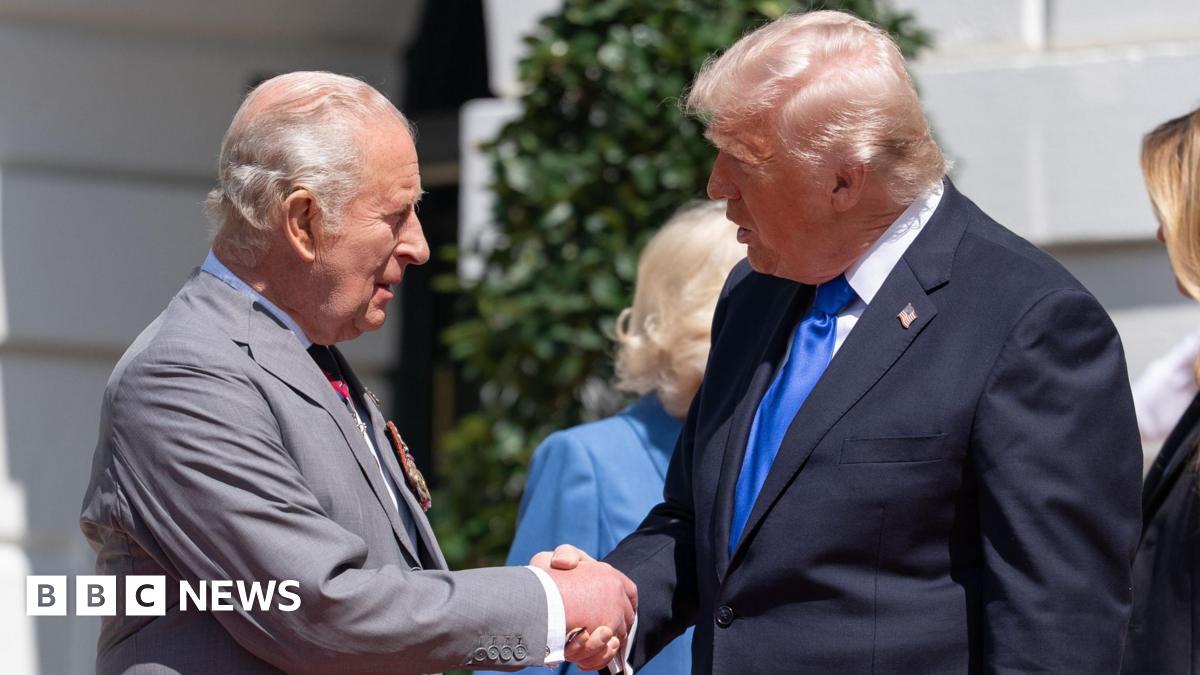
Trump credited the royals directly, adding: "The King and Queen got me to do something that nobody else was able to do, without hardly even asking!"
The BBC reported that Trump said he would lift restrictions on Scotland’s ability to work with the state of Kentucky on whisky and bourbon, and the Guardian described the move as removing all tariffs on whisky imports.B
The Courier-Journal likewise said Trump would lift a 10% tariff on Scottish whisky, while the PBS/AP report said the White House did not respond to emails seeking clarification and that the post was interpreted in Scotland and by industry lobbyists as removing the tariffs on Scotch.P
Politico reported that Trump framed the decision as a gesture of gratitude to the British royals and as strengthening cooperation between Scottish and Kentucky distillers.
Across the coverage, the common thread is that the announcement came as the king and queen wrapped up their visit, with UPI noting the timing as they were “starting to wrap up their visit to the United States this week.”
What the tariffs covered
The reporting ties the whisky tariff rollback to a specific trade framework that had put a 10% baseline tariff on most British goods imported into the United States, with whisky among the affected products.
The Guardian said the US and the UK signed a deal in 2025 allowing Washington to impose a 10% baseline tariff on imports of most British goods, and it noted that Trump had previously left that baseline in place even after a reduction from an earlier 27.5% rate.
PBS/AP similarly described the 2025 trade framework as putting a 10% tax on most goods imported from Britain, and it said the Scotch Whisky Association reported export volume to the U.S. fell 15% after tariffs were announced in April of last year.P
Politico reported that the Scotch industry had lobbied for months to eliminate the 10% tariff on its whisky, and it added that Scotch exports to the U.S. were down 15 percent in 2025, citing the Scotch Whisky Council.
The Courier-Journal said the whisky tariff was part of a 10% baseline tariff on most British exports to the U.S., with some exceptions, and it stated that the baseline had been in place since May 2025.
Reuters-free framing in the BBC coverage emphasized that Trump would lift restrictions on Scotland’s ability to work with Kentucky on whisky and bourbon, while the Fox Business and New York Post versions focused on Trump’s Truth Social language about Scotland’s ability to work with the Commonwealth of Kentucky on Whiskey and Bourbon.
The PBS/AP report highlighted uncertainty about scope, saying Trump’s post left it unclear if tariffs were being lifted on bottles of Scotch or on the materials used to produce alcohol in both countries.P
In the background, the Guardian said the Scotch Whisky Association estimates the charges cost the industry £4m a week, and it also cited Diageo reducing production at some distilleries to balance lower demand.
Reactions from Scotland and industry
Scottish officials and industry leaders welcomed the tariff rollback, repeatedly tying it to jobs and lost revenue.
“"tremendous news for Scotland"”
Scotland’s First Minister John Swinney called it “tremendous news for Scotland” and said he was grateful to the King for the “key role he played,” adding: "Millions of pounds were being lost every month from the Scottish economy."
The BBC quoted Swinney saying the move was “tremendous news for Scotland,” and it also reported that a Buckingham Palace spokesperson said the King sent his "sincere gratitude" to Trump and he "will be raising a dram to the President's thoughtfulness".B
In the same vein, the Guardian quoted the Scotch Whisky Association’s view that the deal was “a significant boost” and that "Distillers can breathe a little easier during a period of significant pressure on the sector."
Mark Kent, chief executive of the Scotch Whisky Association, told the BBC Scotland News that the industry had been losing around £4m a week in lost exports to the United States—"£150m over the course of the last year while tariffs have been in place"—and he said distillers would “breathe a sigh of relief now that these tariffs are off."B
On the U.S. side, Chris Swonger, president and CEO of the Distilled Spirits Council, called the change “a major victory for American hospitality businesses” and said it would "strengthens transatlantic ties, brings much‑needed certainty to our industry and allows spirits producers on both sides of the Atlantic to grow, invest and support jobs at a critical time."
Politico also quoted U.S. Trade Representative Jamieson Greer saying the move was part of a broader economic agreement, with Greer stating: "As part of the [Economic Prosperity Deal], the U.S. and UK have decided that in continuing its implementation, the United States will allow preferential duty access for whiskey produced in the United Kingdom."
Kentucky lawmakers and industry groups also praised the decision, with the Courier-Journal quoting U.S. Sen. Mitch McConnell saying: "This move will give businesses the certainty they need to increase investment in Kentucky’s economy."
Scope disputes and framing differences
While all outlets tied the rollback to Trump’s comments and the royal visit, they differed in how they described what exactly was being removed and how broadly it applied.
The Guardian said Trump would remove “all tariffs on whisky imports,” while the BBC described the action as removing restrictions on Scotland’s ability to work with Kentucky on whisky and bourbon.B

The PBS/AP report emphasized ambiguity, stating Trump’s post left it unclear if tariffs were being lifted on bottles of Scotch or on the materials used to produce alcohol, and it added that the White House did not respond to emails seeking clarification.P
The Courier-Journal and Fox Business both described the move as removing a 10% tariff on Scottish whisky, with the Courier-Journal saying Trump would lift a 10% tariff and that the whisky tariff was part of a 10% baseline tariff on most British exports.
Politico, meanwhile, framed the change as part of a broader economic agreement and quoted U.S. Trade Representative Jamieson Greer describing it as preferential duty access for whiskey produced in the United Kingdom.
The Times portrayed the decision as a “tariff reprieve” and described months of lobbying by ministers who had tried to persuade Trump to scrap the 10 per cent levy, while also noting that if a deal had not been struck these were due to have been reimposed in June.
Newsweek described the move as a “major diplomatic win” and said Swinney understood Trump’s comments to mean tariffs on Scotch would be dropped, while the Independent reported that without intervention the industry could have seen another 25% in the spring as Trump continued his tariff agenda.
Even within the same outlet family, the BBC and Guardian differed in their phrasing—BBC focusing on restrictions tied to Scotland-Kentucky cooperation, Guardian on removing all tariffs on whisky imports—while UPI described the action as lifting tariffs that had limited business between bourbon makers in Kentucky and Scotland.B
These differences mattered because the scope of “whisky” versus “whiskey” and whether it covered bottles or production materials was directly raised in PBS/AP’s account of the post’s unclear wording.
Economic stakes and next steps
The rollback was presented as a relief from pressure on both sides of the Atlantic, but multiple outlets also described looming consequences if tariffs had returned.
“American tariffs on single malts, which were suspended four years ago, were on course to return this spring with a further 25% charge”
The BBC reported that tariffs introduced under the Trump administration added 10% to importers’ costs and hit sales in Scotland’s whisky industry’s biggest export market, and it said American tariffs on single malts were on course to return this spring with a further 25% charge unless a deal could be done with the Trump administration.B

The Guardian similarly described the Scotch market suffering from higher levies and declining rates of alcohol consumption, and it cited SWA’s estimate that charges cost £4m a week.
Politico added that both Kentucky and Scottish whisky industries had been hurt by Trump’s trade war, reporting Scotch exports to the U.S. down 15 percent in 2025 and U.S. whisky exports down 19 percent in 2025, while noting that most of the decrease in U.S. whisky exports was due to a loss of exports to Canada.
The Times said the tariffs cost £3 million in lost exports to the US every week, and it described the lobbying effort as trying to persuade Trump to scrap the 10 per cent levy that had affected sales in the industry’s biggest export market.
In the background of the deal, Politico quoted Greer saying the move was part of a broader “Economic Prosperity Deal” that would expand market access for key industries including beef, pharmaceuticals and ethanol, and it described preferential duty access for whiskey produced in the United Kingdom.
The Courier-Journal and UPI both tied the tariff issue to the barrel trade between Kentucky and Scotland, with Trump saying the barrels are used to age the alcohol and that the barrels are only good for one year, and with UPI describing that some whiskey distilleries age bourbon in barrels used to age Scotch and that the tariff increased costs for U.S. whiskey manufacturers.
Looking ahead, the BBC quoted Graeme Littlejohn saying the move was “thanks to the huge amount of negotiation that’s been going on over many months, at a very senior level.”B
Across the coverage, the stakes were repeatedly expressed in jobs and export volumes, with Swinney saying “Millions of pounds were being lost every month from the Scottish economy” and Mark Kent describing “£150m over the course of the last year” in lost exports while tariffs were in place.